Produce the gala’s survey, ROI report, project write-up and portfolio entry.
Read the transcript
Module 11 workshop: debrief and report.
Produce the gala's survey, ROI report, case study and portfolio entry.
The debrief package.
This workshop produces four documents from the Harbour Gala, in the order they are produced in practice: the survey results summary, the one-page ROI report, the case study, and the portfolio entry.
Done well, the package takes most of a working day spread over the fourteen-day close.
Step 1: the survey summary.
Use the gala's results from lesson 2: 51 responses from 203 attendees; overall 4.5; venue 4.3; food 3.6; program 4.0; entertainment 4.8; arrival 3.9; likely to return 4.4; purpose question 4.6.
Write the summary as half a page.
Step 2: the one-page ROI report.
Enter the figures from lesson 3 into the calculator: total cost 50,685 dollars with HST and service charges; gross revenue 137,700 dollars across tickets, sponsorships, paddle raise and auction; 203 attendees.
The calculator returns net proceeds 87,015, dollars cost to raise a dollar 0.37, dollars cost per attendee roughly 250. dollars
Step 3: the case study.
Write all ten sections.
The brief, the constraints and the plan come from the discovery and design modules.
Step 4: the portfolio entry.
Cut the case study to the portfolio structure: title, facts line, three sentences, five photos, one quote, links.
Write the testimonial request email with the three questions from lesson 5.
That is the lesson. The worksheet and the quiz are just below this video.
What you will be able to do
- Complete the debrief package
- Report to the committee
- Publish the example
The debrief package
This workshop produces four documents from the Harbour Gala, in the order they are produced in practice: the survey results summary, the one-page ROI report, the project write-up, and the portfolio entry. Done well, the package takes most of a working day spread over the fourteen-day close. Done in this workshop, with the figures already in hand from the previous lessons, it takes about ninety minutes. The point is to do it once from start to finish so that the next time, on a real event, the sequence is familiar.

| Step | Output | Tool | Time |
|---|---|---|---|
| 1 | Survey summary: scores, response count, top themes, vendor lines | Survey template | 20 min |
| 2 | One-page ROI report | ROI calculator | 25 min |
| 3 | Project write-up, ten sections | Template from lesson 4 | 30 min |
| 4 | Portfolio page and testimonial request | Lesson 5 structure | 15 min |
Step 1: the survey summary
Use the gala’s results from lesson 2: 51 responses from 203 attendees; overall 4.5; venue 4.3; food 3.6; program 4.0; entertainment 4.8; arrival 3.9; likely to return 4.4; purpose question 4.6. Write the summary as half a page. First line: response count and rate. Then the scores in one row. Then the three themes from the open comments, each with a count and one quote: cold mains at the back tables (nine), the chair’s speech length (six), the coat check line (four). Then the best-of theme: the mentalist (eleven mentions) and the strolling magicians (seven). Finish with the vendor lines: what goes to the hotel, what goes to the mentalist, what goes to the magicians, what goes to the AV company.
Check yourself: is every theme counted, not characterised? Is the sample size stated beside every score? Did you count the 1s and 2s on the food question, and is that number in the summary?
Step 2: the one-page ROI report
Enter the figures from lesson 3 into the calculator: total cost $50,685 with HST and service charges; gross revenue $137,700 across tickets, sponsorships, paddle raise and auction; 203 attendees. The calculator returns net proceeds $87,015, cost to raise a dollar $0.37, cost per attendee roughly $250. Write the page in the six-part order: purpose and measure, headline sentence, numbers table, three things that worked, three to change, recommendation. The cost overrun against the $40,000 envelope must be explained in one line, with who approved it and when. Attach the vendor invoice summary from the close as the appendix.

Check yourself: does every number trace to an invoice, a door count or a survey response? Is “raised” used only for net? Is the recommendation specific enough to be a proposal for next year, with a date, an envelope and a target?
Step 3: the project write-up
Write all ten sections. The brief, the constraints and the plan come from the discovery and design modules. The team is the vendor contact sheet with a line on each. The program is the run of show in six lines. What happened on the night uses the circuit trip and the chair running long, handled and invisible. Results come from the ROI report with sample sizes. What we would change is the three items from the survey themes. The quote is marked “pending approval” until the email arrives. Photos are listed by description with the photographer’s licence clause noted beside the list.
Then the rights pass. Draft the three emails: to the executive director asking approval of the name, numbers and quote; to the photographer confirming the usage clause and asking for the eight selected files with credit wording; to the mentalist and the magicians asking how they want to be named and whether they would like the link. Keep all three in the event folder with the replies.
Step 4: the portfolio entry
Cut the project write-up to the portfolio structure: title, facts line, three sentences, five photos, one quote, links. Write the testimonial request email with the three questions from lesson 5. Draft the directory listing update with the headline number and the one photo. Note which single social channel the day-of photos go to and schedule them for within the week.
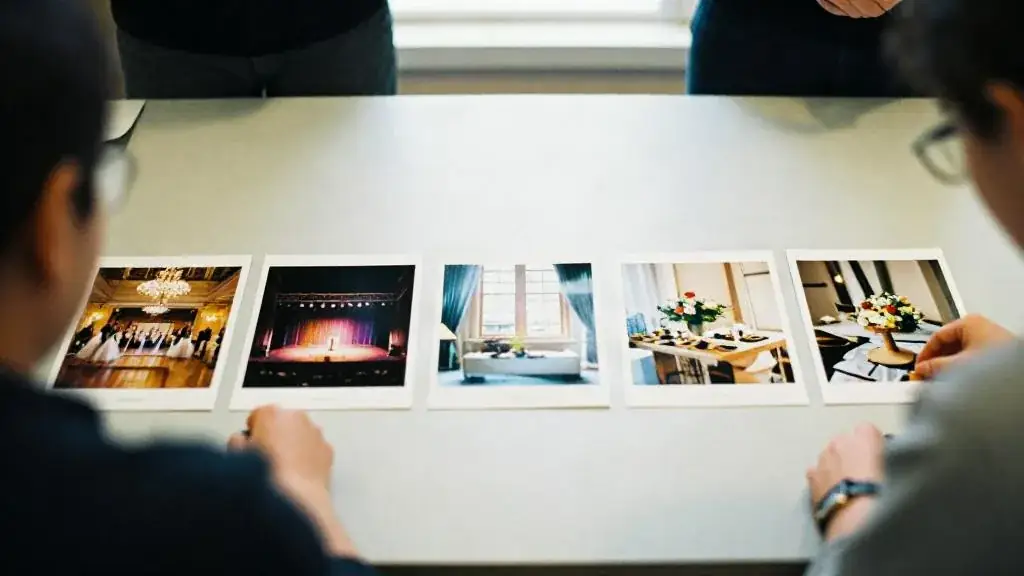
Worked example: reporting to the committee
The gala committee meets on the third Tuesday after the event. The planner has ten minutes on the agenda. She shares the one-page ROI report on screen and reads none of it. She says: “The gala netted $87,015 at 37 cents per dollar raised, with 203 guests. Three things worked: the mentalist before the ask, table sponsorships, and finishing the ask by 9 p.m. Three things to change: fourteen servers, a five-minute cap on the chair’s remarks, a second coat check. For next year I recommend the same venue, the second Thursday in November, a $45,000 envelope that includes the band and photographer, and a net target of $95,000.” The chair asks why the cost went over the envelope; the planner points to the line showing the band and photographer were approved on October 3 when the eighth sponsor signed. The treasurer asks whether $95,000 is realistic; the planner points to the paddle raise beating target and the 4.4 return score on 51 responses, and says the honest range is $85,000 to $100,000. The committee sets the date before the meeting ends. The survey summary and the project write-up draft are left with the executive director, with the approval email flagged.
Publishing the project write-up
When the three approvals are in, usually within two to three weeks, the project write-up goes live on the planner’s site as its own page, the portfolio entry goes up beside it, the directory listing is updated, and the links are sent to the client and every named vendor with a two-line note. The complete package in the event folder: survey summary, ROI report with appendix, project write-up, portfolio text, three approval emails, photo licence, testimonial approval. That folder is what you open the day the foundation calls about next year, and what you show the next foundation that calls.
Common mistakes
- Producing the package in the wrong order and finding the project write-up numbers do not match the ROI report.
- Presenting the report without the recommendation, so the committee decides nothing.
- Publishing before the three approvals are in.
- Leaving the package half-done when the next event starts. Block the time in the close.
- Not asking for next year’s date in the room.
Worksheet
Download the worksheet, complete it for your own event (or the running gala example), and keep it in your course binder. It takes about 15 minutes.
Check your understanding
Related guides, venues and vendors
City permits: parks, tents, noise, road closures
Module 8: Legal, Safety & Risk (Ontario) · 15 min
Toronto, Mississauga, Vaughan and Hamilton processes for park bookings, tents, amplified sound, road closures and food vendors.
Read more
Outdoor and tented events
Module 4: Venues · 15 min
Tents over 60 m² need permits in most Ontario municipalities. Learn tent sizing, flooring, power, washrooms, weather plans and the park permit…
Read more
Parties by age: 1st, 2–4, 5–8, 9–12
Specialist · Kids' Parties · 15 min
Length, timing, venue, entertainment and the schedule that avoids meltdowns.
Read more