Length, timing, venue, entertainment and the schedule that avoids meltdowns.
Read the transcript
Parties by age: 1st, 2 to 4, 5 to 8, 9 to 12.
Length, timing, venue, entertainment and the schedule that avoids meltdowns.
Age decides everything.
Ask a parent what kind of party they want and you will hear a theme.
Ask how old the child is turning and you will learn the length, the start time, the venue, the entertainment and whether the parents stay.
The four bands.
Two hours is the number to remember for ages 2 to 8.
Under two hours the party feels rushed around the cake; over two hours the youngest guests fall apart.
The schedule that avoids meltdowns.
Meltdowns come from hunger, overstimulation and transitions handled badly.
A good schedule manages all three.
Venue by age.
First birthdays and toddler parties work at home or at a grandparent's: small group, nap flexibility, no rental clock.
Five to eight is where community centre rooms, indoor playgrounds and party venues earn their fee, because 18 children in a condo is not a party.
Worked example: Maya's 6th.
Maya is turning six.
Eighteen kids from her Grade 1 class, Sunday 1 to 3 p.m., a rented room at an Etobicoke community centre, 900 dollars all-in.
That is the lesson. The worksheet and the quiz are just below this video.
Age decides everything
Ask a parent what kind of party they want and you will hear a theme. Ask how old the child is turning and you will learn the length, the start time, the venue, the entertainment and whether the parents stay. Plan the age first, then hang the theme on it. A first birthday is a party for adults with a baby in it. A twelfth is a party for a small group of friends that the adults are asked to leave alone. Everything between moves along that line.
The four bands
| Age | Length | Best window | Guests | Entertainment that works | Who stays |
|---|---|---|---|---|---|
| 1st birthday | 2 hours, no more | 10 a.m. to noon, or straight after the afternoon nap | Mostly family; a few babies | None needed; a soft play corner, music, the cake moment | All parents, and the grandparents who are really the audience |
| 2 to 4 | 90 minutes to 2 hours | Late morning or early afternoon, around naps | 6 to 10 kids | A gentle performer (bubbles, puppets, songs) for 20 to 30 minutes; free play; one craft | All parents; the host needs to feed adults too |
| 5 to 8 | 2 hours | Early afternoon, 1 to 3 or 2 to 4 | 10 to 20 kids, often the whole class | A magician, circus-skills workshop or balloon artist, 30 to 45 minutes, plus games | Some parents drop off; collect phone numbers at the door |
| 9 to 12 | 2 to 3 hours | Afternoon or early evening | 6 to 12 chosen friends | An activity, not a show: climbing, trampoline, escape room, a workshop they can do themselves | Drop-off; parents collect |
Two hours is the number to remember for ages 2 to 8. Under two hours the party feels rushed around the cake; over two hours the youngest guests fall apart. The first hour is arrival, free play and the performer; the second is food, cake and a wind-down.

The schedule that avoids meltdowns
Meltdowns come from hunger, overstimulation and transitions handled badly. A good schedule manages all three.
- Arrival buffer, 15 minutes. Nobody arrives on time to a kids’ party. Have something that works for one kid or ten: a colouring table, a bubble machine, a dress-up box. Do not start the performer at the start time.
- Entertainment, 30 to 45 minutes. Start once most guests are in. The performer takes the room while the host finishes the food setup. For 5 to 8 this is the centrepiece; for 2 to 4 keep it to 20 or 30 minutes and expect wanderers.
- Food, 20 minutes. Straight after the show, while the kids are seated and calm. Small portions, nut-free, nothing that needs a knife.
- Cake moment, 10 minutes. Song, candles, photo. Cut and serve immediately or the sugar window closes and kids drift.
- Wind-down and pickup, 20 to 30 minutes. A quiet activity (craft, a short game, free play) so the parents arriving to collect are not walking into chaos. Favours handed out at the door as each child leaves, not before.
Build this with the timeline generator; it prints a one-page schedule the host can tape to the wall.
Venue by age
First birthdays and toddler parties work at home or at a grandparent’s: small group, nap flexibility, no rental clock. Five to eight is where community centre rooms, indoor playgrounds and party venues earn their fee, because 18 children in a condo is not a party. Nine to twelve usually means an activity venue where the venue is the entertainment. The next lesson covers entertainers; lesson 3 covers venues and costs.
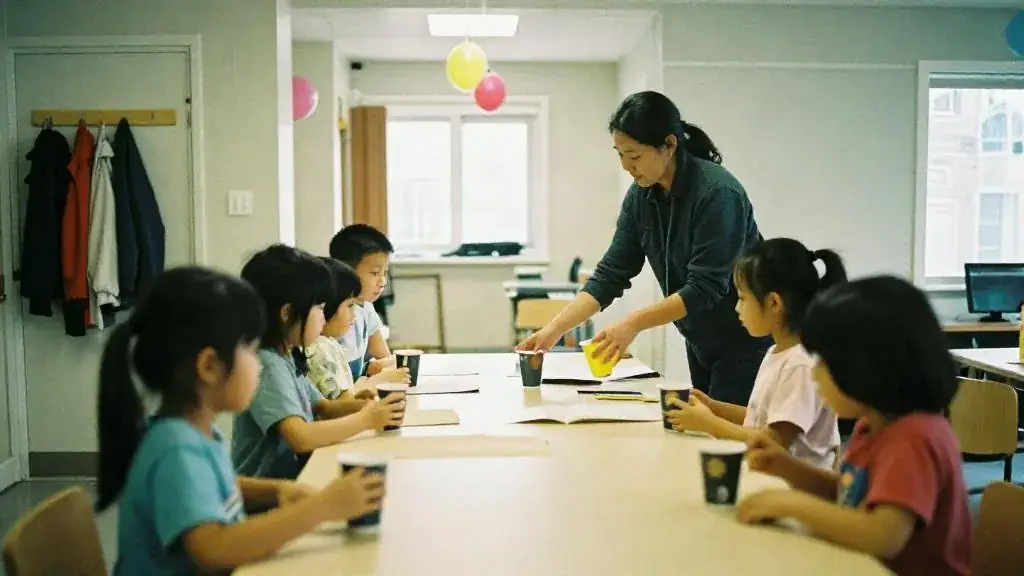
Worked example: Maya’s 6th
Maya is turning six. Eighteen kids from her Grade 1 class, Sunday 1 to 3 p.m., a rented room at an Etobicoke community centre, $900 all-in. Six-year-olds mean a 2-hour party, early afternoon, a performer as the centrepiece and most parents dropping off.
- 12:30 Host and one helper set up: tables for 18 at one end, performance area at the other, colouring table by the door.
- 1:00 to 1:15 Arrival. Colouring, bubble machine, name tags with any allergy marked on the back for the helper. Parent phone numbers collected on a sheet at the door.
- 1:15 to 1:55 Magician, 40 minutes, with Maya as the assistant for the last trick. Host finishes food and drinks while the room is held.
- 1:55 to 2:15 Food. Pizza slices, fruit, veggie sticks, water and juice boxes. Nut-free, egg-free sandwich alternative for the two kids whose parents flagged it.
- 2:15 to 2:25 Cake. Song, candles, photos, cut and serve.
- 2:25 to 2:55 Balloon animals from the magician (booked as a 30-minute add-on) while kids wind down; parents arriving from 2:45.
- 3:00 Favours at the door. Room must be clear by 3:30 under the rental terms, so the helper starts breaking down tables at 2:50.
The budget split was roughly: room $150, magician with balloon add-on $400, food and cake $200, decorations and favours $120, contingency $30. That is a full party for 18 at $900, and the only reason it works is that the schedule gives the host two free hands while the performer holds the room.
Common mistakes
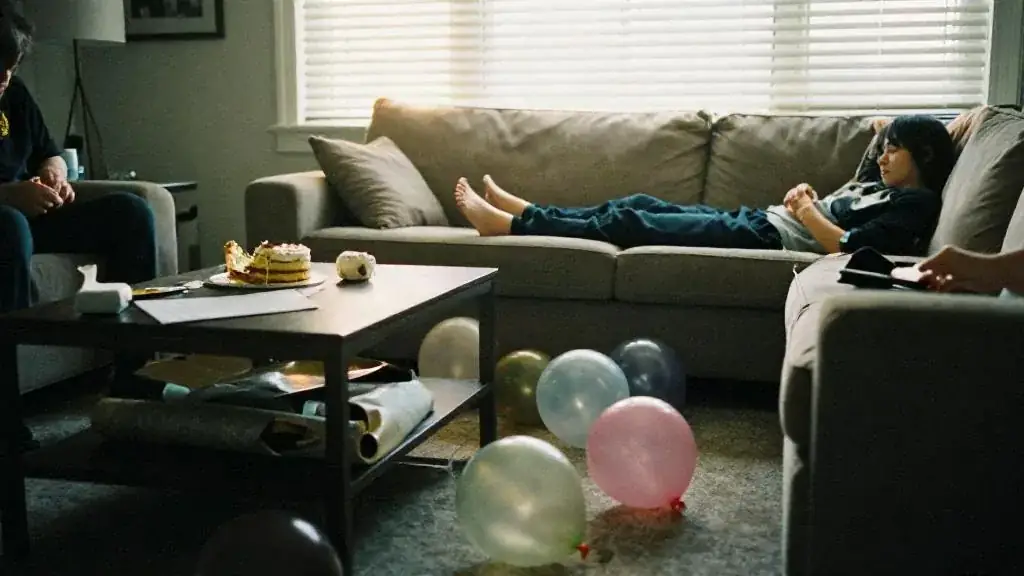
- A three-hour party for five-year-olds. The third hour is crying.
- Booking the performer to start at the start time. Half the room is still parking.
- Serving food before the show. Sugar plus a seated show is a losing combination; show first, then food.
- Inviting the whole class to a home. Eighteen six-year-olds need a room with a hard floor and a door.
- Scheduling across nap time for ages 1 to 4. The birthday child will be the one asleep or in tears.
- Handing out favours early. They become projectiles, then they get lost, then there are tears at pickup.
Worksheet
Apply this lesson to a real or practice event using the worksheet, then mark the lesson complete to track your progress toward the certificate.
Related guides, venues and vendors
PR and media for GTA events
Module 9: Marketing & Promotion · 15 min
Which outlets cover events in Toronto, how to pitch, media passes, and what makes a story.
Read more
Systems, tools and scaling
Module 12: The Business of Event Planning · 15 min
CRM, proposals, contracts, payments, project boards, and when to hire your first coordinator.
Read more
Typical cost splits by event type
Module 3: Budgeting · 15 min
A holiday party, a gala, a kids' party and a conference spend differently. Memorise the four shapes and you can sanity-check any…
Read more