Everything on EventPlans.ca that goes deeper on conferences and conventions: articles on the problems planners run into most, the tools to use next, the lessons in the free Academy, and the hubs that overlap with this one.
Read the transcript
Related articles and tools.
Everything on the site tagged for conferences and conventions, in one place.
How to use this page.
Read the ones closest to your size and format first.
A 200-person association meeting in a downtown hotel has more in common with a 200-person customer summit in a loft than either has with a 2,000-delegate convention at the Metro Toronto Convention Centre, so match on scale before you match on industry.
A reading order for first-time conference organizers.
Start with the conference overview for the sequence: goal, audience, date, venue, registration, program, sponsors.
Read the budget guide next, because AV and catering for breaks surprise almost everyone, and run your numbers in the budget calculator with "Corporate" selected.
Encyclopedia entries conference planners use most.
Run of show, BEO, attrition, room block, load-in, production schedule, food and beverage minimum, RFP and classroom seating.
Each entry explains how the term shows up in a Toronto contract and what to ask before you sign.
Learn it properly.
The free Event Planner Academy has a corporate specialist track with a full lesson on conferences (program design, AV house rules, registration and sponsors) and a virtual and hybrid track for events with an online audience.
Both use the same worked examples as this hub, and every lesson has a printable worksheet.
Articles.
Tools.
The full guide, with tables and checklists, continues below this video.
How to use this page
The articles go deeper on single topics the hub pages can only summarize: AV house rules at Toronto venues, whether a magician or a mentalist suits a corporate audience, ceiling heights for anything that hangs, and how to write a sponsorship prospectus that sells. The tools are the ones we use on every conference: the budget sheet, the run of show, the capacity calculator and the ROI model.
A reading order for first-time conference organizers

- Start with the conference overview for the sequence: goal, audience, date, venue, registration, program, sponsors.
- Read the budget guide next, because AV and catering for breaks surprise almost everyone, and run your numbers in the budget calculator with “Corporate” selected.
- Then the venue guide, with the capacity calculator open: plenary rooms are sized at 0.75 m² per person theatre-style and breakouts at 1.85 m² classroom-style under the Ontario Building Code table, and the posted occupant load is the legal maximum.
- Build the timeline with the timeline generator, then work the checklist phase by phase.
- Finish with entertainment between sessions and the FAQs.
Encyclopedia entries conference planners use most
Run of show, BEO, attrition, room block, load-in, production schedule, F&B minimum, RFP and classroom seating. Each entry explains how the term shows up in a Toronto contract and what to ask before you sign.
Learn it properly
The free Event Planner Academy has a corporate specialist track with a full lesson on conferences (program design, AV house rules, registration and sponsors) and a virtual and hybrid track for events with an online audience. Both use the same worked examples as this hub, and every lesson has a printable worksheet.

Articles
Tools
Event budget calculator
Calculators
Split any budget into venue, food, entertainment, décor, photo, print and contingency using GTA cost ratios.
Read more
Wedding budget splitter
Calculators
Toronto wedding budget breakdown by style: classic, cultural, micro or destination.
Read more
Venue capacity calculator
Calculators
Turn room dimensions into banquet, cocktail, theatre, classroom, U-shape and cabaret capacities.
Read moreRelated hubs
Conferences overlap with trade shows when there is an exhibit floor, with galas and award nights when the programme ends with a dinner, and with holiday parties when the same audience returns in December. Start with the Academy if you want the full course.
Related guides, venues and vendors

The Robert McLaughlin Gallery
Oshawa · up to 250 guests
Licensed bar
The gallery building, about 36,000 sq ft, was designed by architect Arthur Erickson and sits in Oshawa's Civic Centre.
Read more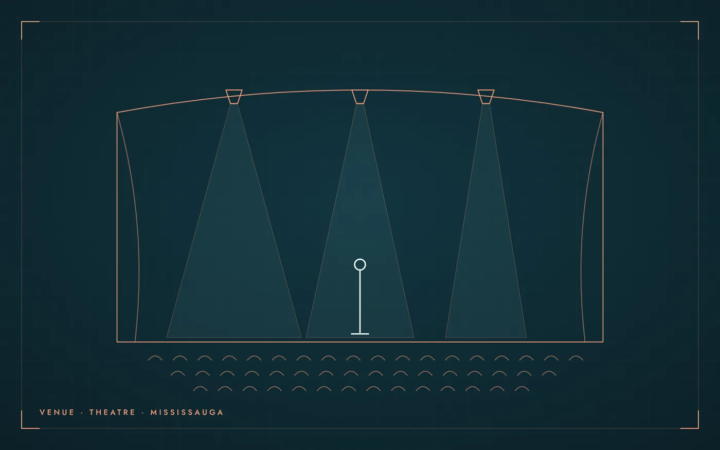
Living Arts Centre
Mississauga · 300+ guests
In-house catering · Near transit
The Living Arts Centre is a City of Mississauga arts facility in the downtown core near Square One.
Read more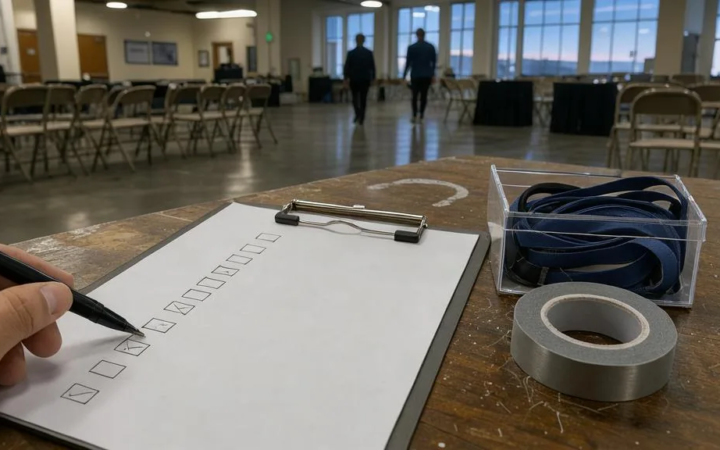
Conference checklist
Conferences & Conventions
The printable conference planning checklist, grouped by phase. Progress saves in your browser.
Read moreRelated guides, venues and vendors
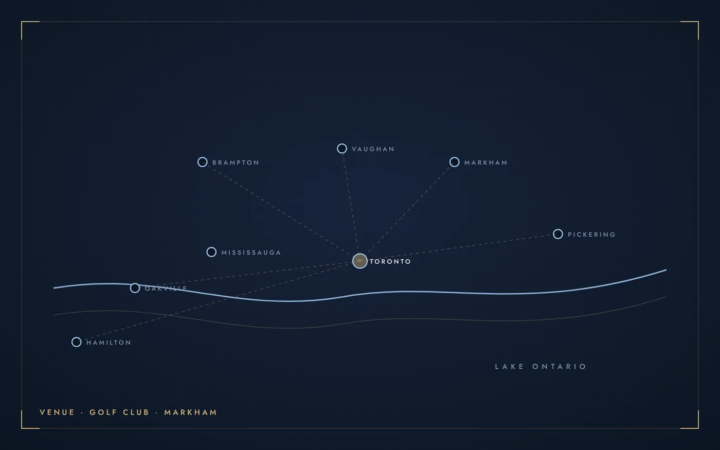
Angus Glen Golf Club
Markham · up to 800 guests
In-house catering · Free parking
Angus Glen is a golf club in north Markham with a clubhouse conference and banquet centre.
Read more
Fairmont Royal York
Downtown, Toronto · 300+ guests
In-house catering
The hotel lists more than 70,000 sq ft of meeting space across 36 venues.
Read more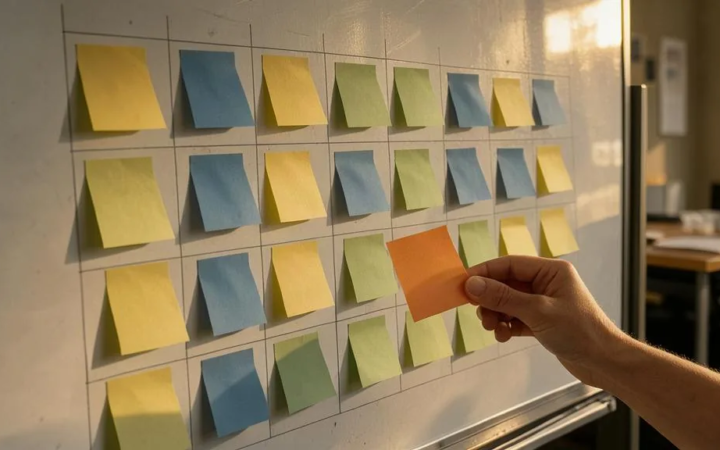
Conference planning timeline
Conferences & Conventions
Twelve months out to the week after: what to book when for a Toronto conference, with the lead times venues and suppliers…
Read more