Conference entertainment has one job: give the room back its attention. Used in the right slots it is the cheapest thing on the budget per minute of audience energy. Used in the wrong slots it is an interruption delegates resent.
Read the transcript
Conference entertainment ideas.
Conference entertainment has one job: give the room back its attention.
Used in the right slots it is the cheapest thing on the budget per minute of audience energy.
The four slots that work.
Something physical before the first speaker, while the room is still finding its seats.
A short illusion piece with the MC, a drummer or a brief spoken-word opener works; a video does not, because the room talks over it.
Timing rules.
Stage sets of 10 to 20 minutes at a conference; 20 to 45 minutes only at a gala dinner or an awards night.
Never over a meal service and never while delegates are moving between rooms.
What the venue needs.
Send every performer's tech rider to the AV lead and the venue at least two weeks out.
A mentalist needs a handheld wireless microphone and a clean stage; an illusionist may need a backstage area, a specific stage depth and a pre-show rehearsal in the room; an aerial act needs a certified rigging point and ceiling height that most hotel meeting rooms do not have (see rigging).
Budget.
Typical GTA range, 2026: a stage illusionist or mentalist for a 30 to 45 minute set runs 1,500 to 5,000, dollars and a shorter conference set is usually priced within the same range because the preparation is the same.
Close-up magicians for a two-hour reception run 600 to 1,500 dollars each.
Booking notes.
Book the acts you want at the six-to-nine month mark. Good corporate performers are booked on the same weekdays by other conferences.
Ask for a conference-specific demo, not a wedding reel. The skills are the same; the material is not.
The full guide, with tables and checklists, continues below this video.
The four slots that work
The opening (5–10 minutes)
Something physical before the first speaker, while the room is still finding its seats. A short illusion piece with the MC, a drummer or a brief spoken-word opener works; a video does not, because the room talks over it. The act should hand off to the MC, who introduces the first speaker. In our experience the right length is under ten minutes; anything longer eats the keynote’s slot.
The post-lunch reset (10–20 minutes)
The slot after lunch is where conferences lose their audience. A ten- to fifteen-minute set from a mentalist or stage illusionist using delegates from the room, or a short improv piece built from the morning’s content, pulls people back into their seats on time and sends them into the afternoon awake. The act is also a built-in reason for the room to be seated by the stated time, which protects the first afternoon speaker.
Sponsor moments
Sponsors want visibility that does not feel like an ad. A performer who works the sponsor’s name or product into a trick, or a roaming act in the sponsored break with the sponsor’s branding, is more memorable than a logo on a slide. Price this into the sponsorship tier rather than the entertainment budget.
The reception (60–120 minutes)
Roaming acts: close-up magicians, caricaturists, a jazz trio. One roaming performer per 40–60 guests keeps the room moving and gives strangers something to talk about. See strolling act and close-up magic. Avoid a band at a networking reception; it ends conversations.
Timing rules
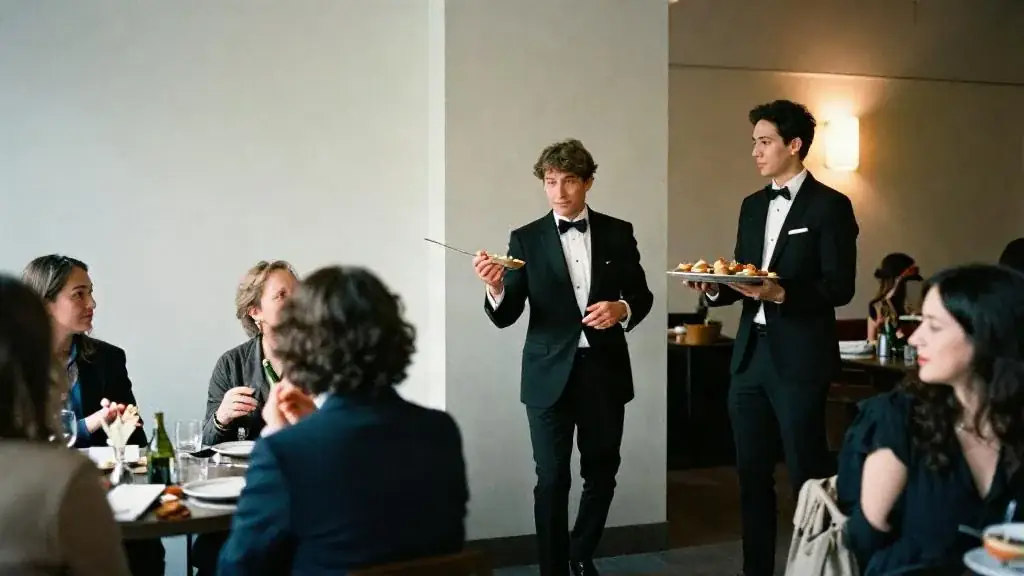
- Stage sets of 10–20 minutes at a conference; 20–45 minutes only at a gala dinner or an awards night.
- Never over a meal service and never while delegates are moving between rooms.
- The MC introduces every stage act and every speaker. An act that walks on cold loses its first minute.
- Put the act on the run of show with its own cue line: mic, lighting state, walk-on music, and who resets the stage after.
What the venue needs
Send every performer’s tech rider to the AV lead and the venue at least two weeks out. A mentalist needs a handheld wireless microphone and a clean stage; an illusionist may need a backstage area, a specific stage depth and a pre-show rehearsal in the room; an aerial act needs a certified rigging point and ceiling height that most hotel meeting rooms do not have (see rigging). At venues with house rules, the act’s own equipment may need to come through the dock with house labour, so include it in the load-in schedule.
Budget
Typical GTA range, 2026: a stage illusionist or mentalist for a 30–45 minute set runs $1,500–$5,000, and a shorter conference set is usually priced within the same range because the preparation is the same. Close-up magicians for a two-hour reception run $600–$1,500 each. A DJ for the reception or the awards dinner runs $900–$2,500. Use the entertainment hours planner to size the booking and the entertainment finder to shortlist acts by event type.
Booking notes
- Book the acts you want at the six-to-nine month mark. Good corporate performers are booked on the same weekdays by other conferences.
- Ask for a conference-specific demo, not a wedding reel. The skills are the same; the material is not.
- Confirm the performer’s liability insurance and that they will send a certificate to the venue.
- Brief the act on the audience, the industry and anything to avoid. A mentalist who knows what the company announced that morning is worth twice one who does not.
Listings in the Directory that are owned by the site founder carry a visible disclosure and receive no ranking preference. The article magician vs mentalist explains which fits a corporate audience.
Related guides, venues and vendors
Conferences & Conventions
Event hub
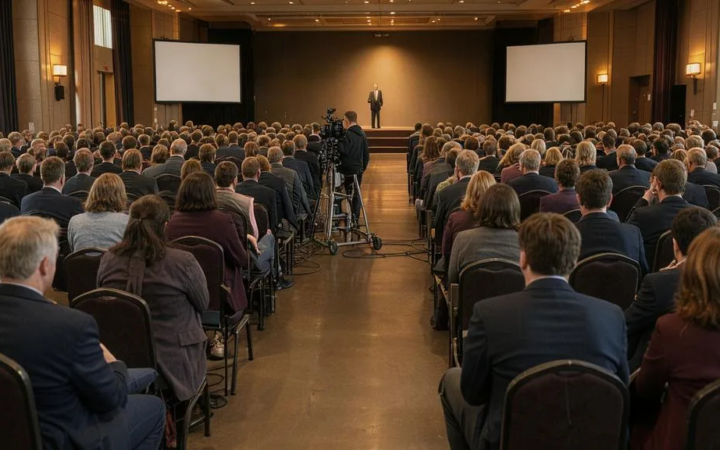
Planning a conference in Toronto: venues, registration, program design, AV, sponsorship, and entertainment between sessions.
Read more
Hilton Toronto/Markham Suites Conference Centre & Spa
Markham · up to 1,184 guests
In-house catering
This is an all-suite Hilton hotel with 502 guest rooms and an attached conference centre.
Read more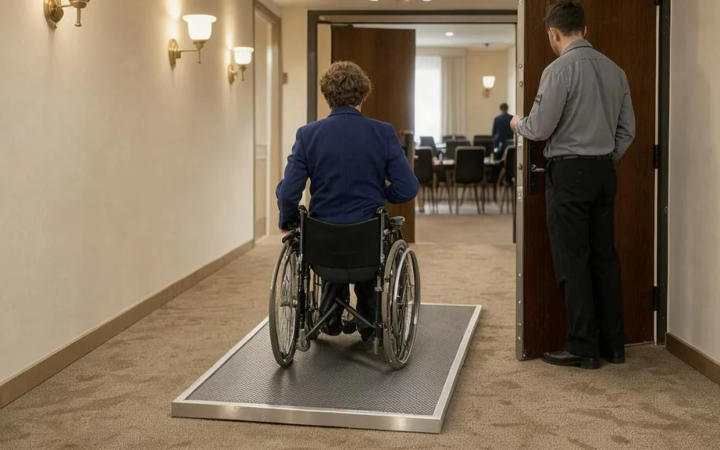
Conference etiquette & FAQs
Conferences & Conventions
Speaker, sponsor and delegate etiquette for Toronto conferences, the AODA accessibility checklist, privacy rules for registration data, and the questions organizers ask…
Read more