Planning is a service the client cannot see until the day itself, so the marketing has to make it visible. Learn to name your process, package it into tangible deliverables, and prove the value of judgment the client never watches you exercise.
Read the transcript
Selling an invisible service.
A caterer can hand you a canapé.
A florist can show you a peony.
Why planning is hard to buy.
Services marketers describe four traits that make a service harder to sell than a product.
Planning has all four in their strongest form.
Make the process the product.
The most effective move is to name your process and show it.
A prospect who can see seven defined stages, each with something they receive, is no longer buying a promise.
Turn claims into proof.
Planner websites are full of words that prove nothing: stress-free, detail-oriented, passionate, personalized.
Every competitor uses them, so they cancel out.
Build a sample deliverable pack.
The single strongest sales asset for a planner is a short pack of real, redacted deliverables.
It lets the prospect hold the work before they buy it.
Worked example: pricing what the client cannot see.
Visibility also changes how you talk about price.
Here is how Lantern and Lane explains its Full Planning fee of 7,500 dollars for a 150-guest wedding.
That is the lesson. The worksheet and the quiz are just below this video.
What you will be able to do
- Map your planning process into five to seven named stages with a visible deliverable at each one
- Rewrite vague claims such as stress-free into specific, provable statements
- Build a sample deliverable pack you can show a prospect before they sign
A caterer can hand you a canapé. A florist can show you a peony. A planner sells hundreds of small decisions made on the client’s behalf, most of which the client will never see. If your marketing does not make that work visible, the prospect compares you on the only thing left: price.
Why planning is hard to buy
Services marketers describe four traits that make a service harder to sell than a product. Planning has all four in their strongest form.

| Trait | What it means for planning | What the client feels |
|---|---|---|
| Intangible | There is nothing to inspect before the event | Am I paying for a spreadsheet and some emails? |
| Inseparable | The service is produced as it is delivered, with the client involved | Will we get along for nine months? |
| Variable | Every event is different, so past results are only a guide | Your last wedding was lovely, but mine is not that wedding |
| Perishable | The date happens once and cannot be redone | If this goes wrong, there is no refund that fixes it |
Notice that every feeling in the right-hand column is a form of risk. Your marketing job is to reduce perceived risk by making the invisible concrete, the variable predictable and the relationship previewable.
Make the process the product
The most effective move is to name your process and show it. A prospect who can see seven defined stages, each with something they receive, is no longer buying a promise. They are buying a sequence of deliverables they can picture.
Lantern & Lane, the two-person studio in Toronto’s west end, did this after losing three inquiries in a row to cheaper planners. Priya wrote down everything she actually does for a full-planning wedding and grouped it into stages. Marco gave each stage a plain name and a deliverable.
- Discovery. A 90-minute meeting and a written event brief, returned within five business days.
- Budget map. A line-by-line budget with GTA price ranges and a contingency line.
- Venue shortlist. Three venues with a comparison sheet covering capacity, minimum spend, curfew and load-in.
- Vendor team. Two vetted options per category, with notes on why each fits.
- Design direction. A mood board and a colour and material palette.
- Production schedule. A minute-by-minute run of show shared with every vendor.
- Event day. Two planners on site from vendor arrival to last load-out.
Each stage also gives the client a natural moment to feel progress. A couple who receives a budget map in month one and a venue shortlist in month two can tell friends what the planner has done so far, which is word-of-mouth marketing you did not have to ask for.
The work had not changed. What changed was that a prospect could now see it, and compare it line by line against a competitor’s single sentence.
Turn claims into proof
Planner websites are full of words that prove nothing: stress-free, detail-oriented, passionate, personalized. Every competitor uses them, so they cancel out. Replace each one with a specific statement you can back up.

| Vague claim | Specific replacement | Proof you can show |
|---|---|---|
| Stress-free planning | You will receive a written update every Friday until the event | A redacted sample update |
| Detail-oriented | Every vendor gets the same minute-by-minute run of show 14 days out | A sample run of show with names removed |
| We handle everything | We confirm every vendor’s arrival time, contact and insurance in writing | Your vendor confirmation checklist |
| Budget-conscious | Every budget includes a contingency line, and you approve any change over it | A sample budget map |
Specific claims carry a second benefit. Under Canada’s Competition Act, a claim that creates a false or misleading general impression can be a problem even if you did not intend it. Statements you can demonstrate keep you on solid ground.
Build a sample deliverable pack
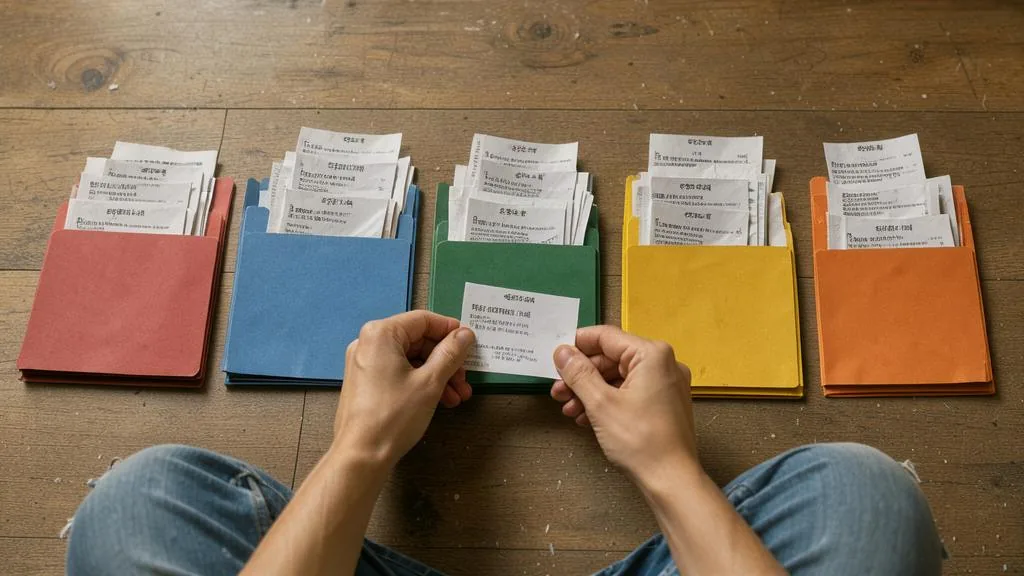
The single strongest sales asset for a planner is a short pack of real, redacted deliverables. It lets the prospect hold the work before they buy it. Keep it to six to ten pages and send it after the first call, or walk through it in the consultation.
A sample pack checklist you can copy:
- A one-page event brief from a past client, with names and dates removed
- A budget map page showing categories, ranges and the contingency line
- A venue comparison sheet for three real venues (venue names are fine, client names are not)
- Two pages of a run of show
- A sample Friday update email
- A timeline graphic showing your stages from booking to event day
- One page of client testimonials, each with first name, event type and month
Get written permission before using any client’s documents, even redacted. A line in your contract that lets you use anonymized planning documents for marketing makes this routine.
Worked example: pricing what the client cannot see
Visibility also changes how you talk about price. Here is how Lantern & Lane explains its Full Planning fee of $7,500 for a 150-guest wedding. The numbers are illustrative.
| Stage | Estimated hours |
|---|---|
| Discovery and brief | 6 |
| Budget map and venue shortlist | 12 |
| Vendor sourcing and contracts | 20 |
| Design direction | 8 |
| Meetings and weekly updates over 10 months | 22 |
| Production schedule and final walkthrough | 8 |
| Event day, two planners for 12 hours | 24 |
| Total | 100 |
At $7,500, that is $75 an hour before the studio’s costs. Marco does not lead with the hourly rate, because it invites haggling. He uses the table to show scope: 100 hours of work the couple would otherwise do themselves, or not do at all. When a prospect says a competitor charges $5,500, he asks which of the seven stages the cheaper quote includes. Usually the answer explains the gap.
A consultation script that previews the relationship
Because planning is inseparable from the client, the consultation is itself a sample of the service. Run it the way you will run the engagement.
- Open with their event, not your story. Ask what a great day looks like, and what would make them unhappy afterward.
- Reflect back in writing. Send a one-paragraph summary within 24 hours. That paragraph is your first deliverable.
- Show one real document. Walk through a sample run of show for five minutes.
- Name the next step and its date. Say exactly when the proposal will arrive, then send it on that day.
A prospect who receives a clear summary and an on-time proposal has already experienced how you work. That experience is the proof no website claim can match.
In Canada and the GTA
The planning market in Toronto and the surrounding regions is crowded and uneven. Full-service studios, day-of coordinators, venue coordinators who include planning in a package, and friends who plan on the side all compete for the same couples and committees. Most prospects cannot tell these apart from a website. That is why naming your stages and deliverables matters more here than in a smaller market: it is the clearest way to show you are not the same thing as a venue coordinator or a part-time helper.

Cost of living shapes how GTA clients hear your price. Couples in Toronto, Peel and York often carry high housing costs, and many weddings are paid for by two or three family members. A transparent scope, broken into stages, gives every payer something they can understand without being in the room. Corporate clients behave differently. They tend to compare you against a budget line or a prior year’s spend, and they respond to deliverables that look like project management: briefs, timelines and status reports.
Claims and the Competition Act.
Canada’s Competition Act makes it reviewable conduct to make a representation to the public that is false or misleading in a material respect to promote a business. The Competition Bureau judges this by the general impression a claim creates. Puffery such as dreamy or unforgettable is rarely a concern, but measurable claims are different. If your site says you save clients 20 percent on vendor costs, or that you are Toronto’s most booked planner, you need records that prove it. Performance claims must be based on an adequate and proper test, and the burden of proof is on the person making the claim. The Bureau’s overview of deceptive marketing practices and penalties sets out the stakes.
Consumer law also applies to how you describe your service before a contract is signed. Under Ontario’s Consumer Protection Act, 2002, which remains in effect until the 2023 Act is proclaimed, a false, misleading or deceptive representation to a consumer is an unfair practice, and consumers have one year to withdraw from an agreement because of one. Marketing that overstates what is included, then a contract that quietly narrows it, is exactly the gap to avoid.
Estimates and future performance.
Two consumer-protection rules shape how planners should describe price and timing to social and wedding clients. Ontario’s business guide says you cannot bill a consumer more than 10 percent above an estimated price unless the consumer agrees in writing to the extra charges. If your proposal shows an estimated total for coordination hours, make clear what is fixed and what could change, and get written approval for any increase. Wedding and party bookings are usually future performance agreements: paid now, delivered later. The Ontario guide to agreement types explains the rules. Corporate clients buying for their business are generally not consumers for these purposes, but clear scope still prevents disputes.
This is general information, not legal advice. Check the official source, or ask a lawyer, about your own contracts.
Local practice.
- Many GTA couples get engaged over the December holidays and start contacting planners in January and February. Have your sample pack, stage list and consultation script ready before the new year, because the first studio to send a clear proposal often wins the booking.
- Multi-day cultural weddings are common in Toronto, Peel and York. Show stages for each day, not just one wedding day, if you serve these clients.
- Offer your deliverables in the formats clients use. Many committees still want PDFs they can circulate. Couples often prefer a shared online folder.
- Some clients will ask whether you are HST-registered. If you are, show prices before HST and state that 13 percent HST applies, so nobody is surprised at the invoice.
Worksheet
Download the worksheet and complete it for your own business, using Lantern & Lane as the model where it helps. Keep it with your marketing plan. It takes about 10 minutes.
Check your understanding
Related guides, venues and vendors

Selling to planners and agents
Specialist Track: Marketing for Performers and Entertainers · 15 min
Planners and entertainment agents control a large share of performance bookings, and they choose acts that make them look good and cause…
Read more
What marketing is (and is not) for a service business
Module 1: Marketing Foundations · 15 min
Marketing for an event business is the work of making the right clients know you, trust you and ask you for a…
Read more
Keyword research for services
Module 7: Search, Local SEO and Google Business Profile · 15 min
How to find the exact words clients type when they look for an event service, sort them by intent and value, and…
Read more