Corporate clients book entertainment to achieve a business goal, from thanking staff to pulling prospects into a trade show booth. Learn how corporate buyers think, how to package your act around their goals, and how to price and prove the value of a trade show appearance.
Read the transcript
Corporate and trade show bookings.
A couple books a performer to make a day feel special.
A company books a performer to get something done: to make staff feel valued, to keep clients talking to sales reps, to fill a conference break with energy, or to stop people walking past a trade show booth.
Corporate events and what each one is for.
Corporate entertainment is not one market.
Each event type has a different buyer, budget and definition of success.
Trade shows: selling the booth draw.
At a trade show, the exhibitor has paid for floor space, a booth build, travel and staff time, and needs leads to justify it.
A good booth performer gathers a crowd, holds it while sales staff qualify people, weaves in the client's message and hands the crowd to the sales team at the end of each set.
Worked example: the cost-per-lead argument.
The figures here are illustrative.
A software company exhibits at a three-day industry show in Toronto.
Paperwork that marks you as professional.
Corporate buyers work inside systems.
Make it easy for them to say yes inside those systems.
Customizing without overcommitting.
Corporate clients love a routine that mentions their company, product or award winners.
Price customization as a separate line, set a deadline for the client's information, and agree how much of the show will change.
That is the lesson. The worksheet and the quiz are just below this video.
What you will be able to do
- Match your act to the main types of corporate event and the goal each one serves
- Package a trade show appearance around booth traffic and lead capture, with a cost-per-lead argument
- Prepare the paperwork and follow-up that corporate buyers expect from a professional act
A couple books a performer to make a day feel special. A company books a performer to get something done: to make staff feel valued, to keep clients talking to sales reps, to fill a conference break with energy, or to stop people walking past a trade show booth. Sell the outcome, and the corporate buyer can defend the expense to whoever approves it.
Corporate events and what each one is for
Corporate entertainment is not one market. Each event type has a different buyer, budget and definition of success.
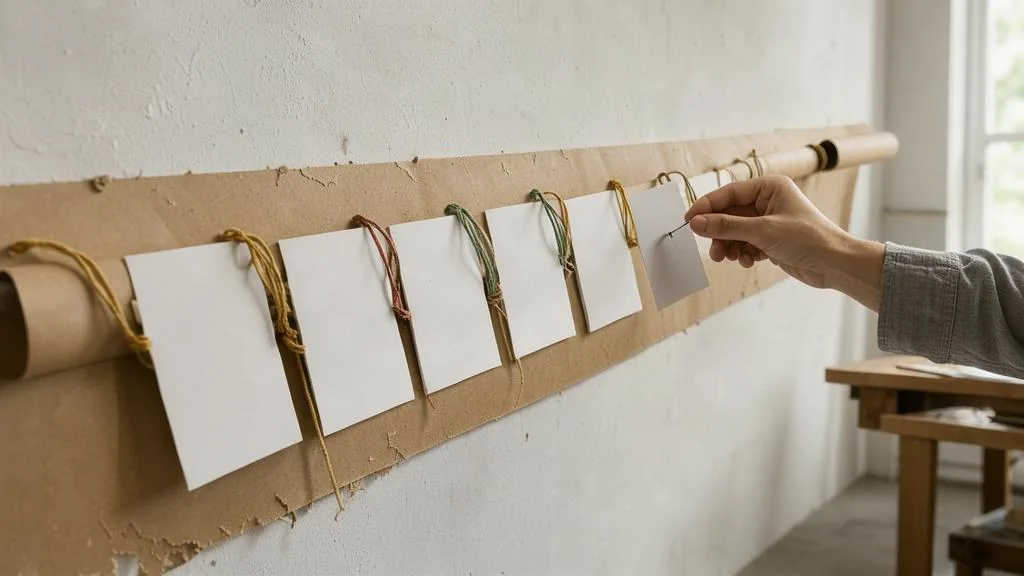
| Event | Usual buyer | What success looks like | Acts that fit |
|---|---|---|---|
| Holiday party | HR, an office manager or a social committee | Staff stay, mix across teams and talk about it on Monday | Bands, DJs, strolling acts, caricaturists, interactive games |
| Client appreciation or VIP reception | Sales or marketing | Clients stay longer and talk to the account team | Close-up magic, mentalism, small ensembles, live artists |
| Conference or sales meeting | An events team or an agency | Energy after lunch, a memorable opening or closing, a message reinforced | Keynote entertainers, comedians who customize, stage acts |
| Product launch | Marketing | Media and social coverage, a moment people film | Visual spectacle, aerial, projection, custom routines |
| Trade show booth | Marketing or the exhibit manager | More visitors stopping, more qualified leads scanned | Magicians, mentalists, caricaturists, interactive performers |
| Family day or summer picnic | HR or a social committee | Families attend and children are entertained | Face painters, balloon artists, roving acts, children’s shows |
On your website and in your kit, describe your act in the buyer’s terms. A trade show marketer does not want a magic show. They want people to stop, stay for three minutes and agree to a badge scan.
Trade shows: selling the booth draw
At a trade show, the exhibitor has paid for floor space, a booth build, travel and staff time, and needs leads to justify it. A good booth performer gathers a crowd, holds it while sales staff qualify people, weaves in the client’s message and hands the crowd to the sales team at the end of each set.
Design the act around that hand-off.
- Short cycles. Sets of eight to twelve minutes, repeated through the day, so the crowd turns over and staff can scan badges between sets.
- The message in the act. Build one routine around the client’s key benefit. A mentalist who predicts the problem the client’s software solves is more useful than one who predicts a playing card.
- The hand-off line. End each set by sending people to a named staff member or a demo station: Sam at the demo table has a two-minute version of what you just saw.
- Respect the floor. Keep within the booth’s footprint and the show’s noise rules. Crowds that block the aisle or neighbouring booths cause complaints to the organizer.
Worked example: the cost-per-lead argument
The figures here are illustrative. A software company exhibits at a three-day industry show in Toronto. Its booth, travel and staff cost $38,000. Last year, without entertainment, staff scanned 300 badges, of which the sales team judged 90 to be qualified. That is about $422 per qualified lead.
A booth magician quotes $2,200 a day, all-in before HST, or $6,600 for three days. With the magician drawing crowds, staff scan 520 badges, and 150 are qualified. Total cost is now $44,600, and the cost per qualified lead falls to about $297.
The magician did not just add entertainment; he reduced the cost of each qualified lead by about $125. Present your fee this way to marketing buyers, using their numbers where they will share them. Then ask for their lead counts after the show, so you have real results for the next proposal, with the client’s permission to share them in general terms.
Paperwork that marks you as professional
Corporate buyers work inside systems. Make it easy for them to say yes inside those systems.
- A written quote on letterhead with an all-in fee, HST shown and a quote number
- A certificate of liability insurance, ready to send the same day
- Your HST number and full legal business name for vendor set-up
- A short supplier profile: what you do, years in business, similar clients, and your banking details only through the client’s secure onboarding process
- Payment terms you can accept, such as a deposit on signing and the balance within 30 days of the event
- Exhibitor credentials or a contractor badge arranged through the client for trade shows
Expect to wait longer for payment from large companies. Build that into your cash flow and your deposit policy rather than chasing it angrily.
Customizing without overcommitting
Corporate clients love a routine that mentions their company, product or award winners. Price customization as a separate line, set a deadline for the client’s information, and agree how much of the show will change. Never promise to use a logo, product image or slogan in your own marketing afterwards unless the client agrees in writing.
After the event: the corporate follow-up
Corporate clients rebook more reliably than almost any other buyer, because the same events recur every year and the person who booked you has to fill the same slot again. The follow-up is where that rebooking is won.
- Within two days. Thank the contact by email. Mention one specific moment from the event, such as the vice-president who volunteered on stage. Attach two or three photos you are allowed to share, credited to the photographer.
- Within two weeks. Ask one or two short questions: did the act do what you hoped, and is there anything you would change next year? For trade shows, ask for their badge counts compared with the previous show.
- Two to three months before next year’s date. Write again with a fresh idea for the same event: a new routine, a different format or a second performer for a larger room. Offer to hold the date.
- When your contact leaves. Corporate event staff change jobs often. When an email bounces, find out who replaced them and introduce yourself, then follow your old contact to their new company too.
Keep each corporate client’s event dates, budget, contacts and notes in your tracker. A client who books you for a holiday party and a summer family day every year can be worth more than a dozen one-off weddings.
In Canada and the GTA
The GTA corporate calendar. Downtown Toronto’s convention centres and hotels host industry trade shows, association conferences and sales meetings through spring and autumn, with fewer in July, August and late December. Holiday parties are booked from late summer through October for dates in late November and December, and many companies now hold them in January when venues are cheaper. Fiscal years shape budgets: many companies plan events when the next year’s budget is approved, and some spend remaining budget near their year end. Ask a corporate client when their fiscal year ends; it tells you when to call. Mississauga, Markham, Vaughan and the airport hotel strip host many corporate events for head offices in the suburbs, often on weekday evenings.

Contact details you collect at trade shows. If you walk a trade show to meet exhibit managers, the CRTC says a business card someone hands you can support implied consent to email them, provided the card carries no instruction not to contact them. The CRTC suggests confirming it with a follow-up email that mentions the conversation and date. That email is itself a commercial electronic message, so it needs your business name, mailing address and contact details, and a working unsubscribe link. See the CRTC’s guidance on implied consent.
Leads collected in the booth belong to the exhibitor. When you help an exhibitor gather contact details, the exhibitor is the organization collecting personal information under PIPEDA, and its purposes must be clear to visitors. Do not keep copies of those leads or contact them for your own business. If a client asks you to run a draw or a quiz, let the exhibitor handle the form and the consent wording.
Posting about corporate clients. If a company pays you or gives you something of value to post about its product or event on your own social channels, that is a material connection under Ad Standards’ Influencer Marketing Disclosure Guidelines. Disclose it at the start of the caption with a clear label such as #ad or #sponsored, and in the video itself in audio and on-screen text within the first 30 seconds. Simply tagging the brand is not enough. The guidelines give the full list of acceptable labels.
Accessibility. Under the AODA’s Customer Service Standard, organizations in Ontario with one or more employees must provide accessible customer service, which includes welcoming support persons and service animals and providing information in accessible formats on request. Corporate clients increasingly ask how an act can include guests with disabilities. Have an answer: seated participation, a volunteer role that does not require coming on stage, captions on any video segment, or a quieter version for sensory-sensitive guests.
Unions and venue rules. Some large downtown venues and convention centres use unionized stage labour or have exclusive suppliers for rigging, power and audio-visual work. Your client’s exhibit manager or event planner will know the rules. Ask before you arrive with a rigging point or a power cable. Exhibitor manuals for large shows often set rules on sound levels, open flame, haze, demonstrations that block aisles and who may work in a booth, so ask your client for the manual early and read the sections that apply to performers. Breaking a show rule can embarrass your client in front of the organizer, which is the opposite of what they hired you for.
Bilingual events. National companies with Ontario and Quebec staff may want a bilingual MC or segments in French. If you can perform in French, say so prominently; it is a real point of difference for national sales meetings.
This is general information, not legal advice. Check the official source or a lawyer for your own situation.
Worksheet
Download the worksheet and complete it for your own business, using Lantern & Lane as the model where it helps. Keep it with your marketing plan. It takes about 10 minutes.
Check your understanding
Related guides, venues and vendors
Trade show venue guide
Trade Shows & Booth Activations
What the Toronto and GTA exhibition venues mean for an exhibitor: load-in, docks, ceiling heights, labour rules, parking, hotels and the questions…
Read more
Trade show planning timeline
Trade Shows & Booth Activations
Twelve months out to thirty days after: when to book space, order show services, brief the booth team and follow up leads.
Read more
Trade show checklist
Trade Shows & Booth Activations
The printable exhibitor checklist from space contract to the 30-day ROI review. Progress saves in your browser.
Read more