What you will be able to do
- Set response-time targets for each inquiry channel and a plan to meet them on event days
- Write a first reply that answers, qualifies and proposes a next step
- Calculate what slow responses cost your business in lost bookings
An inquiry is a buyer at their most interested. They have a date, a guest count and a tab open with three other vendors. The vendor who replies first, clearly and personally, usually gets the conversation. The others get a polite “we went another way”, if they hear back at all. Speed to lead is the habit of answering fast and well, every time.
Read the transcript
Speed to lead: answering inquiries.
An inquiry is a buyer at their most interested.
They have a date, a guest count and a tab open with three other vendors.
Why speed wins.
Event buyers rarely contact just one vendor.
A couple looking for a DJ will message several.
Targets by channel.
Set a target for each channel and write it down.
Then measure yourself against it for a month.
The first reply.
A good first reply does three things: it answers the question that was asked, it asks the two or three questions you need to quote, and it proposes one clear next step.
Copy this template for email and adapt it.
Auto-replies that help.
An instant automated email is useful when it confirms the inquiry arrived and tells the buyer exactly what happens next.
It is harmful when it pretends to be personal or replaces a real reply.
Covering event days and peak season.
The hardest time to answer quickly is when you are working an event, which in peak season might be three days a week.
In a two-person business, one person covers the inbox on days the other is on site. Lantern and Lane rotates: whoever is not leading the event checks messages at 10 a.m., 1 p.m. and 4 p.m.
That is the lesson. The worksheet and the quiz are just below this video.
Why speed wins
Event buyers rarely contact just one vendor. A couple looking for a DJ will message several. An office manager will email three caterers in one sitting and book whichever sends a sensible quote first, because their boss wants an answer by Friday. When you reply quickly, three things happen. You catch the buyer while the event is top of mind. You set the tone as the organized, responsive choice, which is exactly what they want from an event vendor. And you often get to frame the comparison, because yours is the quote they read first.
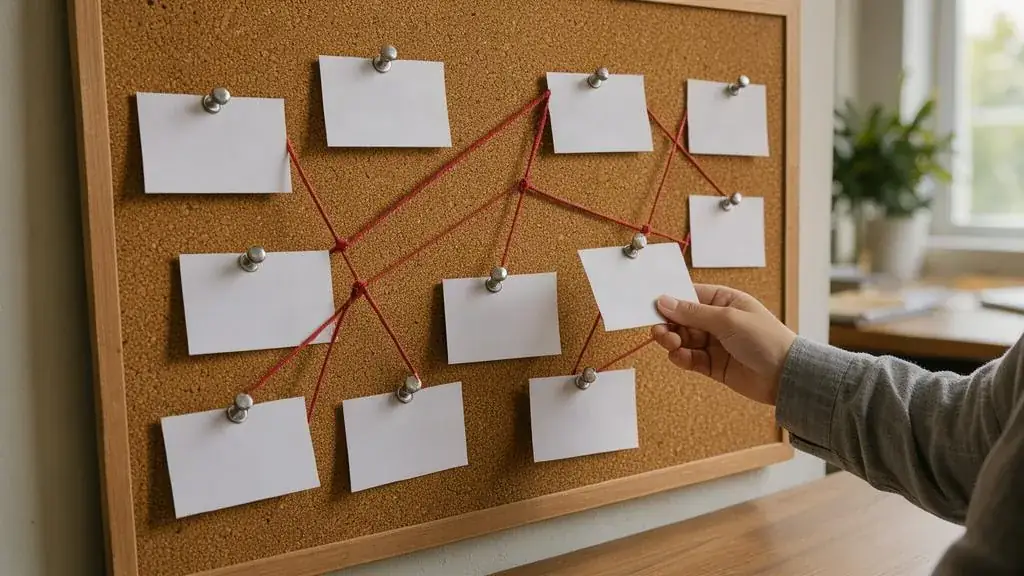
Speed does not mean a rushed or generic reply. A fast reply that asks the right questions beats a slow reply that answers everything, and both beat a fast reply that is obviously automated.
Targets by channel
Set a target for each channel and write it down. Then measure yourself against it for a month.
| Channel | Target for first response | Notes |
|---|---|---|
| Phone call | Answer live in business hours; return voicemails within 2 business hours | A caller is often the most urgent buyer, such as an event in weeks, not months |
| Website inquiry form | Within 2 business hours; same business day at the latest | An instant confirmation email sets expectations |
| Same business day | Corporate buyers often send at the start of the day | |
| DM on social media | Same business day | Move to email or a call within two messages |
| Listing platform or directory lead | Within 1 to 2 hours | These buyers are usually contacting several vendors at once |
| Partner referral | Same day, with a thank-you to the partner | Warm leads close at higher rates; do not let them cool |
“Business hours” should be stated on your website and in your auto-reply. If you work weekends because events happen on weekends, say when you answer messages and stick to it.
The first reply
A good first reply does three things: it answers the question that was asked, it asks the two or three questions you need to quote, and it proposes one clear next step. Copy this template for email and adapt it.

Subject: Your [event type] on [date]
“Hi [first name],
Thank you for getting in touch about your [event type] on [date]. Good news: we are available that day at the moment.
To put together an accurate quote, could you tell me:
- Roughly how many guests you expect
- Whether you have a venue yet, and if so which one
- The budget range you have in mind for [service]
If it is easier to talk it through, you can book a 15-minute call here: [link]. Most clients find it quicker.
[First name], [business name], [phone]”
Notice what is missing: no attachments, no full price list, no long story about your business. Those come later, when you know what the client needs. If your prices are public, add one line with your typical range so the client can self-qualify.
Auto-replies that help
An instant automated email is useful when it confirms the inquiry arrived and tells the buyer exactly what happens next. It is harmful when it pretends to be personal or replaces a real reply.
Auto-reply template. “Thanks, [first name]. We have your inquiry for [date]. Priya or Marco will reply personally by [time today or next business morning]. In the meantime, here is our planning guide and some recent events: [link]. If your event is within the next two weeks, please call us at [phone].”
The last line matters. It routes urgent buyers to the fastest channel instead of letting them wait.
Covering event days and peak season
The hardest time to answer quickly is when you are working an event, which in peak season might be three days a week. Plan for it.
- Split the role. In a two-person business, one person covers the inbox on days the other is on site. Lantern & Lane rotates: whoever is not leading the event checks messages at 10 a.m., 1 p.m. and 4 p.m.
- Use saved replies. Store the first reply, the auto-reply and your common answers so a good response takes two minutes on a phone.
- Book calls, not conversations. On a busy day, a reply that offers a call slot tomorrow is fast enough. You are capturing the lead now and qualifying it later.
- Hire help for peak months. A part-time assistant for May to October who answers first replies from a script often pays for themselves with one extra booking.
Measure your response time
You cannot improve a number you never look at. Add two fields to every lead in your CRM: the time the inquiry arrived and the time of your first personal reply. Once a month, work out the average gap and the longest gap. Then compare the booking rate of leads answered within your target with those answered late. Most businesses that do this for one season stop arguing about whether speed matters, because their own numbers settle it.
Worked example: the cost of slow replies
A wedding photographer in Hamilton, an illustrative business, receives 15 inquiries a month in season. She replies in two to three days because she is editing. She books 2 a month, at an average of $3,800, or $7,600.
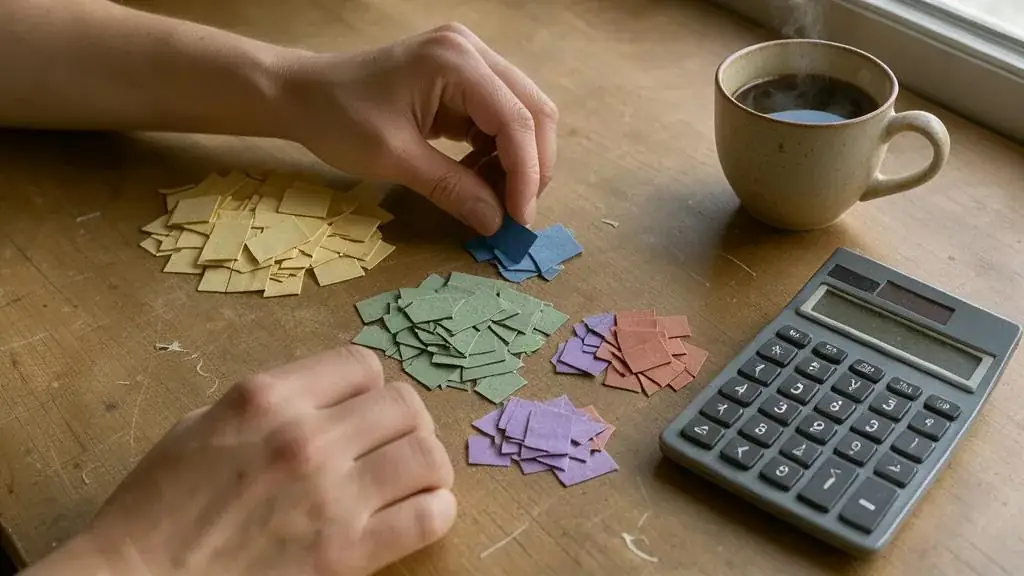
She sets a same-day target, uses a saved first reply and books calls. Over the next season, the inquiries stay at 15, but more turn into calls because she reaches couples before they have picked someone. She books 3 a month instead of 2. That extra booking is worth $3,800 a month, or $22,800 over a six-month season, for about 20 minutes a day of inbox discipline. These figures are an example; track your own response times and booking rate for a season to see the effect in your business.
In Canada and the GTA
Replies to inquiries and CASL. Canada’s Anti-Spam Legislation does not stop you answering the people who ask. The Electronic Commerce Protection Regulations exempt a commercial electronic message that is sent in response to a request, inquiry or complaint, or is otherwise solicited by the person to whom it is sent, from CASL’s consent, identification and unsubscribe requirements. Your first reply, your quote and the conversation that follows are covered. You can read the exemption in section 3 of the Electronic Commerce Protection Regulations.
The inquiry also starts a clock. Under CASL, an inquiry or application about your services creates an existing business relationship, and therefore implied consent, for 6 months from the inquiry. Record the inquiry date in your CRM as soon as it arrives. If the person does not book, you have six months to invite them to subscribe to your newsletter; after that, commercial emails need their express consent.
Text messages. Many GTA clients prefer texting, and replying by text to a client who texted you is part of the same conversation. If you send marketing texts later, they are commercial electronic messages. CASL allows the identification details to sit on a webpage reached by a clear link when space is limited, and the CRTC gives replying STOP as an acceptable way to unsubscribe.
Accessible ways to reach you. Ontario’s accessibility rules require organizations with one or more employees to provide accessible ways for people to give feedback, and to provide information in accessible formats on request. In practice, offer more than one channel. A client who is Deaf may prefer email or text to a phone call; a client with low vision may find a form difficult and prefer to call. List phone, email and form on your contact page and in your auto-reply. See Ontario’s accessibility rules for businesses.
Personal information in the first exchange. Inquiries often include more than you asked for: guest lists, health and dietary details, family situations. PIPEDA’s principle of limiting collection applies, so ask only for what you need to quote. Never ask for credit card numbers or identification by email or DM. Take payment through your normal payment channel once the client has the contract.
Local timing and expectations
Corporate buyers work office hours. In the GTA, many corporate event inquiries arrive on weekday mornings, and procurement-minded buyers expect a professional reply the same day. A planner who answers a Tuesday 9 a.m. email at 4 p.m. may already be behind a competitor who replied at 10.
Social buyers work evenings and weekends. Couples and families often send inquiries at night or on Sunday. An auto-reply that says when you will respond, followed by a personal reply first thing in the morning, is usually enough.
Long weekends and statutory holidays. Inquiries do not stop on Victoria Day or the Civic Holiday weekend, and wedding vendors are often working. Set an auto-reply that gives a realistic response time and a phone number for urgent dates.
Peak season arithmetic. Southern Ontario’s outdoor and wedding season runs from late spring to early fall, and corporate holiday parties fill November and December. These are the months when your inbox is busiest and you have the least time. Hire or schedule inbox cover before those seasons start, not in the middle of them.
Language. If an inquiry arrives in French or another language you do not speak, reply promptly to acknowledge it, use a translation tool to understand it, and confirm dates, guest numbers and prices in writing in the language your contract is written in, so there is never doubt about what was agreed.
Worksheet
Download the worksheet and complete it for your own business, using Lantern & Lane as the model where it helps. Keep it with your marketing plan. It takes about 10 minutes.

Check your understanding
Related guides, venues and vendors
Venues as a lead source
Specialist Track: Marketing for Event Planners · 20 min
Venue coordinators meet couples and companies months before anyone else, and the planners they mention get the first call. Learn what venues…
Read more
Module 10 workshop: an inquiry-to-booking pipeline
Module 10: Email, CRM and Follow-Up · 15 min
A step-by-step workshop that builds a complete inquiry-to-booking pipeline for your business: stages, CRM fields, an inquiry form with consent, first replies,…
Read more
Photos, video and page speed
Module 6: A Website That Books · 15 min
Photos and video sell event services better than words, but heavy pages lose visitors on phones. Learn which images to use, three…
Read more