What you will be able to do
- Identify the signals a price sends about quality, audience and risk in a service business
- Calculate how many bookings you can lose at a higher price and still earn the same contribution
- Align the number, format and presentation of your prices with your chosen position
Clients cannot test-drive a wedding, a corporate gala or a magic show. They have to judge you before the event happens, with very little to go on. Your price is one of the few hard facts they can see, so they read it as evidence. Set it carelessly and it will say things about you that your website, your photos and your reviews then have to argue against.
Read the transcript
Price is a marketing message.
Clients cannot test-drive a wedding, a corporate gala or a magic show.
They have to judge you before the event happens, with very little to go on.
Why clients read price as a signal.
Event services are what marketers call credence goods: the buyer cannot judge the quality properly until after the money is spent, and sometimes not even then.
A couple booking a planner in March will not know until October whether she was worth it.
The three layers of a price.
A price communicates through more than the number.
Think of it in three layers.
What different prices say.
Use this table to check what your current pricing is saying on your behalf.
Worked example: what a higher price really costs you.
Lantern and Lane, our two-person planning studio in Toronto's west end, sells a wedding day-of coordination package.
Marco has been pricing it at 1,400 dollars because that felt safe.
Matching your price to your position.
Before you change a single number, run this checklist.
Can you name the client you most want, and does your price sit where that client expects to pay?
That is the lesson. The worksheet and the quiz are just below this video.
Why clients read price as a signal
Event services are what marketers call credence goods: the buyer cannot judge the quality properly until after the money is spent, and sometimes not even then. A couple booking a planner in March will not know until October whether she was worth it. A procurement officer hiring a keynote entertainer has never seen the act in that room, with that audience.
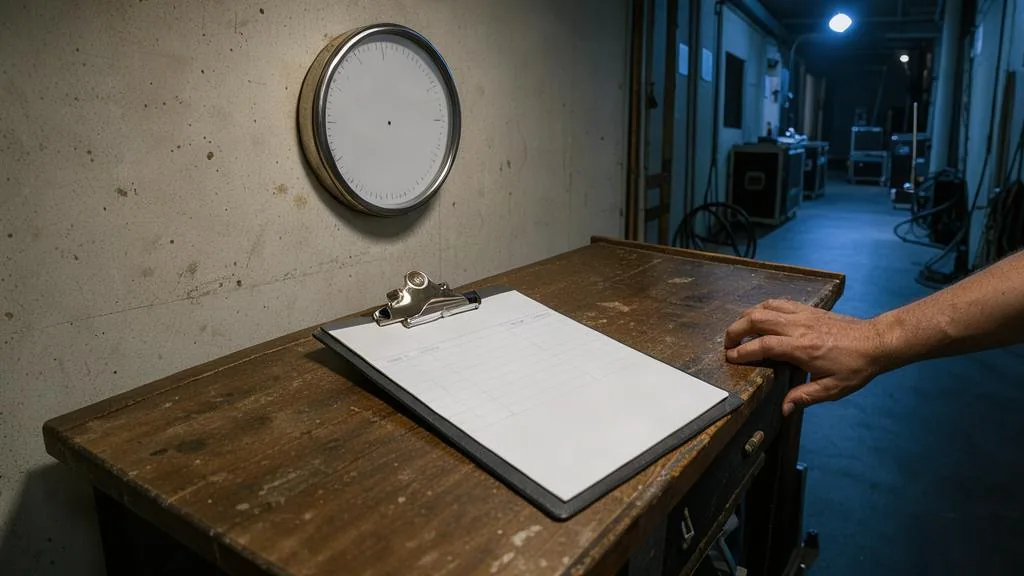
When quality is hard to judge, people use shortcuts. Price is the most powerful one. A low price suggests a beginner, a side business or a corner being cut somewhere. A high price suggests experience, demand and confidence. Neither is always true, but clients act as if it is, and you have to market to how they behave.
This works in both directions. A price that is too high for your proof feels like a bluff. A price that is too low for your proof makes people suspicious. The goal is a price that your portfolio, reviews and process can visibly support.
The three layers of a price
A price communicates through more than the number. Think of it in three layers.
- The number. The amount itself, and how it compares with what the client expected. Round numbers ($2,500) read as considered and premium. Precise numbers ($2,437) read as calculated, which suits a caterer quoting per head but looks odd on a planning fee.
- The format. A single flat fee, a range, a per-person rate, an hourly rate or a “starting from” figure. Hourly rates invite the client to count your hours. Flat fees invite them to judge the outcome. Per-person pricing makes guest count the client’s problem, which is fair for food and drink but awkward for a DJ.
- The presentation. Where the price appears, what sits next to it, and what it is compared with. A price listed after three paragraphs about outcomes reads differently from the same price at the top of a bare table.
What different prices say
Use this table to check what your current pricing is saying on your behalf.

| Pricing choice | What the client tends to read | Who it attracts |
|---|---|---|
| Lowest price in your category | New, hungry, possibly risky | Price shoppers who will leave for the next cheaper option |
| Middle of the market, no explanation | Ordinary, interchangeable | Clients who compare you line by line with everyone else |
| Above the market, with clear proof | Experienced, in demand, safe | Clients who care most about the outcome and least about the saving |
| “Contact us for pricing” only | Expensive, or hiding something | Clients who are already sold, and fewer cold inquiries |
| A starting price plus packages | Transparent and organized | Clients who want to self-qualify before they call |
Worked example: what a higher price really costs you
Lantern & Lane, our two-person planning studio in Toronto’s west end, sells a wedding day-of coordination package. Marco has been pricing it at $1,400 because that felt safe. Priya thinks it undersells them.
First they work out the direct costs of one booking: an assistant for 10 hours at $30 an hour ($300), travel and parking ($60), and printing and supplies ($40). Total direct cost: $400. At $1,400, each booking contributes $1,000 toward rent, software, marketing and their own pay. Last year they sold 6, so the package contributed $6,000.
Now test $1,900. Each booking contributes $1,500. To earn the same $6,000 they need 6,000 divided by 1,500, which is 4 bookings. So they could lose two of their six bookings, a third, and still earn the same, while working two fewer Saturdays. If they keep even 5 bookings, the package contributes $7,500.
The general formula is worth keeping:
- Contribution per booking = price minus direct costs.
- Break-even bookings at the new price = current total contribution divided by new contribution per booking.
- Bookings you can afford to lose = current bookings minus break-even bookings.
A performer can run the same test. A magician charging $450 for a one-hour set with $50 of travel and props contributes $400. At $650 he contributes $600, so 30 bookings at the old price ($12,000) equal 20 at the new one. A third fewer shows for the same money, and more time to sell to corporate clients who expect the higher figure anyway.
The arithmetic does not tell you the market will accept the new price. It tells you how much room you have to find out.
Matching your price to your position
Before you change a single number, run this checklist.

- Can you name the client you most want, and does your price sit where that client expects to pay?
- Does your proof support the price: photos of comparable events, reviews that mention outcomes, credentials or press?
- Is the format right for your category? Per-person for food, flat fees for planning and performance, collections for photography.
- Is the price the same everywhere it appears: website, listing platforms, social profiles and old PDFs?
- Do you explain what is included before the client sees the number?
- Would you be comfortable saying the price out loud on a call without apologizing for it?
That last question matters more than it looks. Clients hear hesitation. A price you believe in, stated plainly, is part of the message.
A script for saying the price
Many vendors lose the sale in the ten seconds after the client asks “So what does it cost?” They ramble, offer a discount nobody asked for, or bury the number in qualifications. Practise a short, calm answer that puts the outcome first and the number second, then stops.
Marco’s version for the coordination package: “For a wedding your size, day-of coordination is $1,900 plus HST. That covers a planning meeting six weeks out, the full timeline, vendor confirmations the week before, and Priya and an assistant on site from set-up until the last vendor leaves. Would you like me to send the details in writing?”
Then he stops talking. Silence after a price is not rejection. It is the client thinking, and anything you add usually lowers the price in their mind.
In Canada and the GTA
The Greater Toronto Area is one of the most expensive places in Canada to run an event business. Rent, insurance, vehicle costs, parking and wages are all higher than in most of Ontario, and your price has to carry them. A price copied from a template written for a smaller market, or from a competitor who works from a parent’s basement, will not carry your costs. Work from your own numbers.
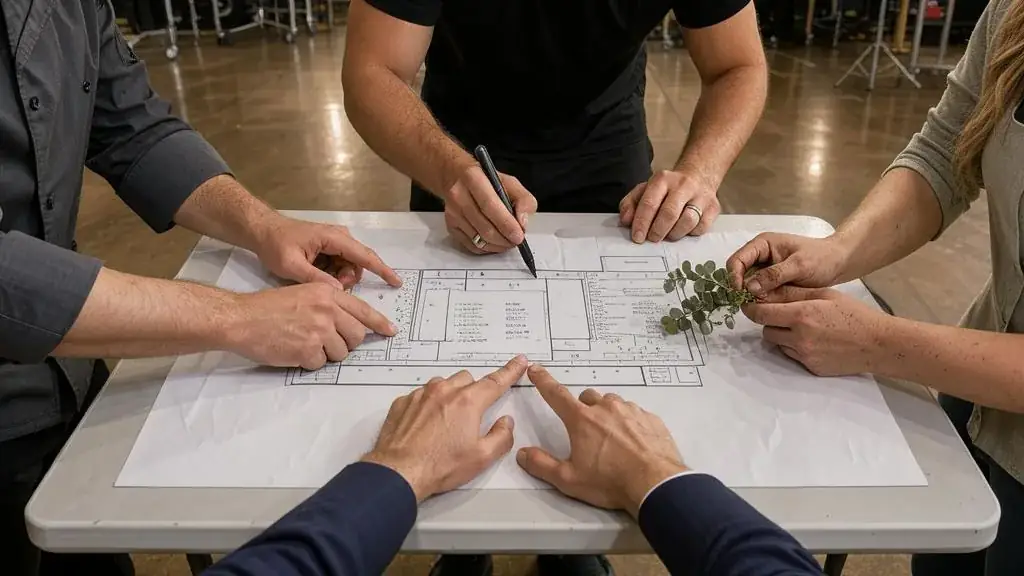
The GTA is also several markets sharing one map. A planner working with downtown corporate clients, a caterer serving large multi-day South Asian weddings in Peel and York, and a photographer focused on intimate elopements in the Annex or the Beaches are selling to different buyers with different expectations. Price to the segment you choose, not to an imaginary average Toronto client.
HST is part of the message. Ontario’s HST rate is 13 percent. Once you are registered, how you show it changes what the client hears. The CRA allows you to tell the customer that the total includes GST/HST, show the HST amount separately, or show the rate. Where HST applies, show the combined 13 percent rate rather than splitting it into federal and provincial parts. Corporate buyers expect to see HST as a separate line because they can usually claim it back. Couples paying from their own savings feel the full total, so a $3,000 quote that becomes $3,390 at the end can feel like a surprise unless you say “plus HST” from the start.
If your worldwide taxable sales are $30,000 or less in any single calendar quarter and over the last four consecutive quarters, the CRA treats you as a small supplier and you do not have to register. Many new performers and solo vendors sit below that line and quote without HST. If you cross it, you must register within 29 days, and your prices to consumers effectively rise by 13 percent overnight unless you absorb it. Plan for that moment before it arrives, so the jump does not undo the positioning you have built. The CRA’s guide for registrants sets out the details: General Information for GST/HST Registrants.
Price claims are regulated. Under the federal Competition Act it is reviewable conduct to make a representation to the public that is false or misleading in a material respect. That covers prices. If you use a price to signal value, such as “regularly $2,500, now $1,900”, the regular price must be genuine. The Competition Bureau’s ordinary selling price guidance says either more than half of your sales were at that price or higher within a reasonable period, usually within a year, or you offered it in good faith at that price for a substantial period. A made-up “regular” price is a misleading message, not a clever one. The lessons on all-in pricing and on discounts later in this module cover the rules in full.
GTA practice notes
Corporate clients in Toronto often set event budgets once a year, in line with their fiscal year, and then look for vendors who fit the line already approved. If your price is far outside what they budgeted, you rarely get a chance to argue. Ask early: “Has a budget been set for this, and roughly where does it sit?”
Wedding couples in the GTA tend to shop most heavily in the months after the holiday engagement season and around the major bridal shows in the winter and early spring. That is when your price is compared most directly with others, so make sure your proof is current and your packages are clear before January.
Watch for the pull of the listing platforms. The Knot, WeddingWire and Zola let couples filter by price band. A price set just above a common band edge can hide you from the clients you want, while one set just inside can put you in front of the wrong ones. Check how your listing appears in a search before you publish a new rate.
Finally, remember that a price is easier to raise for new clients than for existing ones. When you change your rates, honour quotes already sent, give past clients notice, and start the new price with the next inquiry. That keeps trust intact while the message changes.
Worksheet
Download the worksheet and complete it for your own business, using Lantern & Lane as the model where it helps. Keep it with your marketing plan. It takes about 10 minutes.

Check your understanding
Related guides, venues and vendors
The message house: headline, pillars and proof
Module 4: Brand, Identity and Messaging · 15 min
A message house organizes everything you say into one headline, three supporting pillars and the proof beneath each. Learn to build one,…
Read more
Module 5 workshop: a three-tier price sheet
Module 5: Pricing, Packages and Proposals · 15 min
Build a one-page, three-tier price sheet for your own business, step by step. Find your hourly floor, check every tier against it,…
Read more
Gala budget guide: GTA price ranges
Galas & Award Nights
What a Toronto gala costs by category, with typical GTA ranges and the Harbour Gala's real envelope worked line by line.
Read more