A gala budget has two sides and most first-time committees only build one. The cost side tells you what the night costs; the revenue side tells you whether it was worth holding. The ranges below are typical GTA ranges, before HST, for a 150–300 guest gala in a downtown hotel ballroom.
Read the transcript
Gala budget guide: GTA price ranges.
A gala budget has two sides and most first-time committees only build one.
The cost side tells you what the night costs; the revenue side tells you whether it was worth holding.
Cost side: typical GTA ranges.
The Harbour Gala, worked.
The Harbour Gala had an original envelope of 25,000, dollars raised to 40,000 dollars when table sponsors came in.
The biggest line was the hotel: an 18,000 dollars food and beverage minimum, which became roughly 24,000 dollars once the 18 percent service charge and 13 percent HST were added.
Revenue side.
A gala's revenue comes from five places: sponsorship, table and ticket sales, the ask (paddle raise or fund-a-need), auctions, and, for eligible charities with a licence, raffles.
In our experience the ask and the sponsorship together do most of the work; tickets often only cover the cost of the dinner.
Four rules for a gala budget.
Build the net, not the gross. The board will ask what the gala raised; the right answer is what it netted after every cost, including staff time if you can count it.
Add the 18 percent service charge and the 13 percent HST to every food and beverage quote before comparing venues.
Award nights for staff.
If the award night is an employer event for employees, the CRA treats an employer-provided social event as a non-taxable benefit only if it is open to all employees and costs 150 dollars per person or less, including taxes, excluding transport home and overnight accommodation, with a limit of six events a year.
If the cost exceeds 150, dollars the whole amount becomes a taxable benefit, not just the excess.
Where committees overspend.
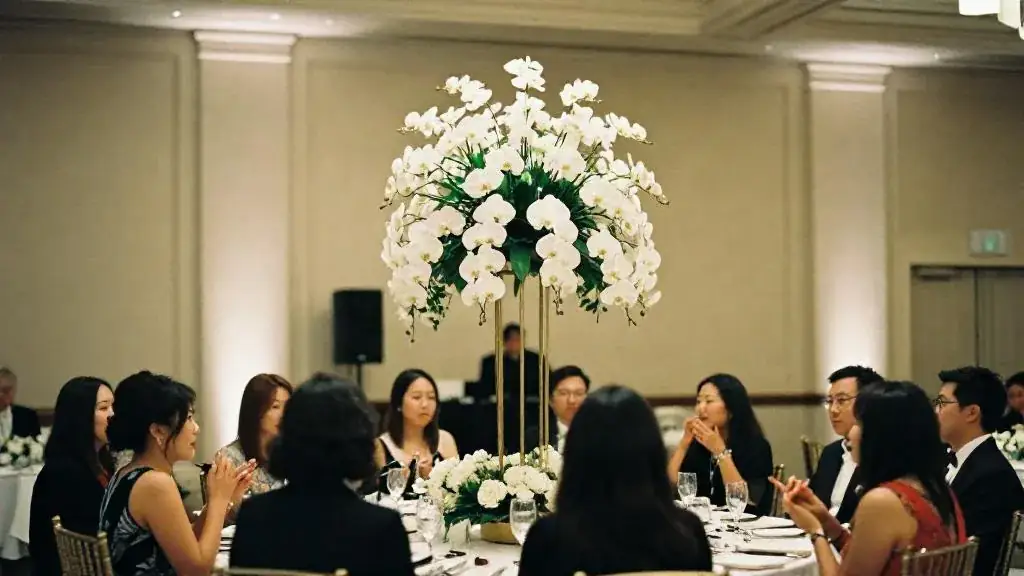
Tall florals that block the stage, printed programs nobody reads, favours left on the tables and a band booked for four hours when the dance floor empties after two.
Every one of those dollars comes off the net.
The full guide, with tables and checklists, continues below this video.
Cost side: typical GTA ranges
| Category | Typical GTA range, before HST | Notes |
|---|---|---|
| Downtown hotel dinner, per plate | $95–$180 | Typical GTA range, 2026; add the 18% service charge |
| Banquet hall dinner, per plate | $65–$120 | Typical GTA range, 2026; before tax and service |
| Bar, per guest | $30–$70 | Hosted wine with dinner and a cocktail-hour bar |
| AV and lighting | $4,000–$15,000 | Stage, sound, screens, a stage wash and room lighting; house supplier rules apply |
| Uplighting, 20 fixtures | $600–$1,200 | Typical GTA range, 2026 |
| Stage illusionist or mentalist, 30–45 min | $1,500–$5,000 | Typical GTA range, 2026 |
| Close-up magician, 2 hours | $600–$1,500 each | Typical GTA range, 2026 |
| DJ | $900–$2,500 | Typical GTA range, 2026 |
| Live band, 4-piece | $2,500–$6,000 | Typical GTA range, 2026 |
| Photographer, 6–8 hours | $1,500–$4,000 | Typical GTA range, 2026; you need the photos for stewardship |
| MC or auctioneer | $0–$5,000 | Volunteer media personalities are common; professional auctioneers often pay for themselves |
| Décor and florals | $2,000–$12,000 | Lighting does more per dollar than florals |
| Print, signage, program | $800–$3,000 | |
| Planner | $3,500–$15,000 | Flat fee or a percentage; the Harbour Gala’s planner charged $4,500 flat |
| Event insurance (one-day liability $2–5M) | $150–$400 | Typical GTA range, 2026 |
The Harbour Gala, worked
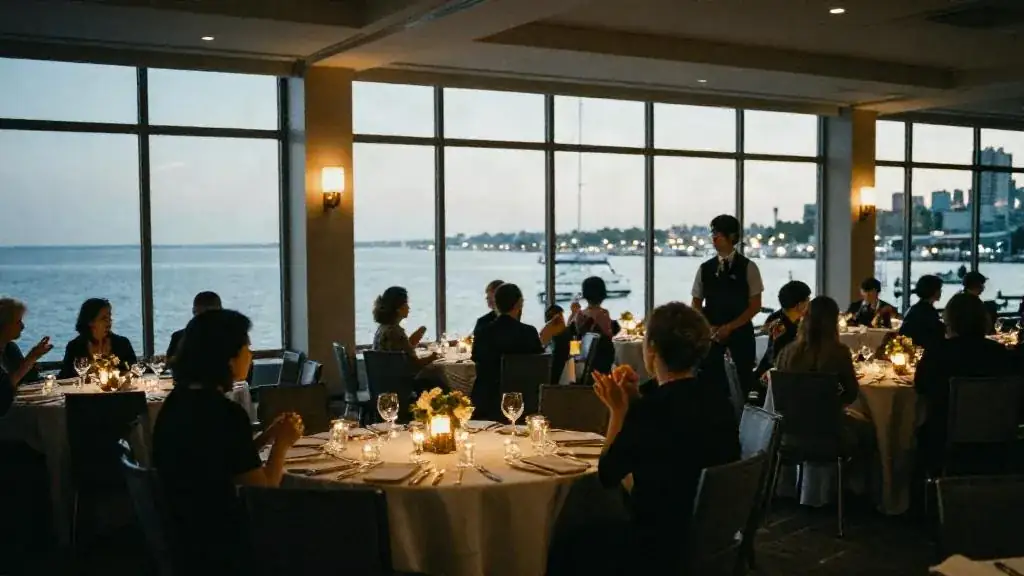
The Harbour Gala had an original envelope of $25,000, raised to $40,000 when table sponsors came in. The biggest line was the hotel: an $18,000 F&B minimum, which became roughly $24,000 once the 18% service charge and 13% HST were added. Remember that the service charge is itself taxable. That left about $16,000 for everything else. The committee spent it roughly like this: AV and lighting about $6,000; the mentalist and two strolling magicians about $4,500 together; the planner’s $4,500 flat fee; and the remaining $1,000 on print, signage and photography from a volunteer. Décor was the hotel’s linens, uplighting inside the AV line, and low centrepieces donated by a florist sponsor. Every number here was quoted before HST and checked again after it.
Revenue side
A gala’s revenue comes from five places: sponsorship, table and ticket sales, the ask (paddle raise or fund-a-need), auctions, and, for eligible charities with a licence, raffles. In our experience the ask and the sponsorship together do most of the work; tickets often only cover the cost of the dinner. Price tickets so each seat at least covers its plate, bar and service charge. For the Harbour Gala, the per-guest cost of food and drink alone was about $120 all-in, so a single ticket under that would have lost money before the program started.
Four rules for a gala budget

- Build the net, not the gross. The board will ask what the gala raised; the right answer is what it netted after every cost, including staff time if you can count it.
- Compare quotes all-in. Add the 18% service charge and the 13% HST to every food and beverage quote before comparing venues.
- Ask sponsors to cover costs, not just appear. A sponsor who underwrites the wine or the entertainment frees the gross for the cause, and it is a visible moment they can own.
- Keep a contingency of 8–10%. It is spent on last-minute AV changes, extra seats for a sponsor, and the volunteer dinner nobody budgeted.
Award nights for staff
If the award night is an employer event for employees, the CRA treats an employer-provided social event as a non-taxable benefit only if it is open to all employees and costs $150 per person or less, including taxes, excluding transport home and overnight accommodation, with a limit of six events a year. If the cost exceeds $150, the whole amount becomes a taxable benefit, not just the excess. A downtown hotel dinner with a bar and entertainment can pass $150 quickly; model it in the event budget calculator before you sign.
Where committees overspend
Tall florals that block the stage, printed programs nobody reads, favours left on the tables and a band booked for four hours when the dance floor empties after two. Every one of those dollars comes off the net. Spend instead on sound that reaches the back tables, lighting that lifts the room at the ask, and photography good enough for the sponsor report.
Build the full sheet in the event budget sheet and test whether the gala earns its keep in the event ROI calculator.
Related guides, venues and vendors
Edmonton Convention Centre
Edmonton · 300+ guests
Edmonton's downtown convention centre, built into the river valley below Jasper Avenue, with an 80,000 sq ft hall, a Riverview Room and…
Read more
Related articles & tools
Galas & Award Nights
Articles, tools and Academy lessons for galas and award nights in Toronto and the GTA, in the order planners use them.
Read more
The Royal Conservatory – Koerner Hall (TELUS Centre for Performance and Learning)
Toronto, Yorkville · up to 400 guests
Koerner Hall is a concert hall inside the TELUS Centre for Performance and Learning.
Read more