At a gala, entertainment works for the ask. Its job is to fill the gaps where a room loses energy, then hand the stage to the person asking for money with every guest looking forward and paying attention.
Read the transcript
Gala entertainment ideas.
At a gala, entertainment works for the ask.
Its job is to fill the gaps where a room loses energy, then hand the stage to the person asking for money with every guest looking forward and paying attention.
Cocktail hour (6 to 7 p.m.).
Guests arrive in a trickle, many of them knowing only their own table.
Roaming acts give strangers a reason to talk.
Dinner (7 to 9 p.m.).
No stage act during meal service.
Servers need the aisles and guests need to talk.
The set before the ask.
This is the most important entertainment booking of the night.
A 15 to 25 minute stage set immediately before the paddle raise pulls the room's attention to the stage, gets people laughing together, and leaves them seated, facing forward and in a generous mood when the auctioneer walks on.
After the ask.
A band or a DJ for dancing, or a dessert reception with a jazz trio for an older crowd.
Live auction results and the paddle total announced once, by the MC, before the music starts.
Award nights.
An award night has no ask, but it has the same energy problem in a different place: the middle of the awards block.
A short stage set at the halfway point, or a performer who links the categories, keeps a long list of winners from blurring together.
Timing rules.
Roaming acts during cocktails and gaps; stage acts only when the room is seated and not eating.
Stage set of 20 to 45 minutes at a gala; 15 to 25 if it leads into the ask.
The full guide, with tables and checklists, continues below this video.
Cocktail hour (6–7 p.m.)
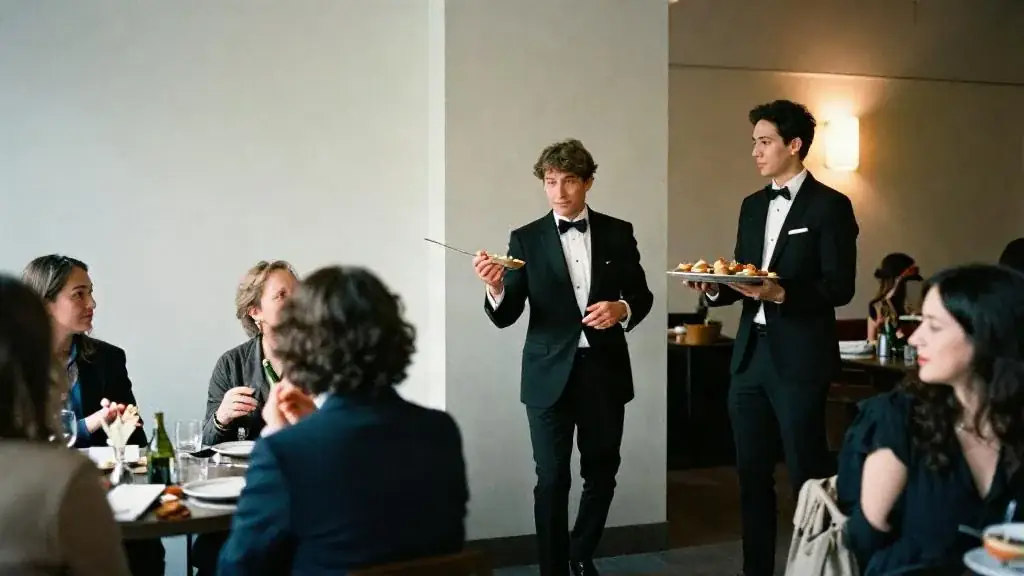
Guests arrive in a trickle, many of them knowing only their own table. Roaming acts give strangers a reason to talk. Plan one roaming performer per 40–60 guests: a close-up magician, a caricaturist, a string duo by the bar. At the Harbour Gala, two strolling magicians worked the 200 guests through cocktails and stayed on for the 25-minute gap between doors to the ballroom and first plate, the stretch where a seated room otherwise goes flat. See strolling act.
Dinner (7–9 p.m.)
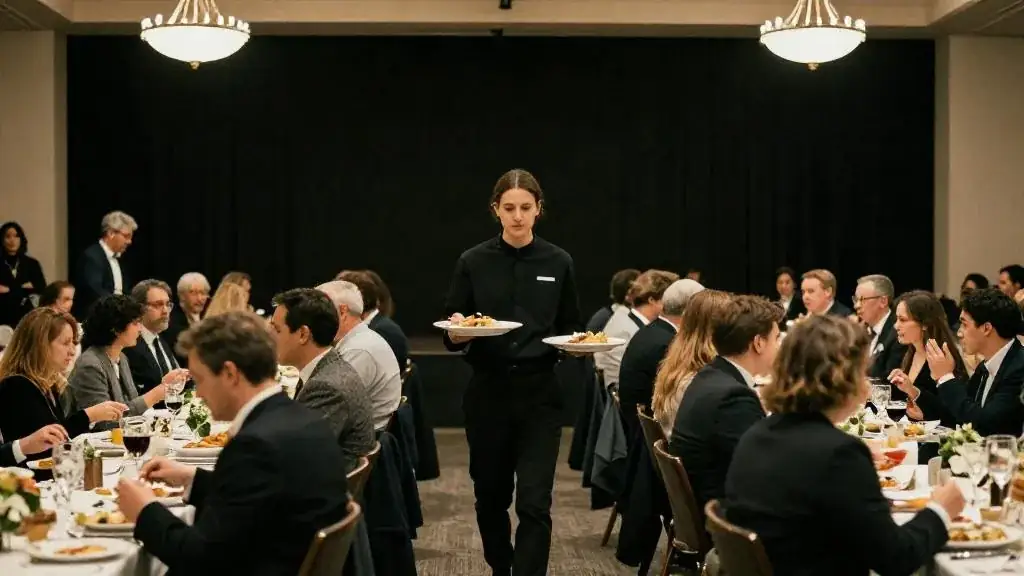
No stage act during meal service. Servers need the aisles and guests need to talk. The program during dinner is short: a welcome from the chair, one beneficiary story with a short video, a sponsor thank-you, each under six minutes and placed between courses. Background music from a trio or a DJ at conversation level.
The set before the ask
This is the most important entertainment booking of the night. A 15–25 minute stage set immediately before the paddle raise pulls the room’s attention to the stage, gets people laughing together, and leaves them seated, facing forward and in a generous mood when the auctioneer walks on. The Harbour Gala booked a mentalist for exactly this slot: mentalism uses guests from the tables, works under ballroom lighting without rigging, and suits a 4.9 m ceiling that would not take an aerial act. The MC introduced the act, the act ended on a strong moment, and the MC moved straight into the ask without a break.
Other acts that work in this slot: a stage illusionist if the stage and backstage space allow, a short aerial spectacle if the venue has the height and a certified rigging point (see rigging), or a short performance tied to the cause, such as a youth choir for a children’s hospital.
After the ask
A band or a DJ for dancing, or a dessert reception with a jazz trio for an older crowd. Live auction results and the paddle total announced once, by the MC, before the music starts. For award nights, the band can play walk-up stings for each winner.
Award nights
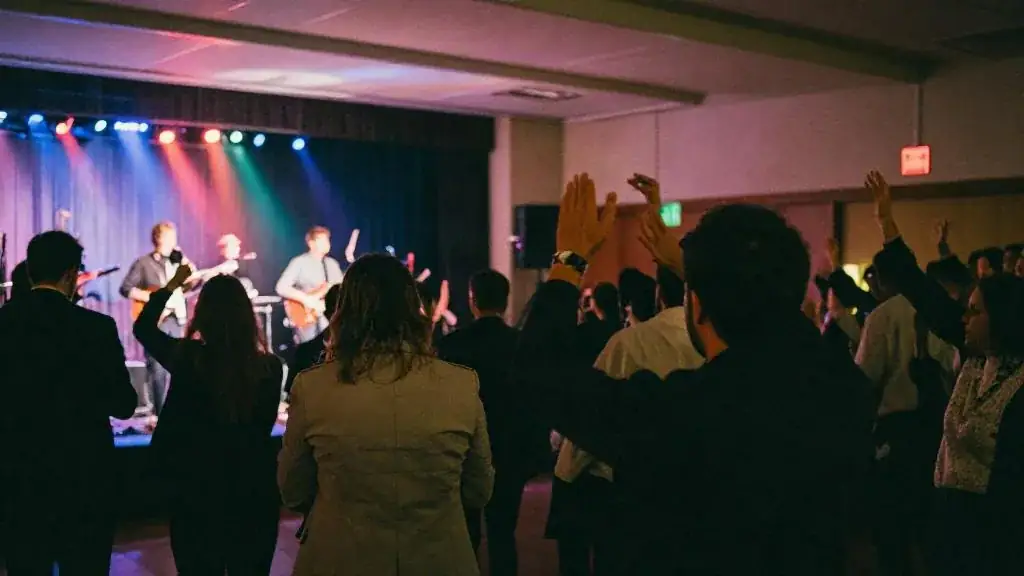
An award night has no ask, but it has the same energy problem in a different place: the middle of the awards block. A short stage set at the halfway point, or a performer who links the categories, keeps a long list of winners from blurring together. Keep the walk-up music short and consistent so the band or DJ can hit every cue, and give the MC a printed list with pronunciations for every winner’s name.
Timing rules
- Roaming acts during cocktails and gaps; stage acts only when the room is seated and not eating.
- Stage set of 20–45 minutes at a gala; 15–25 if it leads into the ask.
- The strongest act goes before the ask, never after it.
- The MC introduces every stage act, and the act is on the run of show with its mic, lighting state and walk-on music.
Budget
Typical GTA range, 2026: close-up magician $600–$1,500 per performer for two hours; stage illusionist or mentalist for 30–45 minutes $1,500–$5,000; aerial duo $1,500–$4,000 plus rigging; DJ $900–$2,500; four-piece band $2,500–$6,000. The Harbour Gala spent about $4,500 on the mentalist and two strolling magicians together. An entertainment sponsor can underwrite this line and own the moment. Use the entertainment hours planner to size the booking.
Booking notes
- Book six to nine months out for a fall gala; good corporate acts are held by other galas the same week.
- Brief the act on the cause, the audience and the major donors. A mentalist who knows the presenting sponsor’s name can include them.
- Send every performer’s tech rider to the hotel and the AV lead.
- Fire performers and indoor pyrotechnics need venue approval and often fire department approval; most hotels will refuse.
Shortlist acts with the entertainment finder or the Directory. Listings owned by the site founder carry a visible disclosure and receive no ranking preference.

Related guides, venues and vendors
Stage & close-up mentalist · Magic Magic roster
Entertainment, Mentalists
Mentalist for corporate events and private parties, performing stage and close-up mind reading across the GTA.
Read more
Related articles & tools
Galas & Award Nights
Articles, tools and Academy lessons for galas and award nights in Toronto and the GTA, in the order planners use them.
Read more
The International Centre
Mississauga · 300+ guests
Free parking
The International Centre is a privately owned trade show and conference facility a few minutes from Toronto Pearson Airport.
Read more