What you will be able to do
- Replace every generic claim on your website with a specific, checkable behaviour
- Run the only-we exercise to find three differences a competitor cannot copy quickly
- Present insurance, accessibility and other credentials accurately and usefully
Open ten event websites in your category and count the words. Professional. Reliable. Passionate. Attention to detail. Stress-free. Unforgettable. Clients read the same words on every page, so they stop reading them. When everyone claims the same thing, the claim becomes invisible and the client falls back on the only difference left, which is price.
Read the transcript
Standing out when everyone says professional and reliable.
Open ten event websites in your category and count the words.
Clients read the same words on every page, so they stop reading them.
Why generic claims fail.
Generic claims fail for three reasons.
They are unprovable, so the client cannot believe them.
From adjective to behaviour.
Take each generic word you use and ask: what do I actually do that makes this true?
The answer is almost always more persuasive than the word.
The only-we exercise.
The strongest differences are the ones a competitor cannot copy by next week.
Find them with a simple exercise.
Five places real differences hide.
If the exercise turns up little, look in these places:
A distinctive way of working, such as a tasting format, a run-of-show template or a rehearsal ritual, can be named and shown.
Rewriting your copy: a worked example.
Here is an illustrative DJ's "About" paragraph before and after.
Before: "We are a professional, reliable DJ company passionate about creating unforgettable experiences.
That is the lesson. The worksheet and the quiz are just below this video.
Why generic claims fail
Generic claims fail for three reasons. They are unprovable, so the client cannot believe them. They are universal, so they do not separate you from anyone. And they describe the minimum, not the advantage. Being reliable is the entry ticket to the event industry, not a reason to choose one vendor over another. Nobody books a DJ because the DJ promises to turn up.
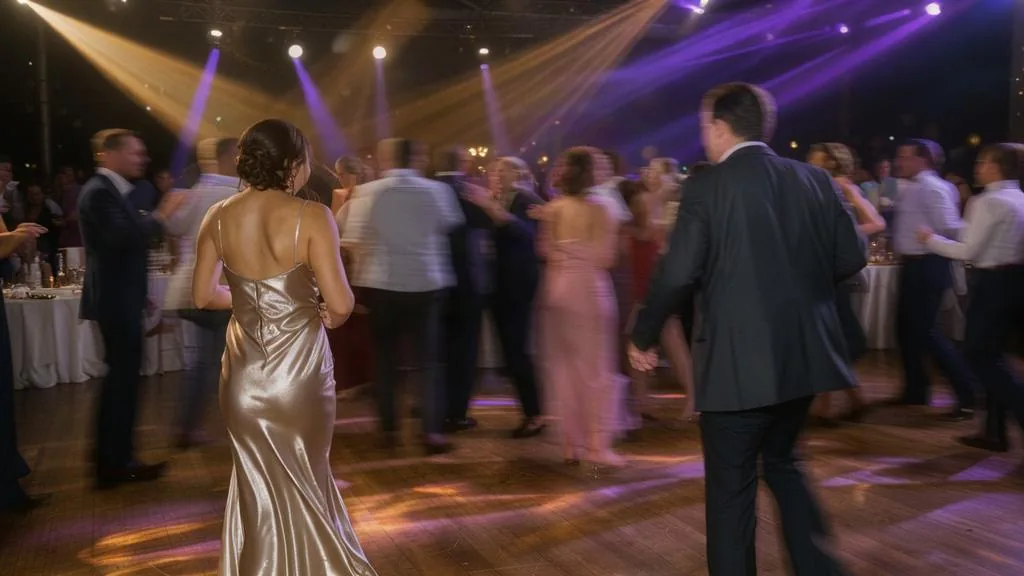
The answer is not to find better adjectives. It is to stop using adjectives and start describing behaviour: what you do, when, and how a client would notice.
From adjective to behaviour
Take each generic word you use and ask: what do I actually do that makes this true? The answer is almost always more persuasive than the word.
| Generic claim | Specific behaviour a client can check |
|---|---|
| Reliable | We arrive 90 minutes before doors and text the planner a photo of the set-up before guests arrive |
| Professional | Every quote arrives within one business day, with the full price, the scope and the cancellation terms on one page |
| Attention to detail | We send a 40-point pre-event checklist two weeks out, and you initial each line |
| Stress-free | One named coordinator answers every message from contract to event day |
| Flexible | Guest count changes are free until 14 days before the event |
| Passionate | Show the work: a two-minute unedited clip of a full dance floor at 11 p.m. |
Every line on the right can be shown, tested or put in a contract. That is what makes it believable. It also tells the client something about how the day will feel, which an adjective cannot.
The only-we exercise
The strongest differences are the ones a competitor cannot copy by next week. Find them with a simple exercise. Sit down with your team, or alone with your booking records, and finish this sentence as many times as you can in 20 minutes: “We are the only ones in our area who…”
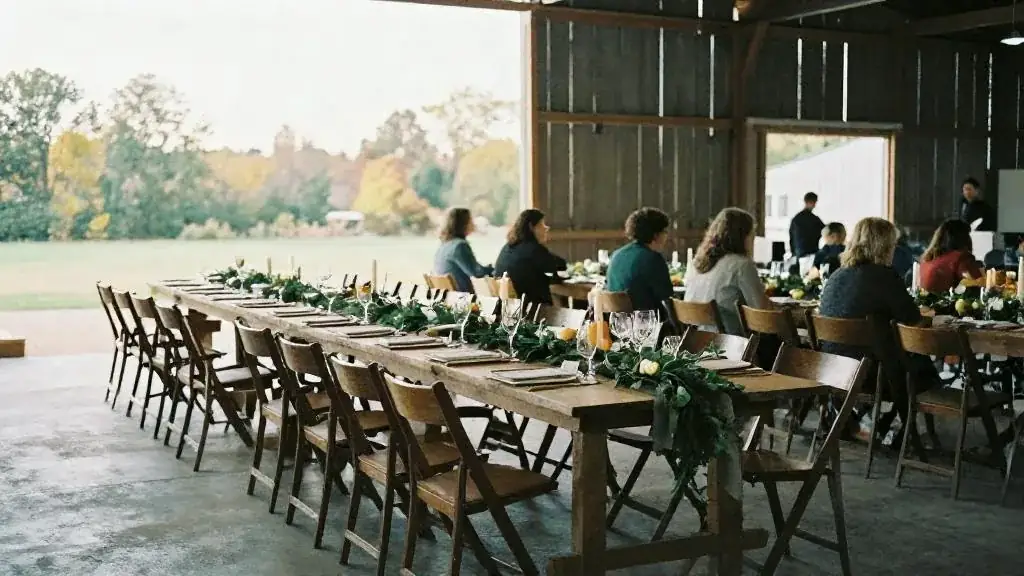
Most answers will be false or trivial. That is fine. Then filter the list with three questions:
- Is it true? Could you prove it to a sceptical client today?
- Does the client care? Would it change a booking decision, or is it only interesting to you?
- Is it hard to copy? Does it rest on experience, relationships, equipment or a process that took years to build?
When Priya and Marco ran the exercise for Lantern & Lane, most of their twenty answers fell away. Three survived: they had planned eleven two-ceremony weddings in two years; Marco speaks Portuguese and Priya speaks Gujarati, so both families can be briefed in their own language; and their family timeline workshop gets both sets of parents to sign one schedule before any vendor is booked. None of those is an adjective. All three are hard to copy.
Five places real differences hide
If the exercise turns up little, look in these places:
- Process. A distinctive way of working, such as a tasting format, a run-of-show template or a rehearsal ritual, can be named and shown.
- Speed. Quote turnaround, gallery delivery, response to a broken item on site. Speed is easy to measure and clients feel it.
- Specialist knowledge. A cultural tradition, an industry, an unusual venue type or a dietary requirement you handle better than most.
- Policy. Fair terms that competitors do not offer, such as free date changes or a clear rain plan. Lesson 6 covers guarantees.
- The moments of the experience. The first reply, the contract, the week before, the morning after. A thank-you package, a next-day preview or a short wrap-up call can become something clients mention in reviews.
A photographer who sends twenty edited images the morning after the wedding has created a moment couples share with their families the same day. A rental company that labels every crate by table number has created a moment planners talk about at the next venue. Neither costs much. Both are specific.
Rewriting your copy: a worked example
Here is an illustrative DJ’s “About” paragraph before and after.
Before: “We are a professional, reliable DJ company passionate about creating unforgettable experiences. With attention to detail and years of experience, we make your event stress-free.”
After: “We play to three generations at once. Before your wedding we sit down with you and one parent from each side, build a playlist that moves from the first dance to the last song, and send it to you to approve. On the night we arrive two hours early, test every microphone with the MC, and keep a full backup system in the van. Our couples’ reviews mention the same thing: their grandparents danced.”
The second version is longer, and it says more in every sentence. It contains a client, a process, a backup plan and a piece of proof. It does not contain the word professional, and it does not need to.
A checklist for your website and profiles
- Search your website for professional, reliable, passionate, quality, unforgettable and stress-free. Replace each with a behaviour or delete it.
- Put your three only-we differences in your homepage, your Google Business Profile description and your social bios.
- Add one piece of proof next to each difference.
- Read the result aloud. If a competitor could say it truthfully, keep working.
In Canada and the GTA: credentials that mean something
Once you strip out the generic words, credentials often fill the gap. Used honestly, they are some of the most persuasive proof you have. Used carelessly, they create legal and reputational risk.

Insurance. GTA venues, hotels and corporate clients regularly ask vendors for a certificate of insurance before load-in, often naming the venue as an additional insured. Being able to send one the same day is a real difference, especially for performers, rental companies and décor installers. If you say “fully insured” on your website, make sure your policy is current and covers the work you are describing, and be ready to send the certificate on request.
Accessibility. Under the Accessibility for Ontarians with Disabilities Act, every organization in Ontario with one or more employees must meet the Customer Service Standard. That includes having accessible customer service policies, welcoming service animals and support persons, and training all employees and volunteers on accessible customer service and the Ontario Human Rights Code. Many small vendors have not done this. If you have, and you can describe how you serve guests and clients with disabilities, you have a difference that matters to venues, public-sector clients and families. Ontario explains the requirements on its page of accessibility rules for businesses.
Languages. The GTA is one of the most linguistically diverse regions in the world, and service in a family’s first language is a genuine advantage for planners, officiants, MCs and caterers. List the languages your team can actually deliver in, on the day, not those someone in the office studied at school.
Training and memberships. Industry courses, association memberships and food-handling or responsible-service training can all be proof. State exactly what each one is. “Certified” implies a certifying body and a standard; if you completed a course but did not earn a certification, say you completed the course.
The law on credential claims
All of these are representations to the public. Under the Competition Act, a representation that is false or misleading in a material respect is reviewable conduct, and Ad Standards’ Code says truthfulness is judged by the general impression the ad conveys. A badge suggesting an award you did not win, an association logo after your membership lapsed, or “licensed” when no licence applies to your work can all create a misleading general impression. The Competition Bureau’s page on false or misleading representations sets out the civil and criminal routes.
Be especially careful with environmental claims. Since June 20, 2024, the Act has required claims about a product’s environmental benefits to be based on an adequate and proper test, and claims about a business’s environmental or climate benefits to be based on adequate and proper substantiation. “Zero-waste caterer” or “carbon-neutral events” are claims you must be able to prove.
A good local habit: keep a one-page credentials file with copies of your insurance certificate, training records, memberships and any award letters, each with its date. When a venue or corporate procurement team asks, you can answer in minutes, and that speed is itself a difference. This is general information, not legal advice.
Worksheet
Download the worksheet and complete it for your own business, using Lantern & Lane as the model where it helps. Keep it with your marketing plan. It takes about 10 minutes.

Check your understanding
Related guides, venues and vendors

Standing capacity
Venue & Layout
The number of guests a room holds for a reception without seating, about 0.6 m² per person.
Read more
The marketing dashboard
Module 12: Paid Ads, Measurement and the Marketing Plan · 15 min
A marketing dashboard is one page of numbers that tells you, in a few minutes each month, whether your marketing is working…
Read more
Price is a marketing message
Module 5: Pricing, Packages and Proposals · 20 min
Your price tells clients who you are for, how good you are and how much risk they take before they read a…
Read more