How to turn each row of your keyword map into a page that Google understands and searchers want to click: the title, description, headings, copy and links. It also shows how to build service-area pages for the towns you serve without creating thin doorway pages.
Read the transcript
On-page SEO: titles, headings and service-area pages.
Your keyword map says which phrase each page should win.
On-page SEO is the work of making that obvious, first to Google and then, far more importantly, to the person scanning ten results on a phone.
The parts of a page you control.
Every page has a handful of elements that tell search engines and readers what it is about.
None of them is a trick.
Titles and descriptions that earn the click.
The title is the single most important line on the page because it is the line people choose from.
Use a simple formula: service + place + differentiator or brand.
Headings and copy that answer the client.
Use one H1 per page that echoes the title in plain language.
Then use H2 subheadings for the questions a client would ask on a first call.
Service-area pages without doorway pages.
Your Business Profile wins the map pack near your base.
For the towns farther away, a dedicated page on your site can rank organically.
Worked example: Lantern and Lane's Mississauga page.
Marco's keyword map gave “wedding planner Mississauga” a score of 18.
The old page was titled “Areas We Serve” and listed fourteen towns.
That is the lesson. The worksheet and the quiz are just below this video.
What you will be able to do
- Write a page title, meta description and main heading for a service page from its primary keyword
- Outline a service page with subheadings that answer the questions real clients ask
- Build a service-area page that contains genuinely local information and passes Google's doorway test
Your keyword map says which phrase each page should win. On-page SEO is the work of making that obvious, first to Google and then, far more importantly, to the person scanning ten results on a phone. Most event business websites lose here, not because their work is weak, but because their pages are called “Services” and open with a paragraph about passion.
The parts of a page you control
Every page has a handful of elements that tell search engines and readers what it is about. None of them is a trick. Each one is a label, and good labels are specific.

| Element | Where it shows | What it should do | Lantern & Lane example |
|---|---|---|---|
| Title tag | The blue headline in search results and the browser tab | Name the service and place, then give a reason to click | Day-of Wedding Coordinator in Toronto | Lantern & Lane |
| Meta description | The grey text under the headline, when Google uses it | Say who it is for, what is included and what to do next | Final-month coordination for Toronto couples who planned it themselves. Fixed fee, timeline built with you, on site all day. |
| URL | Under the headline and in the address bar | Short, readable, stable | /day-of-coordination-toronto/ |
| Main heading (H1) | Top of the page | Confirm the visitor landed in the right place | Day-of wedding coordination in Toronto |
| Subheadings (H2) | Through the page | Answer the questions clients ask, in their words | What is included; What it costs; How the final month works |
| Image alt text | Read aloud by screen readers; used by Google to understand images | Describe the image plainly | Planner cueing the wedding party at a Liberty Village loft |
| Internal links | Links between your own pages | Lead readers, and Google, to related pages | From the coordination page to the full planning page and the pricing guide |
Titles and descriptions that earn the click
The title is the single most important line on the page because it is the line people choose from. Use a simple formula: service + place + differentiator or brand. Put the words the searcher typed near the front, because a phone screen cuts long titles short. A working guide is about 50 to 60 characters, but clarity matters more than counting.
- Weak: Home | Welcome to Our Website
- Weak: Best Wedding Planner Toronto GTA Mississauga Affordable Luxury
- Strong: Small Wedding Planner in Toronto | Lantern & Lane
- Strong: Kids Magician for Birthday Parties in Etobicoke
- Strong: Corporate Holiday Party Catering, Vaughan and the GTA
Google may rewrite your title or choose a different description if it thinks something else on the page matches the search better. That is a signal, not a punishment. If it keeps happening, your title and your page content probably disagree.
The meta description does not directly affect ranking, but it affects whether people click. Write it like a classified ad: who it is for, one concrete detail, and a next step. Avoid repeating the title.
Headings and copy that answer the client
Use one H1 per page that echoes the title in plain language. Then use H2 subheadings for the questions a client would ask on a first call. This structure helps Google, helps readers who scan, and helps people using screen readers, who often jump from heading to heading.
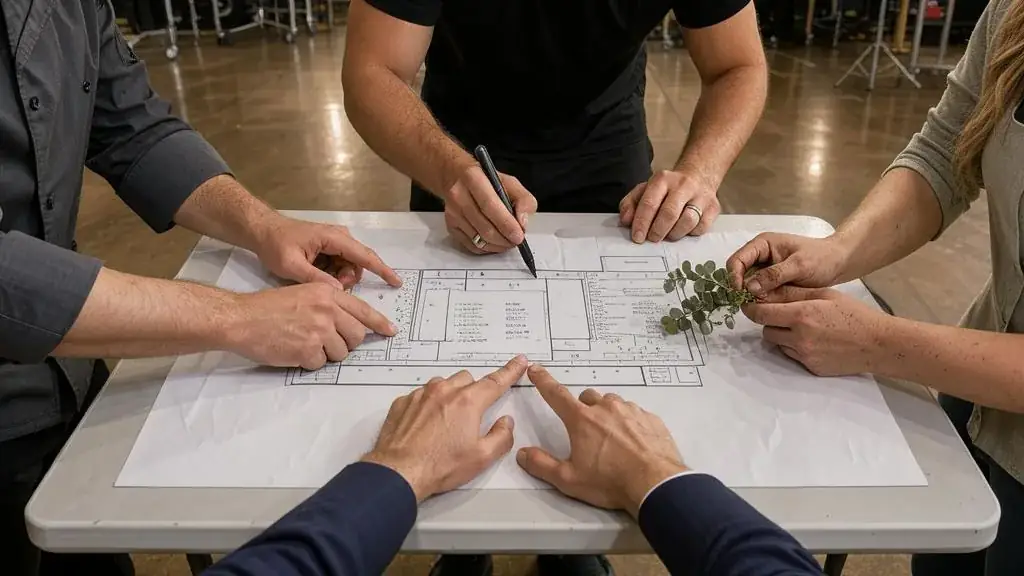
A service page outline you can copy:
- H1: the service and the place.
- Opening paragraph: who this is for and the result, in three sentences.
- H2: What is included. A list, not a paragraph.
- H2: What it costs. A price, a starting price or a typical range, all-in apart from HST.
- H2: How it works. The steps from inquiry to the day.
- H2: Recent events. Real photos, the venue, the guest count, a short story.
- H2: What clients say. Two or three reviews with names, if clients agreed.
- H2: Questions clients ask. Four to six short answers.
- A clear call to action: check your date, book a call, request a quote.
Write the primary phrase naturally in the H1, the opening paragraph and at least one subheading. Then stop thinking about it. Close variants and related words, such as “month-of”, “timeline” and “vendor confirmations”, appear on their own when you describe the service properly.
Service-area pages without doorway pages
Your Business Profile wins the map pack near your base. For the towns farther away, a dedicated page on your site can rank organically. This is where many businesses go wrong. They copy one page twenty times, swap “Oakville” for “Ajax”, and publish. Google’s spam policies name exactly this pattern: doorway abuse includes “having multiple domain names or pages targeted at specific regions or cities that funnel users to one page”.
A service-area page is legitimate when it would be useful even if it were the only page a reader saw. Ask whether it contains information a client in that town needs and could not get from your main page:
- Venues in that area where you have actually worked, with photos and what you learned there.
- Practical detail: travel fees, parking or load-in quirks, the halls and hotels clients there tend to choose.
- Reviews from clients in that area.
- Local occasions you serve there, such as large multi-day weddings in Brampton or corporate campuses in Markham.
- Honest scope: if you serve the area only for full planning, not coordination, say so.
If you cannot write five genuinely local facts, you do not need that page yet. Build pages for the three or four areas that bring real inquiries, and let your main service pages mention the rest.
Worked example: Lantern & Lane’s Mississauga page
Marco’s keyword map gave “wedding planner Mississauga” a score of 18. The old page was titled “Areas We Serve” and listed fourteen towns. Search Console showed it appearing about 2,400 times a month at a click rate of 1.8 percent, which is about 43 visits.

Priya rebuilt it. New title: “Wedding Planner in Mississauga | Lantern & Lane”. New H1: “Planning weddings in Mississauga and Peel”. New sections cover four banquet halls and two hotels where they have planned, a South Asian wedding they coordinated across three days, their travel fee from the west end, and two reviews from Mississauga couples. The other thirteen towns moved to one line on the main planning page.
Three months later, if the click rate rises to 3.5 percent on the same 2,400 appearances, that is 84 visits, almost double. At their usual rate of one inquiry per nine visits, that is roughly nine inquiries a month instead of five, from one page. The numbers are illustrative, but the mechanism is real: a specific title and a page worth reading lift clicks even before ranking improves.
An on-page checklist
- One primary phrase per page, taken from the keyword map.
- Title: service, place, reason to click; no keyword lists.
- Description: who, one detail, next step.
- One H1; H2s that answer real client questions.
- A price or range on the page.
- Real photos with plain alt text and sensible file names.
- Two or three internal links to related pages.
- A clear call to action near the top and at the end.
- Service-area pages only where you have real local content.
In Canada and the GTA
Write for how Ontario clients search, in Canadian English. Your titles and headings should use the place names clients type: Etobicoke and North York as well as Toronto, Mississauga and Brampton rather than only “Peel”, Vaughan and Markham rather than only “York Region”. Regional names belong in the copy, where they help a reader understand your coverage, but a title usually works better with a municipality people recognise. Use Canadian spelling throughout: “colour palette”, “centrepieces”, “licensed venue”. If keyword research shows clients also type an American spelling, use it once in a natural sentence or let Google’s understanding of variants do the work. Never stuff both spellings into a title.
Headings and alt text are accessibility as well as SEO. Under the AODA’s Information and Communications Standard, businesses and non-profits with 50 or more employees in Ontario must make their public websites meet WCAG 2.0 Level AA, and that requirement has applied to public websites since January 1, 2021. Most event businesses are smaller than that and are not legally bound by the website rule, but the practices are the same ones that help search: one logical heading structure, descriptive link text instead of “click here”, and alt text that describes images. A venue, hotel group or caterer large enough to cross the threshold should treat these as compliance items. Ontario’s guide on how to make websites accessible sets out the rules. Every organization with at least one employee also has customer service obligations, including providing information in accessible formats on request, so a clean page structure saves work later.
Your titles are advertising claims. A title such as “Toronto’s #1 Wedding Planner” or “Award-Winning GTA Caterer” appears in search results to thousands of people. Under the Competition Act, making a representation to the public that is false or misleading in a material respect to promote a business is reviewable conduct. If you use a ranking or award, you need the evidence on file, and the more precise version is usually better marketing: “Rated 4.9 from 62 Google Reviews” or “Planner for 40 Peel weddings since 2019”. The same applies to price wording in descriptions. “Packages from $2,800” should be a price a client can actually book, with mandatory fees included and only HST added on top, in line with the drip pricing rules covered in Module 5.
Service-area pages in a spread-out region. The GTA rewards a small number of well-made area pages. A west-end Toronto business typically gets the most from pages for Mississauga, Oakville and Burlington, or for Vaughan if its clients drift north. An east-end business might build Scarborough, Markham and Durham pages instead. Choose by inquiries, not by population. Google’s spam policies describe doorway abuse as pages “created to rank for specific, similar search queries”, so twenty near-identical town pages risk harming the whole site rather than helping it.
Venue names on your pages. Naming venues where you have genuinely worked is one of the most useful things a local page can contain, because clients search for vendors who know their venue. Describe the work honestly: “We planned a 180-guest wedding at a Mississauga banquet hall in June”. Do not imply that you are a venue’s exclusive, preferred or official supplier unless you are, because a false impression of affiliation can be misleading. Ask the venue whether it minds being named and whether it would like a link back to its own site.
French pages. If you serve Ottawa, eastern Ontario or francophone clients, a French version of a page needs its own French title, headings and description written for French searches, not a machine translation of the English. Keep each language on its own URL and link the two versions together so readers can switch. If you cannot deliver service in French, do not publish French pages that imply you can.
This is general information, not legal advice. Check the official sources linked above, or a lawyer, for your own situation.
Worksheet
Download the worksheet and complete it for your own business, using Lantern & Lane as the model where it helps. Keep it with your marketing plan. It takes about 10 minutes.
Check your understanding
Related guides, venues and vendors

Writing service pages that convert
Module 6: A Website That Books · 15 min
A service page should do the selling you would do on a first call. Learn the questions every buyer is asking, an…
Read more
Module 7 workshop: a 90-day local SEO plan
Module 7: Search, Local SEO and Google Business Profile · 15 min
A step-by-step workshop that turns everything in Module 7 into a 13-week local SEO plan for your own business, using Lantern &…
Read more
Module 4 workshop: a one-page brand guide
Module 4: Brand, Identity and Messaging · 20 min
A step-by-step workshop that gathers everything from this module onto a single page: your brand line, logo rules, colours, type, photo style,…
Read more