Marketing done in bursts between busy seasons never compounds. Learn a simple daily hour, split across replying, keeping, creating and measuring, with a weekly rhythm and seasonal adjustments that fit around event work.
Read the transcript
The one-hour-a-day marketing system.
Most event businesses market in bursts.
A slow February brings a flurry of posts, a new website page and a promise to email past clients.
Why one hour, every working day.
An hour is small enough to protect on a Saturday in June and large enough to do real work.
Five hours a week adds up to roughly 250 hours a year, which is more marketing time than most small event businesses spend in total.
The four blocks.
Split the hour across the four jobs from earlier in this module, in order of urgency.
Money is closest to the top of the list.
A weekly rhythm.
The create block works best with a theme for each day, so you never sit down wondering what to make.
Here is a starting rhythm you can copy and change.
Worked example: Marco's hour at Lantern and Lane.
Marco runs sales and operations at Lantern and Lane.
He started the system on a Tuesday in March, at 8:30 a.m., before the studio's first call.
The daily log.
Keep a single sheet with one row per day.
It takes a minute and it makes Friday's review possible.
That is the lesson. The worksheet and the quiz are just below this video.
What you will be able to do
- Divide one daily marketing hour into four blocks matched to the four jobs of marketing
- Build a weekly rhythm that assigns a theme to each weekday and protects the hour during peak season
- Track the hour with a one-line daily log and review it every Friday
Most event businesses market in bursts. A slow February brings a flurry of posts, a new website page and a promise to email past clients. Then the season starts, the work takes over, and marketing stops until the next slow month. The result is a business that is always starting again. One focused hour a day, done in the same order, beats a heroic week every quarter, because marketing compounds: replies get faster, relationships warm, content piles up and the numbers start to mean something.
Why one hour, every working day
An hour is small enough to protect on a Saturday in June and large enough to do real work. Five hours a week adds up to roughly 250 hours a year, which is more marketing time than most small event businesses spend in total. The point is not the length. The point is that it happens every day, in the same order, so that nothing important waits for a quiet month that never comes.
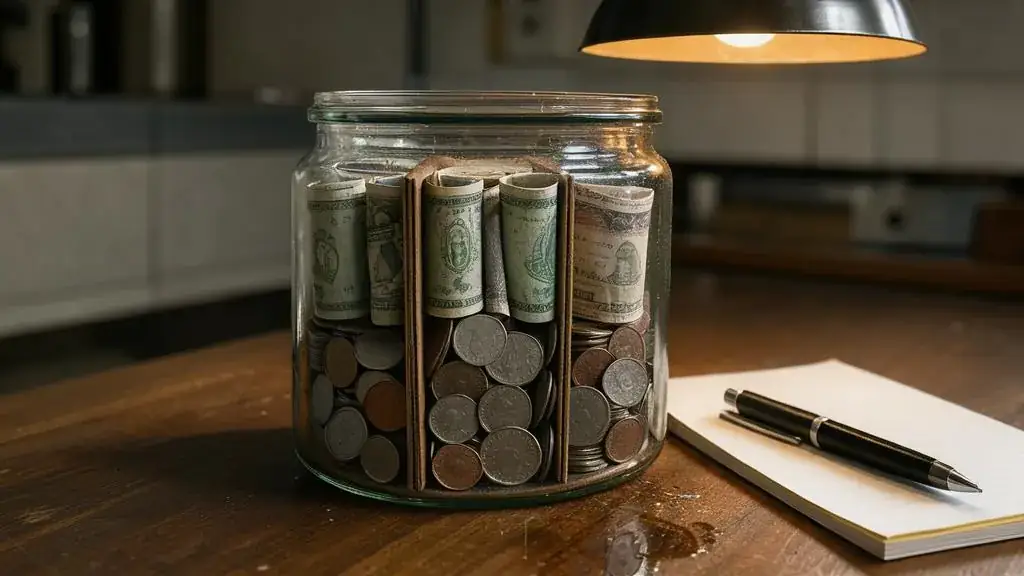
Do it at the same time each day if you can. For most planners and vendors that means first thing in the morning, before client calls and site visits start, or at a fixed slot after lunch. Performers and caterers who work late often prefer late morning. Pick the slot you can actually keep.
The four blocks
Split the hour across the four jobs from earlier in this module, in order of urgency. Money is closest to the top of the list.
| Block | Minutes | Job | What you do |
|---|---|---|---|
| 1. Reply | 15 | Convert | Answer every new inquiry, send quotes that are due, follow up on open proposals |
| 2. Keep | 10 | Keep | Thank a client, ask for a review, check in with a referral partner, note a past client’s anniversary |
| 3. Create | 25 | Attract and convince | Make one useful thing: a post, a page section, a guide, a short video, a pitch to a venue |
| 4. Measure | 10 | All four | Log new leads and their source, update the pipeline, write one line in the daily log |
The order matters. If a client call eats half your hour, you will still have answered the inquiries and thanked the clients, which are the two blocks that turn into money fastest. Creation is the block that flexes.
A weekly rhythm
The create block works best with a theme for each day, so you never sit down wondering what to make. Here is a starting rhythm you can copy and change.
- Monday: proof. Turn the weekend’s event into a portfolio post, a gallery or a short write-up crediting the other vendors.
- Tuesday: teach. Answer one question clients keep asking, as a post, an email or a section on your FAQ page.
- Wednesday: partners. Send one note to a venue coordinator, a planner or another vendor. Share something useful, not a sales pitch.
- Thursday: search. Improve one page of your website or your Google Business Profile: a better photo, a clearer service description, a new answer.
- Friday: review and plan. Read the week’s log, check the numbers, and write next week’s three priorities.
Weekends belong to events for most of the industry. If you work Saturdays, take a different weekday off from the system rather than skipping the reply block. The reply block should run six days a week in peak season, even if it shrinks to ten minutes on your phone between set-up and doors.
Worked example: Marco’s hour at Lantern & Lane
Marco runs sales and operations at Lantern & Lane. He started the system on a Tuesday in March, at 8:30 a.m., before the studio’s first call.
- Reply, 8:30 to 8:45. Three new inquiries came in overnight. He answered each with the studio’s three-question reply and a link to book a call. One proposal had been open for six days, so he sent a short follow-up asking if the couple had questions about the partial planning package.
- Keep, 8:45 to 8:55. He emailed a couple married in October to ask for an honest Google review, with the direct review link. He sent a thank-you note to a Liberty Village venue coordinator who had passed along a lead.
- Create, 8:55 to 9:20. Tuesday is teach day. He wrote a 200-word answer to the question Priya hears most, “When should we book a planner?”, and saved it as a draft post and an FAQ entry.
- Measure, 9:20 to 9:30. He added the three inquiries to the pipeline sheet with their sources (two from Instagram, one from the venue) and wrote the daily log line.
The arithmetic over a season is what persuaded Priya. From March to May, roughly 60 working days, Marco’s hour produced about 60 pieces of content or partner outreach, 25 review requests and a reply to every inquiry within a working day. In the same months the year before, the studio had posted 9 times and answered about half its inquiries within 24 hours. Those figures are illustrative, but the mechanism is not. Small daily actions are what the earlier lessons’ numbers were measuring.
The daily log
Keep a single sheet with one row per day. It takes a minute and it makes Friday’s review possible.

| Date | New leads (source) | Replies sent | Keep actions | Created | Note |
|---|---|---|---|---|---|
| Tue 10 Mar | 3 (2 Instagram, 1 venue) | 3 new, 1 follow-up | 1 review request, 1 partner thank-you | FAQ: when to book a planner | Venue referrals rising |
| Wed 11 Mar | 1 (Google) | 1 new | 1 check-in with a florist | Note to a Junction venue | Search lead asked about pricing |
On Friday, answer four questions in writing: How many leads came in, and from where? Did every inquiry get a reply within a working day? What did I create, and did any of it get a response? What are my three priorities for next week?
Protecting the hour in peak season
The hour is hardest to keep exactly when it matters most. Plan for that before the season starts.
- Write two weeks of create-block material in the slow months, so that peak-season days can use a ready draft.
- Prepare reply templates for your five most common inquiries, so the reply block takes minutes, not an hour.
- In your busiest weeks, shrink the hour to the reply and measure blocks, about 25 minutes, and never drop them.
- Put the hour in your calendar as a recurring appointment, and treat it like a client meeting.
- If two people share the business, split the blocks. One replies and measures, the other creates.
In Canada and the GTA
The hour follows the local calendar. The GTA event year has a clear shape, and your daily hour should change its emphasis with it. The weeks after the winter holidays, through to early spring, are when many couples get engaged, start researching and visit wedding shows, so the reply block grows and the create block should lean toward proof and pricing questions. Late summer and September are when corporate offices start planning holiday parties, so Wednesday’s partner notes should go to executive assistants, office managers and HR coordinators. From mid-November to the end of December, many planners, caterers, DJs and performers are working most nights. That is when the shrunken 25-minute version earns its keep. Cultural and religious celebrations add their own peaks, and some, such as Diwali, Eid and Lunar New Year, move on the calendar from year to year, so check the dates each year rather than copying last year’s plan.

Long weekends change response times. Ontario’s public holidays, including Family Day in February and Victoria Day in May, fall on Mondays. Inquiries pile up over a long weekend, so plan a slightly longer reply block for the Tuesday that follows.
Compliance belongs in the hour
Some legal housekeeping fits neatly into the measure block. None of it takes long if you do it daily, and all of it becomes a problem if you leave it for a month.
- Unsubscribes. Under CASL you must process an unsubscribe request without delay and no later than 10 business days after you receive it. Check your email platform and any replies that say “please remove me” every day, and remove the contact the same day.
- Consent dates. When you log a new lead, record the date and the type of consent. An inquiry gives you implied consent for six months. A purchase gives you two years. Express consent lasts until the person withdraws it. A date in the log tells you when someone falls off your marketing list unless they opt in.
- Review requests. Google’s policy forbids offering incentives such as payments, discounts or free services for a review, and forbids discouraging negative reviews or asking only happy clients. It also says businesses should not pressure customers to leave a review while they are on site, or set staff quotas for reviews. So the keep block should ask every client for an honest review, after the event, with the link. Google’s contribution policy sets out the rules.
- Privacy. PIPEDA expects you to protect the personal information you collect and not keep it longer than you need. Once a month, use one measure block to delete inquiries that went nowhere and are past your retention period.
Partner outreach under CASL. Wednesday’s partner notes are often fine, but not automatically. CASL’s business-to-business exemption covers messages between organizations that already have a relationship, about the receiving organization’s activities. A note to a venue coordinator you worked with last month qualifies. A promotional cold email to a coordinator you have never dealt with needs another basis, such as an address published for that role with no statement refusing messages. When in doubt, introduce yourself in person or by phone, and ask whether you may follow up by email. The CRTC’s CASL guidance covers both tests.
Time and cost. In a region with high rents and wages, an hour of an owner’s time is worth real money. If you value your time at $50 an hour, the system costs about $250 a week. That is the benchmark every paid channel has to beat, and it is why the measure block exists.
This is general information, not legal advice. Check the official sources named here, or ask a lawyer, for your own situation.
Worksheet
Download the worksheet and complete it for your own business, using Lantern & Lane as the model where it helps. Keep it with your marketing plan. It takes about 10 minutes.

Check your understanding
Related guides, venues and vendors
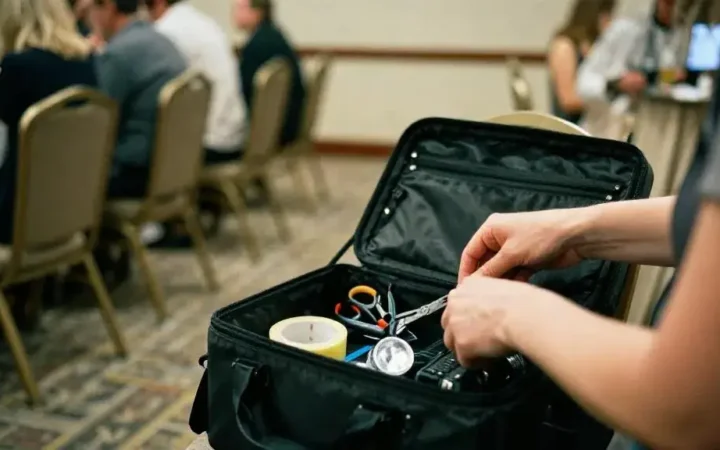
The day-of kit and the first hour
Module 10: Event Day · 15 min
What is in the bag, when to arrive, who to meet, and the walk-through that catches 80% of problems.
Read more
Entertainment hours planner
Calculators
How many roaming performers, how long, when the stage show goes, and a budget range.
Read more
Module 12 workshop: your 90-day marketing plan
Module 12: Paid Ads, Measurement and the Marketing Plan · 15 min
Turn your annual plan into a 90-day action plan with one goal, three priorities, a week-by-week schedule and checkpoints at days 30,…
Read more