What you will be able to do
- Distinguish demand capture from demand creation and classify common event marketing channels
- Estimate how much existing demand there is for each of your services
- Set a time and budget split between capture and creation that fits your business and season
A couple who types “wedding planner Toronto” into Google at 11 p.m. already knows what they want. A marketing director who has never considered a mentalist for the sales kickoff does not. Both can become clients, but you reach them in completely different ways. The first is demand you capture. The second is demand you create. Most small event businesses do only one, and it is usually the wrong one for their service.
Read the transcript
Demand you capture and demand you create.
A couple who types “wedding planner Toronto” into Google at 11 p.m. already knows what they want.
A marketing director who has never considered a mentalist for the sales kickoff does not.
Two kinds of demand.
Captured demand already exists.
The client has an event, knows the category of vendor they need and is actively looking.
Why the distinction matters.
Captured demand is efficient but limited.
Only so many people search for “balloon arch Mississauga” in a given month.
Worked example: two vendors, two different splits.
Wedding planning is a searched category, so capture comes first.
But Priya noticed many couples believe they cannot afford a planner and never search.
Setting your split.
Use this simple starting rule, then adjust from results.
List each service and ask: do clients already search for this by name?
Checklist: are you capturing what already exists?.
Before you invest in creating demand, close the obvious gaps in capture.
A client who is already looking and cannot find you is the most expensive loss in marketing.
That is the lesson. The worksheet and the quiz are just below this video.
Two kinds of demand
Captured demand already exists. The client has an event, knows the category of vendor they need and is actively looking. Your job is to be found, look credible and make it easy to inquire. Search results, Google Business Profile, wedding listing platforms such as The Knot and WeddingWire, venue preferred-vendor lists and directories all capture demand.
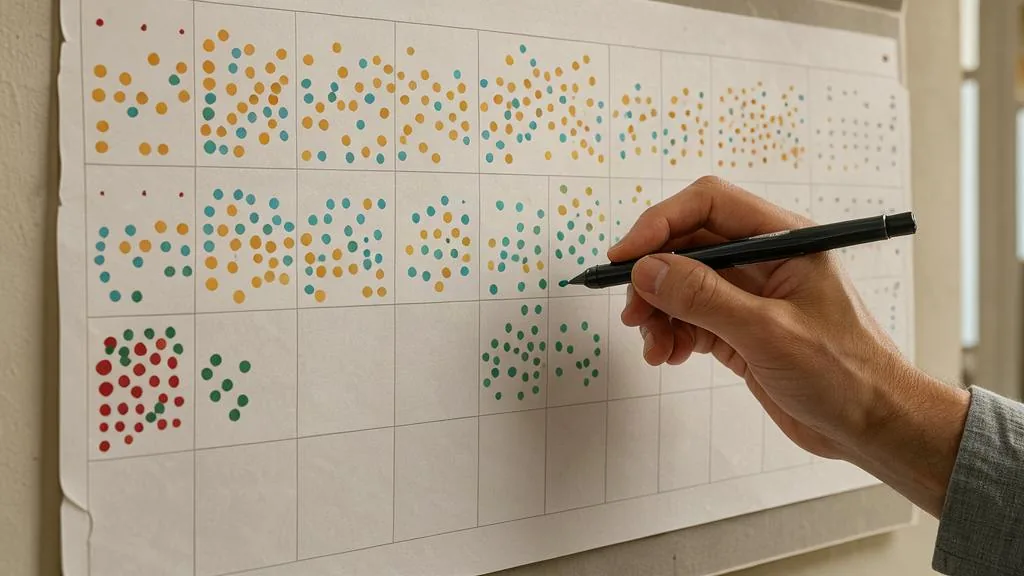
Created demand does not exist yet. The client has an event but has not thought of your service, or does not yet have an event at all. Your job is to plant an idea, teach, inspire and be remembered when the need arrives. Social content, video, speaking, styled shoots, partnerships, email newsletters and public relations create demand.
| Capturing demand | Creating demand | |
|---|---|---|
| Client’s state | Knows the need and is searching | Unaware or not yet planning |
| Speed of results | Fast, often days or weeks | Slow, usually months |
| Main channels | Search, Google Business Profile, listing platforms, referrals from venues | Social content, video, speaking, partnerships, styled shoots, newsletters |
| Competition | Intense: every competitor is in the same results | Lower: you shape the client’s idea before they compare |
| Limit | Capped by how many people are searching | Limited mainly by your time and consistency |
| What you measure | Inquiries, cost per inquiry, ranking | Reach, saves, follows, list sign-ups, later branded searches |
Why the distinction matters
Captured demand is efficient but limited. Only so many people search for “balloon arch Mississauga” in a given month. Once you rank well and convert most of them, spending more brings almost no extra bookings. You have hit the ceiling of existing demand.
Created demand is slow but has no such ceiling. It also changes who you compete with. If a corporate planner first sees your interactive dessert station in a LinkedIn video and saves it for next year’s client appreciation event, you may never enter a price comparison at all.
The mix depends on how well understood your service is. Some services have mature, searched-for categories: wedding photographer, DJ, caterer, party rentals. Others are novel or unfamiliar: a silent disco operator, a live portrait artist, an escape-room style team-building game, a roving mentalist. Nobody searches for what they have never heard of. If your service is unfamiliar, you must create demand, because there is very little to capture.
Worked example: two vendors, two different splits
Lantern & Lane. Wedding planning is a searched category, so capture comes first. But Priya noticed many couples believe they cannot afford a planner and never search. Their month-of coordination service solves exactly that, at a lower price. So the studio works on both: capture through search and listing platforms for full planning, and creation through short videos explaining what month-of coordination is and what goes wrong without it.

A close-up magician working corporate events. Very few event buyers search for “corporate magician”. Suppose a keyword tool shows about 50 searches a month for the main terms in the GTA. If 5 percent of searchers inquire and 30 percent of inquiries book, capture yields 50 x 0.05 x 0.30 = 0.75 bookings a month. At $900 a booking, that is about $675 a month, before competitors take their share. Capture alone cannot sustain the business. The magician needs to create demand: short clips of real reactions shared on LinkedIn, a showcase for planners, a partnership with a venue’s events team.
The figures are illustrative. The method is not. Estimate existing demand before you decide where to spend your time.
Setting your split
Use this simple starting rule, then adjust from results.
- List each service and ask: do clients already search for this by name?
- If yes, make sure capture is solid first. A complete Google Business Profile, a service page per main offer, reviews and listings where your clients look. Then give about a quarter of your marketing time to creation.
- If partly, split roughly evenly. Capture the people who search, and teach the people who do not yet know the option exists.
- If no, spend most of your time creating demand, and capture the small but valuable branded searches that follow, such as people searching your business name after seeing your video.
- Review every quarter. When created demand starts to work, you will see more searches for your name and more inquiries that mention a post, a talk or a referral.
Checklist: are you capturing what already exists?
Before you invest in creating demand, close the obvious gaps in capture. A client who is already looking and cannot find you is the most expensive loss in marketing.

- Does your business appear in Google when someone searches your name plus your city?
- Do you have a page for each main service, using the words clients use?
- Are you listed on the platforms your clients actually use for your category?
- Do the venues you work at most often know what you do and have your details?
- Do your photos and reviews make you look like the obvious choice for the people who find you?
- Does every inquiry get a reply the same day?
If you can tick all six, creating demand will compound on a solid base. If not, start here.
Three common mistakes
Judging creation by capture’s clock. A photographer posts educational reels for three weeks, sees no inquiries and stops. Created demand often takes a full season to show up, and it arrives as people searching your name or saying “I’ve been following you for a while”. Give it at least two quarters before you judge it.
Creating demand for the category, not for you. A video explaining why couples need a day-of coordinator helps every coordinator in the city unless it also shows your process, your face and your name. Teach the idea, then show how you deliver it.
Paying to capture demand you have not earned. Buying search ads while your Google Business Profile has three reviews and your site has no service pages sends paid clicks to a weak first impression. Fix the free capture basics first.
In Canada and the GTA
The capture calendar. Searched demand in the GTA rises and falls with the event calendar. Wedding searches tend to climb after the December holidays, when many couples get engaged. Searches for holiday party venues, caterers and entertainers rise from late summer into the fall. Graduation, prom and summer festival demand gathers in spring. Capture channels work hardest in these windows, so make sure your listings, photos and reply templates are ready a month before each one. Module 2 shows how to read these patterns with free tools, and Lesson 5 of that module covers the full seasonal calendar.

The creation calendar. Creating demand works best in the quieter months, when you have time to film, write and meet people. For many GTA vendors, that means the slower stretch after the holidays and parts of the shoulder season. A caterer who builds a following of office managers in the spring is the one they think of when holiday party planning starts. A wedding DJ who films a few polished mixes and venue walk-throughs in March has fresh material for the next engagement season.
Paid capture: what exists for event businesses
Google Ads search campaigns are available to event businesses and are a direct way to pay for captured demand. Module 12 covers when they make sense. Google’s Local Services Ads, which show verified businesses at the top of some local searches, are a different product. Google says they are available only for certain service categories, and the Canadian list on its Local Services help page covers home services such as plumbers, electricians, movers and cleaners. No event-industry categories, such as photographers, DJs, planners or entertainers, appear on it. Do not plan around Local Services Ads for an event business unless that changes.
Creating demand without breaking CASL
Created demand often means reaching people who have never heard of you, and that is where Canada’s Anti-Spam Legislation applies. You cannot simply email a list of office managers you found online. A few rules help:
- Social posts, video and public content are not commercial electronic messages sent to a person’s inbox, so they are the safest way to create demand.
- Conspicuous publication. You may email an address that a person has published, such as on their company’s website, only if the posting does not say they do not want commercial messages and your message relates to their business role. Offering an employee appreciation event to an HR manager whose work email is published could qualify. Sending the same offer to a company’s receptionist probably would not.
- Business cards. An address someone hands you, for example at a trade show, can support implied consent. The CRTC suggests a follow-up email that mentions where and when you met. That email must itself identify you and include an unsubscribe mechanism.
The CRTC explains these situations in its guidance on implied consent. When in doubt, create demand through public content and let interested people opt in to your list.
Local demand creation that works
The GTA’s density makes some creation tactics unusually effective. Planner and venue showcases bring dozens of potential referrers into one room. Community events, from cultural festivals to charity galas, put your work in front of the families and companies who host events. A styled shoot in a recognisable venue gives both you and the venue content to share. And because so many GTA events are multicultural, short educational content explaining traditions and logistics, such as how a planner times a baraat with a hotel’s loading dock, creates demand among clients who did not know a vendor could help with that.
This is general information, not legal advice. Check the CRTC’s guidance, or ask a lawyer, for your own situation.
Worksheet
Download the worksheet and complete it for your own business, using Lantern & Lane as the model where it helps. Keep it with your marketing plan. It takes about 10 minutes.

Check your understanding
Related guides, venues and vendors

Reading search demand with free tools
Module 2: Customers, Competitors and the Market · 20 min
Search data shows what clients want, when they want it and in what words, before they ever contact you. Learn to read…
Read more
Module 10 workshop: an inquiry-to-booking pipeline
Module 10: Email, CRM and Follow-Up · 15 min
A step-by-step workshop that builds a complete inquiry-to-booking pipeline for your business: stages, CRM fields, an inquiry form with consent, first replies,…
Read more
CASL in practice: consent, identification and unsubscribe
Module 10: Email, CRM and Follow-Up · 15 min
How Canada's Anti-Spam Legislation applies to the everyday emails and texts of an event business: what counts as a commercial message, the…
Read more