What you will be able to do
- Name the seven stages of the client journey and the client's question at each one
- Map the real touchpoints of one recent booking, with the days between each step
- Identify the two or three stages where your business loses the most clients
Nobody books a wedding planner, a magician or a tent rental on first sight. They hear a name, look you up, compare, hesitate, ask a question, wait for your answer, and only then decide. After the event, they either forget you or tell everyone. That path is the customer journey, and once you can see it, you can see exactly where your bookings leak away.
Read the transcript
The customer journey from stranger to repeat client.
Nobody books a wedding planner, a magician or a tent rental on first sight.
They hear a name, look you up, compare, hesitate, ask a question, wait for your answer, and only then decide.
The seven stages.
Marketers draw the journey in many ways.
For event services, seven stages describe it well.
Event journeys are long and lumpy.
Event clients move through the journey on very different clocks.
A couple may sit in the considering stage for months, comparing planners while they choose a venue.
Worked example: one Lantern and Lane booking, step by step.
Marco reconstructed the journey of one recent wedding client from emails, calendar notes and the couple's answer to “How did you hear about us?”
The bride's cousin mentioned Lantern and Lane at a family dinner. (Aware)
Where journeys break.
Run through this checklist for your own business.
Each item is a common leak.
The loop after the event.
The journey does not end at stage seven.
A happy client feeds stage two for someone else through referrals and reviews, and returns to stage four themselves for the next event.
That is the lesson. The worksheet and the quiz are just below this video.
The seven stages
Marketers draw the journey in many ways. For event services, seven stages describe it well. At each stage the client is asking a different question, and your marketing has to answer that question, not the next one.

| Stage | The client is asking | Your job | Typical assets |
|---|---|---|---|
| 1. Unaware | Nothing yet. They have no event or no need. | Be present where future clients already spend time | Venue partnerships, community presence, useful content |
| 2. Aware | “Who does this kind of thing?” | Be findable and memorable | Google Business Profile, search results, referrals, social posts |
| 3. Considering | “Are they right for me, and can I afford them?” | Prove fit and show a price range | Service pages, portfolio, reviews, starting prices |
| 4. Inquiring | “Will they answer, and do they understand my event?” | Reply fast and ask good questions | Inquiry form, first-reply template, discovery call |
| 5. Booked | “Did I make the right choice?” | Reassure and set expectations | Welcome email, contract, timeline, payment schedule |
| 6. Delivered | “Was it worth it?” | Exceed the promise in visible ways | The event itself, a wrap-up note, photos or a gallery |
| 7. Advocate | “Who should I tell, and when do I need them again?” | Make referral and rebooking easy | Review request, referral thanks, anniversary or annual reminder |
The most common mistake is answering the wrong question. A considering client wants to know whether you suit a 90-guest backyard wedding. A homepage that says only “Luxury events, unforgettable moments” answers nothing, so they move on.
Event journeys are long and lumpy
Event clients move through the journey on very different clocks. A couple may sit in the considering stage for months, comparing planners while they choose a venue. A corporate assistant asked to find a holiday party entertainer may go from aware to booked in a week. A family hosting a milestone birthday may inquire with three caterers on the same evening and book whoever replies first.
Two features make event journeys unusual. First, the purchase is often a once-in-a-lifetime event, so the client has no experience to draw on and leans heavily on reviews and referrals. Second, the decision is usually shared. A couple, a parent paying the deposit, a manager approving the budget. Your marketing has to work for someone who was never on the first call. The next module covers decision makers in depth.
Worked example: one Lantern & Lane booking, step by step
Marco reconstructed the journey of one recent wedding client from emails, calendar notes and the couple’s answer to “How did you hear about us?”
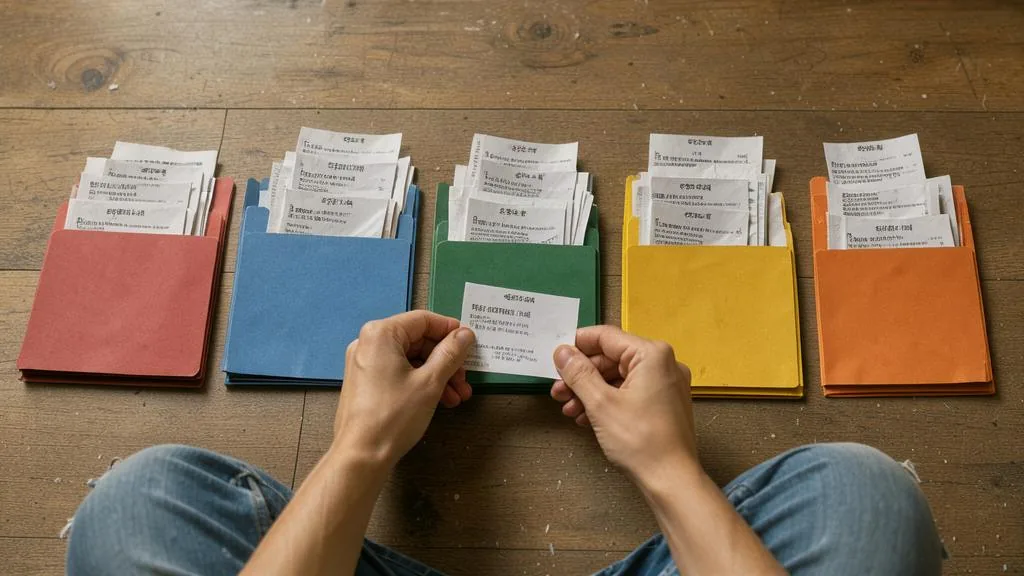
- Day 0. The bride’s cousin mentioned Lantern & Lane at a family dinner. (Aware)
- Day 3. She searched the studio’s name, read a dozen Google reviews and looked at the Instagram grid. (Considering)
- Day 9. She visited the website twice, opened the wedding planning page and the pricing guide. (Considering)
- Day 10, 9:40 p.m. She filled in the inquiry form. (Inquiring)
- Day 11, 8:15 a.m. Marco replied with three questions and a link to book a call. (Inquiring)
- Day 15. A 30-minute video call with both partners and the bride’s mother. (Inquiring)
- Day 17. Proposal sent. Day 24. Contract signed, deposit paid. (Booked)
- Day 26. Welcome email with the planning timeline. (Booked)
From first mention to signed contract took 24 days and at least eight touchpoints, four of which Lantern & Lane did not control: the cousin, the reviews already posted, the search result and the mother’s opinion. The lesson for Marco: the reviews and the pricing guide were doing as much selling as he was.
Where journeys break
Run through this checklist for your own business. Each item is a common leak.
- Aware to considering: your name is hard to find, or your Google Business Profile shows old photos and no reviews.
- Considering to inquiring: no price guidance at all, so budget-conscious clients assume you are too expensive and leave.
- Inquiring: slow replies, a reply that ignores what they wrote, or a form with fifteen required fields.
- Inquiring to booked: a proposal that arrives a week late or with no clear next step.
- Booked: silence between signing and the event, which breeds anxiety and nitpicking.
- Delivered to advocate: no thank-you, no review request, and no reason to remember you in a year.
The loop after the event
The journey does not end at stage seven. It loops. A happy client feeds stage two for someone else through referrals and reviews, and returns to stage four themselves for the next event.

Consider a party rental company with an average order of $800. A client who books once is worth $800. A client who also rents for a summer barbecue and a holiday party each year for three years, and refers two friends who each book once, is worth (3 x 2 x $800) + (2 x $800) = $4,800 + $1,600 = $6,400. The first booking is the same in both cases. The difference is entirely what happens in stages six and seven. Lesson 5 turns this into lifetime value.
Map your own journey in an hour
You do not need software to do this. A spreadsheet, your inbox and an honest hour are enough.
- Pick your last five bookings and your last five inquiries that did not book.
- For each, list every touchpoint you can find: the referral source, the first email, calls, proposals, follow-ups. Write the date beside each one.
- Label each touchpoint with its stage, from one to seven.
- Count the days between stages and note the longest gaps.
- Compare the booked and the lost. Where did the lost inquiries stop? Often the answer is the same stage every time.
- Choose one stage to fix this month, and write down the single asset or habit that would fix it.
Repeat the exercise each season. Your journey will change as you add channels, raise prices or move into new client types, and the map should change with it.
In Canada and the GTA
The GTA’s event calendar stretches and compresses the journey in predictable ways. Many couples get engaged over the December holidays, so January and February bring a surge of wedding inquiries. That is also when many of the region’s large consumer bridal shows run, along with a second round in the fall. A wedding vendor whose website, reviews and reply templates are in shape by New Year’s catches clients in the considering stage. One who updates them in March meets clients who have already booked.

Corporate journeys follow the business year. Many GTA companies plan December holiday parties in late summer and early fall, so an entertainer or caterer who appears in the aware stage in August often converts in September and October. Companies with a fiscal year that ends in March may rush to spend remaining budget in February. Conferences and incentive events can be booked a year or more ahead. Map the journey for each client type separately, because the clocks differ.
Geography matters too. A family in Vaughan will happily drive to a venue tour in Woodbridge but may hesitate at a downtown consultation in rush hour. Offering video calls for the first conversation, and in-person meetings only once a client is close to booking, shortens the inquiring stage for clients spread across the 905.
The journey and Canadian anti-spam law
The journey also has a legal shape. Under Canada’s Anti-Spam Legislation (CASL), whether you may send someone a commercial email or text depends partly on where they are in the journey.
- Inquiring. When a person makes an inquiry or application about your services, you have implied consent through an existing business relationship for 6 months after the inquiry. You can follow up on their quote, but the clock is running.
- Booked and delivered. When someone buys or leases from you, you have implied consent for 2 years after the purchase.
- Advocate. To keep marketing to past clients beyond that window, ask for express consent, which has no time limit unless they withdraw it. A checkbox on your contract or a clear invitation in your wrap-up email is the natural moment.
Every commercial message, at any stage, must identify you, include a mailing address and a way to contact you, and offer a simple, free unsubscribe. The CRTC sets out these rules in its guidance on implied consent and its CASL frequently asked questions. Lesson 6 covers CASL in more detail.
The practical point for journey mapping: put the date of each inquiry and each booking in your CRM or spreadsheet. Without those dates, you cannot tell whose implied consent has expired, and you cannot measure how long your journey takes.
Word of mouth, local style
In much of the GTA the aware stage happens offline. A recommendation at a gurdwara, a church hall, a cricket club or a cousin’s engagement party carries more weight than an ad. You cannot buy your way into those conversations, but you can make them easy to act on: a name that is simple to search, a Google Business Profile that appears when someone types it, and reviews from clients in the same community. When you ask new clients how they heard of you, write down the exact answer. Over a season, those answers show you which communities and venues are already sending you work. They also tell you where to show up next: the venue coordinators to thank, the community events worth sponsoring, and the clients whose friends are about to start planning their own weddings and milestone parties.
This is general information, not legal advice. Check the CRTC’s guidance, or ask a lawyer, for your own situation.
Worksheet
Download the worksheet and complete it for your own business, using Lantern & Lane as the model where it helps. Keep it with your marketing plan. It takes about 10 minutes.

Check your understanding
Related guides, venues and vendors
Account management and repeat business
Specialist Track: Selling to Corporate Clients · 15 min
The real value of a corporate client appears in the second, third and tenth event, not the first. Learn to calculate what…
Read more
Corporate clients and procurement
Specialist Track: Marketing for Event Planners · 20 min
Corporate events are bought by people who must defend the decision to someone else, through processes built to reduce risk. Learn who…
Read more
Customer interviews that tell you the truth
Module 2: Customers, Competitors and the Market · 20 min
Clients will tell you why they booked, why they nearly did not, and what almost sent them elsewhere, if you ask the…
Read more