A buyer persona is a short, evidence-based portrait of a group of clients who choose for the same reasons. Learn which evidence to use, how to fill in a one-page persona template, and how to keep personas honest so they guide your marketing instead of decorating a slide.
Read the transcript
Building buyer personas from evidence.
Most buyer personas are fiction.
“Sarah, 32, loves brunch and yoga, drives a crossover” tells you nothing about why Sarah books a caterer or what makes her choose one over another.
What a persona is, and what it is not.
A buyer persona is a short description of a group of clients who come to you in a similar situation and choose for similar reasons.
It is a summary of evidence, given a name so your team can talk about it.
The evidence you already have.
You do not need a research budget.
You need to put five sources side by side.
Worked example: the numbers behind Lantern and Lane's personas.
Marco sorted the studio's 40 bookings from the past year into four situations.
These figures are illustrative.
The one-page persona template.
Fill in one page per persona.
Every line should be traceable to evidence.
A second example: a children's entertainer.
Personas work the same way for a solo performer.
Imagine a children's magician in Mississauga who sorts a year of 120 bookings and finds that 70 were Saturday birthday parties at home, 30 were school and daycare shows, and 20 were community centre or library events.
That is the lesson. The worksheet and the quiz are just below this video.
What you will be able to do
- Combine interview notes, inquiry records and booking data into evidence for two or three personas
- Complete a one-page persona covering trigger, worries, decision roles, channels, proof and words
- Use personas to make specific marketing decisions while keeping them separate from who you serve
Most buyer personas are fiction. “Sarah, 32, loves brunch and yoga, drives a crossover” tells you nothing about why Sarah books a caterer or what makes her choose one over another. A useful persona is built from what real clients did and said, and it answers marketing questions: what triggers the search, what they worry about, who else decides, where they look, and what proof convinces them. If a persona cannot change a decision about your website, your proposal or your week, it is decoration.
What a persona is, and what it is not
A buyer persona is a short description of a group of clients who come to you in a similar situation and choose for similar reasons. It is a summary of evidence, given a name so your team can talk about it. The table below shows the difference between the fictional kind and the useful kind.
| Element | Fictional persona | Evidence-based persona |
|---|---|---|
| Starting point | Age, income, hobbies | The situation that triggers the search |
| Motivation | “Wants a beautiful wedding” | “Needs someone neutral who can keep two families happy” |
| Source | Imagination or a template | Interviews, inquiries, bookings, reviews, partner input |
| Decision | One person | The real mix of deciders, payers and influencers |
| Use | A slide nobody opens | Choosing headlines, proof, channels and timing |
Demographics are not banned. They are simply rarely the reason people choose. Situation, worry and trigger usually are.
The evidence you already have
You do not need a research budget. You need to put five sources side by side.
- Interview notes. The themes and exact phrases from your customer interviews.
- Inquiry records. Event type, guest count, date, budget, area and how they found you, for every inquiry in the last year or two.
- Booking data. Which inquiries booked, at what value, and which became repeat or referral clients.
- Reviews. Your own and your competitors’. Note what clients praise and complain about, in their words.
- Partner input. What venue coordinators and other vendors say about the clients they send you.
Sort your bookings into groups by situation, not by demographics. A planner might group by event type and complexity. A photo booth company might group by corporate, wedding and school events. A caterer might group by drop-off, full-service and cultural menus. Then look at the numbers for each group.
Worked example: the numbers behind Lantern & Lane’s personas
Marco sorted the studio’s 40 bookings from the past year into four situations. These figures are illustrative.

| Situation | Bookings | Average fee | Revenue | Share of revenue |
|---|---|---|---|---|
| Two-tradition weddings | 7 | $9,800 | $68,600 | 30% |
| Other weddings | 15 | $6,600 | $99,000 | 43% |
| Milestone parties | 10 | $2,800 | $28,000 | 12% |
| Corporate holiday parties | 8 | $4,500 | $36,000 | 16% |
| Total | 40 | $231,600 | 100% |
Shares are rounded, so they add to slightly more than 100. Two-tradition weddings were 7 of 40 bookings, about 18 percent, but $68,600 of $231,600, about 30 percent of revenue, at the highest average fee of any group. Five of the eight interviews had mentioned two families, and four of those were in this group. The evidence pointed to a primary persona. The corporate group was small, but the repeat client interview showed that corporate clients rebook every year, so it became a secondary persona.
The one-page persona template
Fill in one page per persona. Every line should be traceable to evidence. If you are guessing, write “guess” next to it and go and find out.
- Label. A short name drawn from the situation, such as “The Two-Family Couple”, not a made-up first name.
- Situation and trigger. What is happening when they start looking?
- The job they are hiring you for. In their words, what must go right?
- Top worries. The two or three fears that came up most.
- Decision roles. Who initiates, decides, pays and influences?
- Where they look. Search, referrals, platforms, venues, community networks.
- Proof that convinces. What evidence tipped past clients?
- Words they use. Three to five exact phrases.
- Deal-breakers. What makes them walk away?
- Value and timing. Typical fee, lead time and season.
Here is Lantern & Lane’s primary persona, abbreviated.
- Label: The Two-Family Couple.
- Trigger: Engaged, with two cultural or religious traditions to honour, often two ceremonies, and parents who disagree about how.
- Job: “Someone neutral who makes both families feel this is their wedding.”
- Worries: Family conflict on the day; one tradition being treated as an afterthought; cost of two ceremonies.
- Roles: Couple initiate and decide; parents often pay a large share and influence strongly; an elder may judge the ceremony.
- Where they look: Friends who had a similar wedding, Google reviews, Instagram, venue coordinators.
- Proof: Reviews mentioning calm under family pressure; a sample two-ceremony timeline; a planner who speaks a parent’s language.
- Words: “neutral”, “both sides”, “nobody feels like a guest”.
- Deal-breakers: No visible pricing; a planner who seems to know only one tradition.
- Value and timing: About $9,800; booking 10 to 14 months ahead; inquiries peak in winter.
A second example: a children’s entertainer
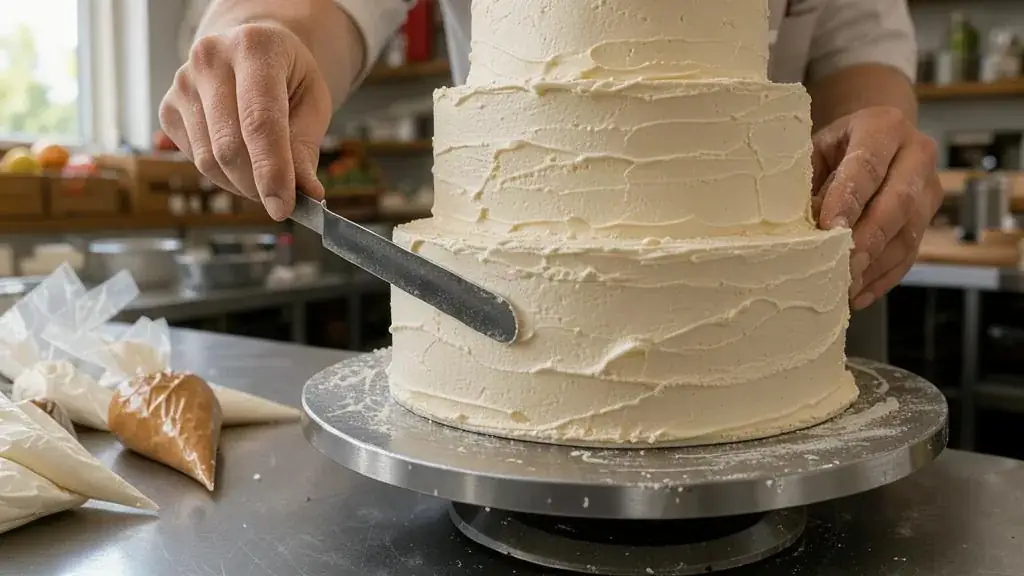
Personas work the same way for a solo performer. Imagine a children’s magician in Mississauga who sorts a year of 120 bookings and finds that 70 were Saturday birthday parties at home, 30 were school and daycare shows, and 20 were community centre or library events. Interviews with eight parents reveal the trigger for the biggest group: a child’s birthday about four to six weeks away, and a parent who fears a room of bored children and a messy living room. The job is “keep 20 kids happy for 45 minutes so I can breathe”. The proof that convinces is a short video of real children laughing and a review from another parent. The words are “the kids were glued” and “no mess”. Those five lines tell the magician what to film, which reviews to feature, and to answer the question about mess on the booking page.
Using personas, and keeping them honest
Personas earn their place when you use them to decide things. Try these:
- Rewrite your home page headline for the primary persona’s job, in their words.
- Put the proof that persona trusts most at the top of your service page.
- Choose where to spend your create block based on where the persona looks.
- Add one paragraph to your proposal that answers the persona’s top worry before they raise it.
Keep two to three personas at most. Write one negative persona as well: the client you cannot serve well, so your marketing stops attracting them. For a luxury caterer, that might be the client who needs a full-service wedding for 200 guests on a drop-off budget. Describe the situation, not the person, and be kind about it.
Review personas once a year, or after every ten new interviews. Markets shift. If the evidence changes, change the persona.
In Canada and the GTA
Personas describe situations, not ethnicities. In a region as diverse as the GTA, it is tempting to build personas around cultural background: “the South Asian bride”, “the Chinese banquet family”. Resist it. Two families who share a heritage can plan completely differently, and a couple from two different traditions may have more in common with another two-tradition couple than with anyone else. Lantern & Lane’s primary persona is defined by a situation, two families and two traditions, not by any one background. That makes it more accurate and more respectful, and it lets the studio serve couples from any combination of cultures.
Personas guide marketing, not service. A persona tells you where to focus your message. It must never decide whom you will serve. In Ontario, the Human Rights Code gives people the right to be free from discrimination when they receive goods or services, on grounds that include race and related grounds, creed, sex, sexual orientation, gender identity and gender expression, age, family and marital status, and disability. A wedding vendor whose persona is a heterosexual couple still serves every couple who books. A venue whose persona is the corporate buyer still serves the family that calls. The Ontario Human Rights Commission explains the right in its page on services. Negative personas should describe a mismatch of needs and budget, never a type of person.
Local evidence sources
Beyond your own records, a few free public sources can add context to a persona. Statistics Canada publishes census profiles for municipalities and smaller areas, which show household make-up, languages spoken at home and similar data. The City of Toronto and the regional municipalities publish neighbourhood and ward profiles. Use them to sense-check where a persona lives and which languages are common there, not to invent motivations. A census table tells you that many households in an area speak a given language; only interviews tell you why those families choose a vendor.
Personas also change with the calendar. The same family may be a birthday client in spring and a holiday party guest who refers you in December, so note the season on every persona.
Watch the cost of living. GTA housing costs shape event budgets more than income does. A couple with good salaries who just bought a condo may have a smaller wedding budget than you expect, and parents who own a paid-off house may contribute more. That is exactly why the payer line in the persona matters.
Language is evidence too. If interviews show that parents in your primary persona often prefer to talk in Punjabi, Tamil, Cantonese, Tagalog, Portuguese or another language, write that into the persona and into your hiring. French matters less in most of the GTA than in Ottawa and eastern Ontario, but federal government clients and some national companies may expect it.
Privacy and personas
A persona is an aggregate. It should never contain a real client’s name, photo or private details. Under PIPEDA, which generally applies to private-sector businesses in Ontario, you should use personal information only for the purposes you identified when you collected it, and limit collection to what you need. Build personas from coded, anonymous notes, and keep the underlying spreadsheet secure. If you note sensitive information such as religion or health while sorting bookings, ask whether you really need it. The OPC’s guidance on meaningful consent says express consent is generally required for sensitive information, so the simplest path is not to record it unless the client offered it and it matters to the event. The OPC’s PIPEDA overview lists the principles.
This is general information, not legal advice. Check the official sources named here, or ask a lawyer, for your own situation.
Worksheet
Download the worksheet and complete it for your own business, using Lantern & Lane as the model where it helps. Keep it with your marketing plan. It takes about 10 minutes.

Check your understanding
Related guides, venues and vendors

Team Building
Event hub
How to plan team building in Toronto and the GTA: formats by team size, workshop activities, offsites, venue types, inclusivity, alcohol policy,…
Read more
Google Business Profile: setup, categories and verification
Module 7: Search, Local SEO and Google Business Profile · 20 min
How to set up a Google Business Profile that fits Google's eligibility rules, choose the right categories and get through verification. Covers…
Read more
Meta ads on Facebook and Instagram
Module 12: Paid Ads, Measurement and the Marketing Plan · 15 min
Meta ads reach people who are not searching yet, which makes them best for visual work, dated events, local awareness and reminding…
Read more