Act categories, agencies vs direct booking, price ranges and lead times.
Read the transcript
The entertainment market in the GTA.
Act categories, agencies versus direct booking, price ranges and lead times.
What is on the menu in the GTA.
Toronto and the surrounding region have a deep bench of working entertainers, and most of them make a living from corporate events, galas, weddings and private parties rather than from theatres.
For a planner that means two things: you have real choice, and the good acts book early.
The main act categories.
The site's directory lists real GTA acts in each of these categories.
Listings owned by the site founder carry a visible disclosure and receive no ranking preference; compare every act on the same brief.
Agency or direct?.
You can book a performer directly or through an agency.
Neither is always better.
Lead times.
Worked example: the Harbour Gala program.
The gala needed three things from entertainment: something for the cocktail hour, something for the 25-minute gap before the first plate, and a stage set to put the room in the right place for the paddle raise.
The planner considered an aerial act for the opening and dropped it: the ballroom ceiling is 4.9 m, at the low end of what lyra or silks need, and the hotel has no certified rigging point (more in lesson 3).
That is the lesson. The worksheet and the quiz are just below this video.
What is on the menu in the GTA
Toronto and the surrounding region have a deep bench of working entertainers, and most of them make a living from corporate events, galas, weddings and private parties rather than from theatres. For a planner that means two things: you have real choice, and the good acts book early. Before you can match an act to an event (lesson 2), you need a map of what exists, what it costs and how it is sold.
The main act categories
| Category | What it is | Typical use | Typical GTA range, 2026 |
|---|---|---|---|
| Close-up and strolling magicians | Sleight of hand performed table to table or in small groups | Cocktail hours, dinner gaps, trade show booths | $600 to $1,500 for 2 hours |
| Mentalists | Mind-reading and prediction; works close-up or as a stage set | Stage set before an ask or awards; corporate audiences | Stage set of 30 to 45 minutes: $1,500 to $5,000 |
| Stage illusionists | Larger props, stage illusions, often with an assistant | Galas, launches, family shows | Stage set of 30 to 45 minutes: $1,500 to $5,000, more for big props |
| Circus and aerial | Aerial silks, lyra (hoop), straps, acrobatics, contortion, Cyr wheel, juggling | Wow moments, reveals, opening acts, dance-floor openers | Aerial duo act $1,500 to $4,000 plus rigging |
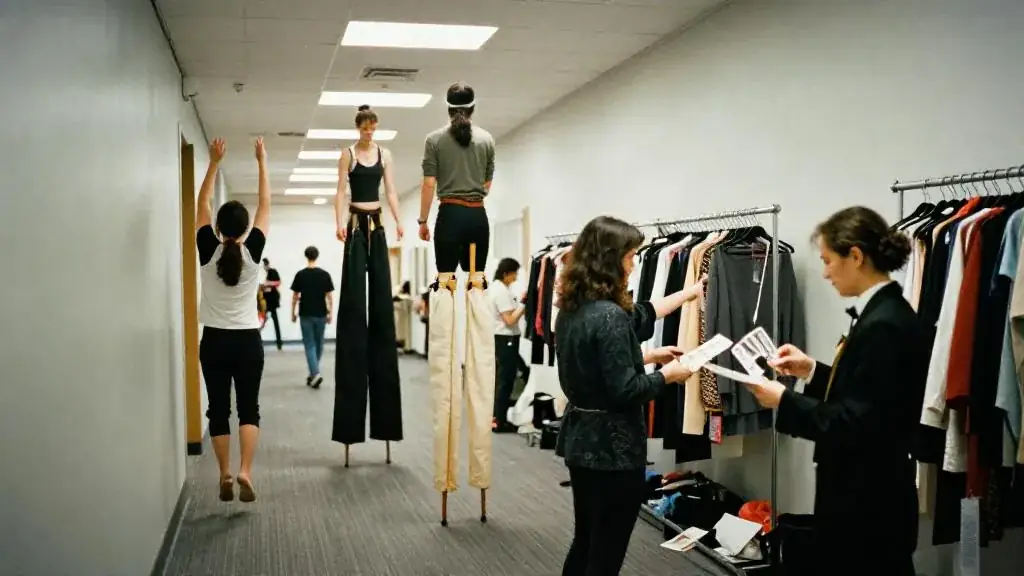
| Stilt walkers | Costumed performers on stilts, often in themed characters | Arrival, cocktail hour, festivals, brand activations | Quote; usually priced per hour with a minimum |
| LED and fire performers | Light-up poi, staff, hoops; fire versions outdoors or with approvals | Night-time moments, outdoor events, after-dinner reveals | Quote; fire acts add approvals and a fire watch |
| Roaming characters and living statues | In-character performers who interact with guests | Arrival, themed events, festivals | Quote; usually per hour |
| Music | DJs, bands, soloists, string quartets | Dinner, dance floor | DJ $900 to $2,500; 4-piece band $2,500 to $6,000 |
The site’s directory lists real GTA acts in each of these categories. Listings owned by the site founder carry a visible disclosure and receive no ranking preference; compare every act on the same brief.
Agency or direct?
You can book a performer directly or through an agency. Neither is always better.
- Direct booking usually costs less because there is no agency margin, and you talk to the person who will perform. You also carry the work: comparing acts, chasing insurance certificates, finding a substitute if they get sick.
- An agency gives you one contract and one invoice for several acts, a curated shortlist, and a substitute if a performer cancels. You pay for that in margin, and you may not talk to the performer until the week of the event.
- Founder-run agencies and production companies sit in between: a performer who also books other acts. Common in the GTA, and often the best of both, provided they are clear in writing which acts are theirs and which are subcontracted.
Ask an agency three questions: who exactly will perform (names, not “one of our magicians”), what is the substitution policy, and is the price the same as booking the act directly.
Lead times

| Booking type | Lead time we recommend |
|---|---|
| Saturday weddings, May to October | 6 to 12 months for in-demand acts |
| Corporate holiday parties, late November to mid-December | 3 to 6 months; December Thursdays and Fridays go first |
| Weeknight galas outside December | 2 to 4 months |
| Aerial acts in a new venue | Add time for the venue’s rigging approval and any engineer sign-off |
| Fire acts | Add time for venue and fire department approval |
| Outdoor acts with amplified sound in Toronto | A noise exemption permit takes about 4 weeks to process; apply early |
Worked example: the Harbour Gala program
The gala needed three things from entertainment: something for the cocktail hour, something for the 25-minute gap before the first plate, and a stage set to put the room in the right place for the paddle raise. The planner considered an aerial act for the opening and dropped it: the ballroom ceiling is 4.9 m, at the low end of what lyra or silks need, and the hotel has no certified rigging point (more in lesson 3).
Final program: two strolling close-up magicians (cocktails and the pre-dinner gap) and a 25-minute mentalist set before the ask. Typical GTA range for that combination is roughly $2,700 to $8,000; the gala’s entertainment sponsor covered it. The planner booked two of the three acts directly and the third through a small founder-run agency that also performs, and asked that agency to confirm the performer by name in the contract. Bookings were confirmed in July for a November date.
Common mistakes
- Waiting until the venue is booked to start on entertainment. Good acts go first.
- Booking an agency act without the performer’s name in the contract.
- Assuming a ballroom can take an aerial act because it looks tall.
- Comparing quotes that include travel, sound and set-up with quotes that do not.
- Forgetting HST. Performers who are registered will add 13% on top of the quote.
Ontario and federal rules that apply
Most GTA performers are self-employed, and that affects how you contract and pay them. They invoice as independent contractors, set their own methods and supply their own equipment, which is usually what the CRA expects of a contractor rather than an employee. If a client wants to control every detail of how an act performs, provide the costumes and pay by the hour on a regular schedule, the relationship starts to look different. For one-off events that is rare, but it is worth recognizing.
Tax shows up in two places. Performers whose taxable revenue passes the CRA’s $30,000 small supplier threshold must register and charge 13 percent HST in Ontario; smaller performers may not, which is why two quotes for the same act can differ by more than the fee. And when you book an act from outside Canada, Canadian tax rules generally require the payer to withhold a portion of the fee for services performed in Canada and remit it to the CRA. Talk to the client’s accountant before you agree a fee with a touring act, and check with IRCC whether the performer needs a work permit for the engagement.
Some acts carry their own approvals. Fire performers need the venue’s agreement and often the local fire department’s, aerial acts need a rigging point the venue will certify, and amplified outdoor acts in Toronto may need a noise exemption. These are covered in detail later in the track, but they belong in the market map now because they change what is realistic for a given room.
GTA practice notes
Most of the region’s performers live in or near Toronto, and that shapes pricing across the GTA. An act based downtown will often add a travel fee for Durham, northern York Region, Halton or beyond, and some will not take short bookings far from home on a busy weekend. Ask about travel when you ask about price, and remember that parking downtown can cost a performer more than gas does. If the venue has no free parking or loading area, say so in the brief, and consider covering it.
The market is also deeply multicultural. Wedding and festival work in the GTA includes performers who specialize in particular traditions, languages and music, and demand clusters around certain seasons and community calendars. When a client’s event connects to a cultural or religious occasion, ask whether there are performers or customs they expect, rather than assuming the general menu fits.
Finally, the GTA has a large amateur and semi-professional pool. That is not a problem in itself, but for a corporate or ticketed event you want a performer who carries liability insurance, has performed for audiences like yours and can give references. Insurance on file is one of the clearest signs of a working professional.
Questions to ask before you shortlist
The agency questions earlier in this lesson cover who performs and what happens if they cannot. For any act, agency or direct, add these:
- What exactly is included in the price: set length, number of sets, travel, sound, lighting and set-up time?
- Do you carry liability insurance, and can your broker issue a certificate naming the venue?
- Are you registered for HST, and is 13 percent included in or added to this quote?
- What do you need from the venue: ceiling height, floor space, power, a green room, parking?
- Can we see recent video of the full act, not just a highlight reel, from an event like ours?
Write the answers into the comparison grid so that you are choosing between like and like.
How this connects to the next lesson
You now have a map of the market: what exists, what it typically costs, how it is sold and how far ahead to book it. The next lesson, Matching acts to events, uses that map to choose the right act for a specific audience, room and moment in the program. Before you start, try the entertainment hours planner on an event of your own, and look up any unfamiliar category in the encyclopedia, starting with strolling acts.
Worksheet
Apply this lesson to a real or practice event using the worksheet, then mark the lesson complete to track your progress toward the certificate.

Related guides, venues and vendors

The discovery meeting
Module 2: Discovery & Concept · 15 min
Forty-five minutes with a client decides the next six months. Learn the question order that surfaces the real goal, the real budget…
Read more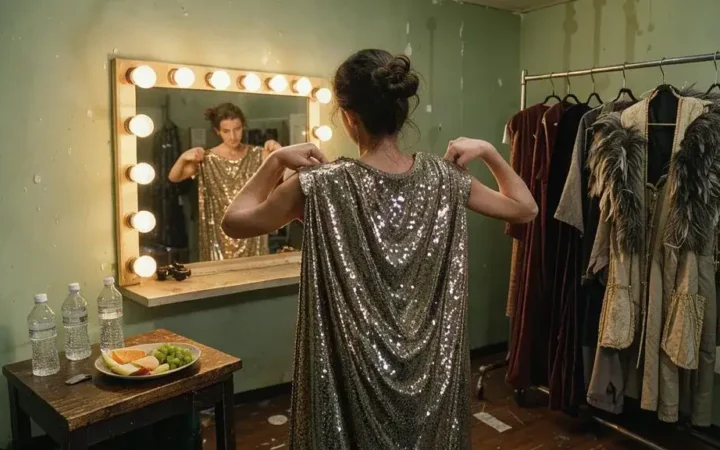
Working with performers
Module 10: Event Day · 15 min
Green rooms, timing, intros, sound checks, audience management and what performers need from planners to do their best work.
Read more
Transportation, parking and shuttles
Module 7: Logistics & Operations · 15 min
Downtown parking math, shuttle sizing, rideshare codes, accessibility vehicles, and the Toronto transit reality.
Read more