The best team-building activities share three traits: a skill people want, a low stake, and a structure that mixes people who do not usually talk. Everything below passes that test. The trust fall does not.
Read the transcript
Team building entertainment ideas.
The best team-building activities share three traits: a skill people want, a low stake, and a structure that mixes people who do not usually talk.
Everything below passes that test.
Workshops (under 25, or stations within a larger day).
Cooking class or cook-off: the most reliable format in the city. Teams cook, everyone eats what they made, and the kitchen noise does the mixing.
Improv: a two-hour session with a trained facilitator teaches listening and saying yes without anyone performing alone. Needs an empty room and a facilitator who knows how to handle the reluctant; the games are chosen so nobody is ever the only one standing up.
Hosted formats (25 to 100).
Game show: a professional host, buzzers, rounds written around company trivia and general knowledge, mixed teams assigned in advance. Scales to 150 in a ballroom and needs only a stage, a screen and a sound system.
Scavenger hunt: across a neighbourhood (the Distillery, Kensington, the waterfront, downtown Oakville) or inside a large venue, with photo challenges rather than trivia so the teams interact with strangers. Needs a host, an app or printed cards, and a finish-line venue with food.
Field days and offsites (100+).
Stations, a stage, a tent, a sound system, a host, a caterer, portable washrooms and a rain plan; this is a production.
Mix physical stations (tug of war, relay, giant games) with seated ones (trivia, a magic workshop table, a build) so every team has places where everyone contributes.
What not to book.
Anything that requires alcohol to be fun.
Anything that depends on strength, speed or a particular body.
Booking notes.
Ask every provider for a certificate of insurance, a plan for participants who sit out, and what the room needs (ceiling height, floor, tables, power, sound).
Send the venue the tech rider.
The full guide, with tables and checklists, continues below this video.
Workshops (under 25, or stations within a larger day)
- Cooking class or cook-off: the most reliable format in the city. Teams cook, everyone eats what they made, and the kitchen noise does the mixing. Needs a studio or a restaurant kitchen; two to three hours; dietary needs built into the menu, not accommodated at the end.
- Improv: a two-hour session with a trained facilitator teaches listening and saying yes without anyone performing alone. Needs an empty room and a facilitator who knows how to handle the reluctant; the games are chosen so nobody is ever the only one standing up.
- Magic workshop: everyone learns three tricks they can do at dinner that night. It is low-physical, works for every age and body, and the reveal moment is the same shared experience as a cook-off. Needs tables, a deck of cards per person, and a magician who teaches rather than performs.
- Circus skills: juggling, plate spinning, poi, flower sticks, low partner acrobatics and sometimes a ground-level aerial introduction. Everyone is equally bad at juggling on minute one, which is the point. Needs a room with height for the throwing skills, a soft floor for anything partner-based, and instructors who make sitting down and spinning a plate as valid as standing.
- Self-defence awareness: a two-hour session on awareness, boundaries and simple techniques, popular with offices that have late shifts or a largely female team. Must be run by a qualified instructor with mats, with participation in any physical drill optional and never singled out; the awareness portion is the part everyone takes home.
- Mixology, coffee cupping, pottery, printmaking, terrariums, chocolate making: quieter workshops for teams that do not want to shout. Mixology should include a non-alcoholic track and a licensed space or a permit.
Hosted formats (25–100)
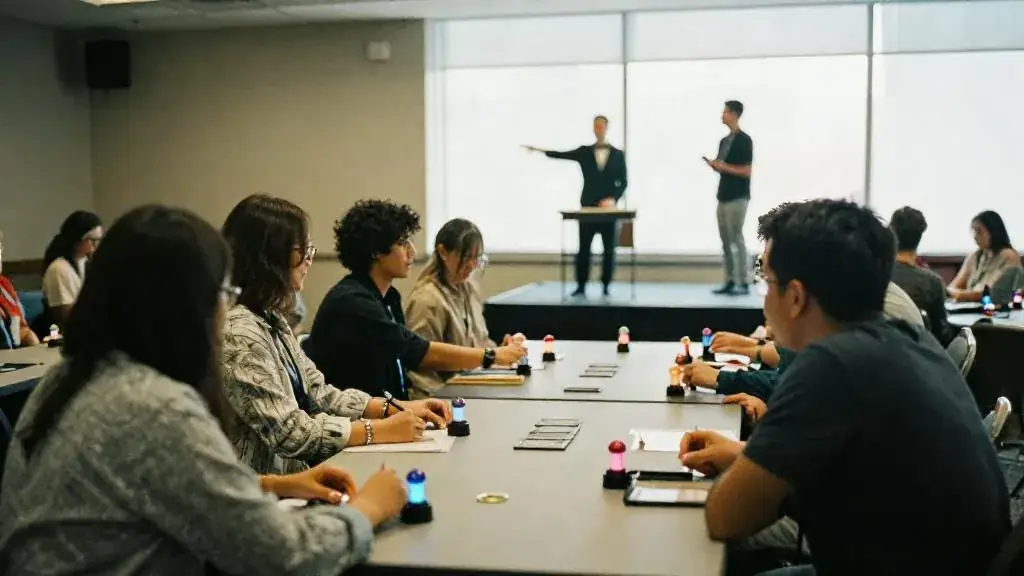
- Game show: a professional host, buzzers, rounds written around company trivia and general knowledge, mixed teams assigned in advance. Scales to 150 in a ballroom and needs only a stage, a screen and a sound system.
- Scavenger hunt: across a neighbourhood (the Distillery, Kensington, the waterfront, downtown Oakville) or inside a large venue, with photo challenges rather than trivia so the teams interact with strangers. Needs a host, an app or printed cards, and a finish-line venue with food.
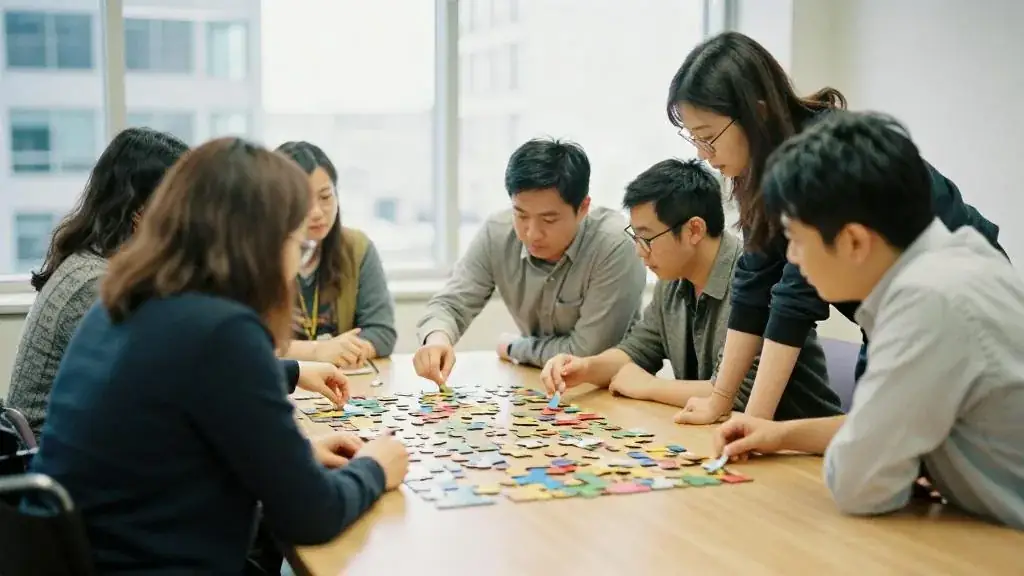
- Escape-room block booking: four to eight rooms at once, teams of six, then a debrief over drinks. Works for analytical teams that hate performing.
- Circus or skills circuit: six stations, ten minutes each, teams rotate: juggling, plate spinning, a magic trick, a knot-tying race, a blind-taste test, a tower build. Any venue with floor space; two to three instructors; a host to run the clock.
- Charity build: bikes, care packages, wheelchair assembly, a community garden shift. The product goes to a real recipient, which makes it the format with the longest afterglow. Partner with the charity months ahead.
Field days and offsites (100+)
Stations, a stage, a tent, a sound system, a host, a caterer, portable washrooms and a rain plan; this is a production. Mix physical stations (tug of war, relay, giant games) with seated ones (trivia, a magic workshop table, a build) so every team has places where everyone contributes. An offsite adds a morning session: a keynote or workshop, then the activity, then dinner with one short piece of entertainment, a mentalist or a close-up magician at the tables, rather than a show that keeps people in their seats after a long day.
What not to book
- Anything that requires alcohol to be fun.
- Anything that depends on strength, speed or a particular body.
- Anything that puts one person on stage alone (karaoke is fine as an option after dinner, cruel as the programme).
- A speaker who talks about teamwork for an hour.
- A surprise. Tell people what the activity is on the invitation so they can dress for it and opt out of parts privately.
Booking notes
Ask every provider for a certificate of insurance, a plan for participants who sit out, and what the room needs (ceiling height, floor, tables, power, sound). Send the venue the tech rider. For groups over 25, book a host even if the provider has an instructor; the instructor teaches, the host runs the day. Typical GTA prices, 2026: two-hour workshops roughly $45–$120 per person with minimums; circus-skills workshops roughly $900–$3,000 flat; hosted game shows and hunts roughly $1,500–$6,000; a close-up magician for dinner $600–$1,500 for two hours; a mentalist or illusionist for a 30–45 minute after-dinner show $1,500–$5,000.
Many GTA workshop providers are the same performers who list on this site. The site founder runs magic and circus-skills workshops among other formats; his Directory listings carry a visible disclosure and get no ranking preference. Use the entertainment finder to match a format to your team, and the entertainment hours planner to lay stations against the afternoon.
Related guides, venues and vendors
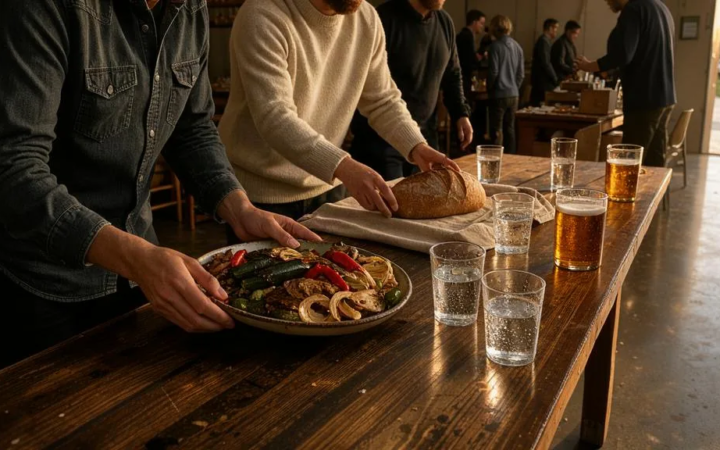
Team building food & drink
Team Building
The shared meal that makes team building work, dietary planning, and an alcohol policy that follows Ontario rules without spoiling the afternoon.
Read more
Team building checklist
Team Building
The printable team building checklist from objective to follow-up survey, with the inclusivity and alcohol questions most organizers forget. Progress saves in…
Read more
Related articles & tools
Team Building
Articles, tools and Academy lessons for team building in Toronto and the GTA, in the order planners use them.
Read more