The meal is not the reward at the end of team building. It is the team building. Plan it with the same care as the activity, and plan the drinks with more.
Read the transcript
Team building food and drink.
The meal is not the reward at the end of team building.
It is the team building.
The meal is the point.
Everything the activity started gets finished at the table: the jokes about the burnt risotto, the trick someone cannot stop doing, the team that lost.
Build the day so the meal comes after the activity, lasts at least an hour, and seats people in their activity teams rather than their departments.
Dietary planning.
Collect dietary needs on the invitation form, four weeks ahead, by person.
Code them (V, VG, GF, H, K, NUT and allergies) and give the caterer the coded list rather than a tally.
Alcohol policy: the rules first.
Most team-building venues in the GTA are licensed: activity venues, breweries, restaurants, hotels.
In a licensed venue the venue's Smart Serve-certified staff serve, no permit is needed, and you choose the package.
Alcohol policy: the policy second.
The rules say what is legal; the policy says what is wise.
In our experience the afternoons that go wrong are the ones where the bar opened at the start.
Coffee, water and the bits people forget.
Water at every station for anything physical; coffee that is better than the office coffee, since that is the comparison everyone makes; snacks at the halfway point of a three-hour session; and something to take home from a cooking or chocolate workshop, because the thing you made is the souvenir that gets talked about on Monday.
The full guide, with tables and checklists, continues below this video.
The meal is the point
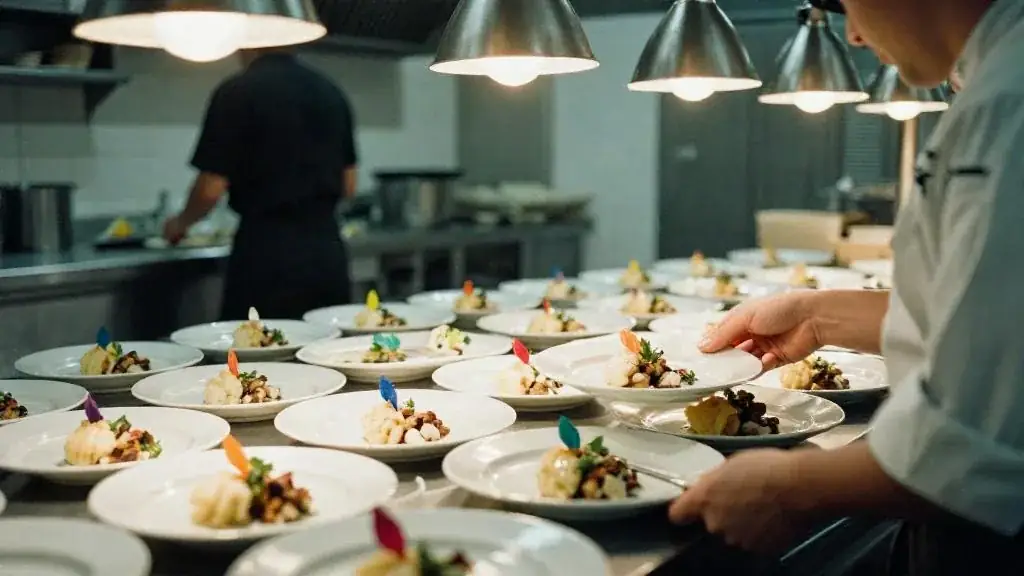
Everything the activity started gets finished at the table: the jokes about the burnt risotto, the trick someone cannot stop doing, the team that lost. Build the day so the meal comes after the activity, lasts at least an hour, and seats people in their activity teams rather than their departments. For a cooking class the meal is built in; for everything else, decide between the venue’s kitchen, catering brought in, or a walk to a restaurant.
- Family style is the best format for a team meal: shared platters force people to pass and talk. Roughly 15% more food than plated; needs tables of eight to ten.
- Food stations or a taco bar work for 40 to 150 in a venue with no kitchen; add about 20% more floor space and a second line so nobody queues for twenty minutes.
- Pizza and sandwiches are fine for a two-hour office workshop and wrong for a day people gave up a Friday for.
- Plated banquet service suits offsites in hotels; expect a service charge, commonly 18%, on top of the plate price, taxable in itself.
Use the food quantity calculator for quantities; physical activities push appetites up, so round up for the field day and down for the pottery class.
Dietary planning
Collect dietary needs on the invitation form, four weeks ahead, by person. Code them (V, VG, GF, H, K, NUT and allergies) and give the caterer the coded list rather than a tally. For a seated meal, name cards with a discreet code let staff serve without asking across the table. For stations, label every dish and keep the allergen-free options at the start of the line so people with restrictions are not waiting until everyone else has served. Halal and kosher catering are easy to find in the GTA but need the lead time of the venue’s own kitchen; ask early.
Alcohol policy: the rules first
Most team-building venues in the GTA are licensed: activity venues, breweries, restaurants, hotels. In a licensed venue the venue’s Smart Serve-certified staff serve, no permit is needed, and you choose the package. If you host in an unlicensed space, an office, a studio, a park pavilion, a rented loft, and want to serve alcohol, the facts are these:
- You need an AGCO Special Occasion Permit. For a private event (your own staff, no sale), apply at least 10 days ahead; the fee is $50 per day for a no-sale permit. A public event, or one where drinks are sold, needs 30 days and municipal notification, at $150 per day.
- Smart Serve training is recommended for everyone serving, though the AGCO does not require it under a permit; the course is online and takes about four hours.
- Liquor must be bought from the LCBO, the Beer Store or an Ontario winery or brewery under the permit, with receipts kept on site, and the permit posted.
- Service hours are 11 a.m. to 2 a.m., with last call at 1:45; a 3 p.m. finish is not the problem, an 11 a.m. start with mimosas at 10:30 is.
- Toronto parks have their own rules on alcohol and most group permits do not include it; ask the permit office rather than assume.
Alcohol policy: the policy second
The rules say what is legal; the policy says what is wise. In our experience the afternoons that go wrong are the ones where the bar opened at the start. A policy that works for most GTA teams:
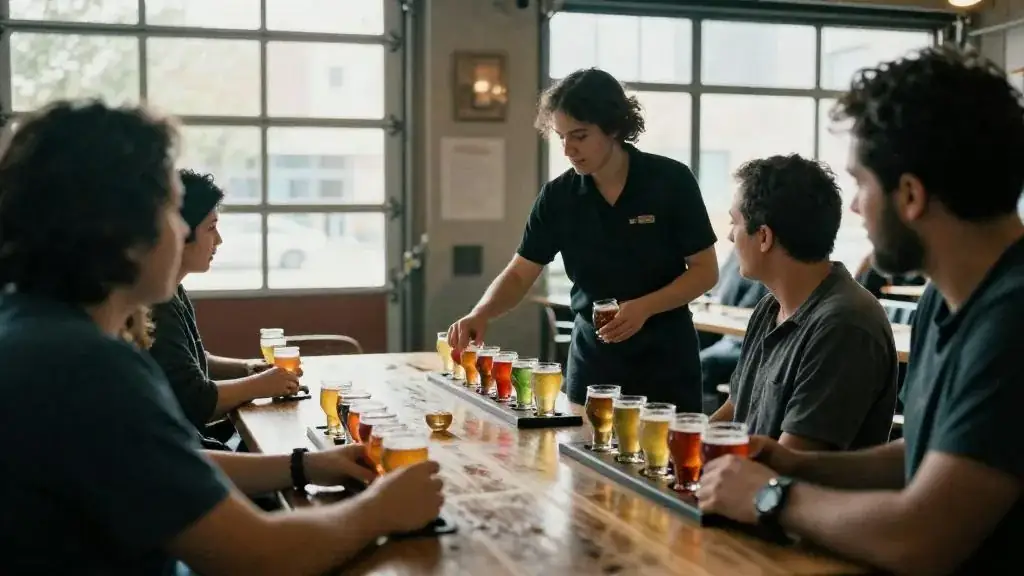
- Activity first, bar after. No alcohol before or during anything physical, anything with equipment, or anything where people are being coached. Self-defence, circus skills, climbing and karts are dry until the session ends; most venues insist.
- Two tickets or a two-hour package, beer, wine and cider, with the full bar closed. It is cheaper, it keeps the per-head under the CRA threshold more easily, and it ends the afternoon on time.
- Non-alcoholic first on the menu. A good non-alcoholic cocktail, a brewery’s alcohol-free flight, proper coffee. The people who do not drink, for any reason, should be holding something as good as everyone else.
- Nobody drives. If the venue is outside transit distance, the coach home is the policy; transport home is excluded from the CRA $150 calculation, so it does not cost you the threshold.
- Managers model it. One drink, visibly, then water.
Size the order with the bar and alcohol calculator, and read the Special Occasion Permit and Smart Serve entries if you are permitting a space yourself.
Coffee, water and the bits people forget
Water at every station for anything physical; coffee that is better than the office coffee, since that is the comparison everyone makes; snacks at the halfway point of a three-hour session; and something to take home from a cooking or chocolate workshop, because the thing you made is the souvenir that gets talked about on Monday.
Related guides, venues and vendors
Team building themes & décor
Team Building
Light-touch themes that give a team-building day a story without costumes, plus the décor that matters: team identity, the welcome, the finish…
Read more
Team building budget guide: GTA price ranges
Team Building
What team building costs in Toronto per head and per line: workshops, hosted events, venues, food, drink, transport, facilitators, with the CRA…
Read more
Team building venue guide
Team Building
GTA venue types for team building: activity venues, breweries, private rooms, studios, parks and ravines with permits, conservation areas, and offsite retreats…
Read more