Roaming vs stage, ceiling height, sightlines, age and culture of the audience, timing in the program. Includes the entertainment finder and real examples from Toronto events.
Read the transcript
Matching entertainment to audience and room.
Roaming versus stage, ceiling height, sightlines, age and culture of the audience, timing in the program.
Includes the entertainment finder and real examples from Toronto events.
Three kinds of entertainment, three jobs.
Entertainment does one of three jobs in a program, and the first mistake is asking one act to do all three.
Roaming or close-up acts work the room guest by guest: magicians, caricaturists, stilt walkers, roaming musicians. They fill gaps, cover arrivals, and give strangers something to talk about.
Audience, age and culture.
Who is in the room decides the act more than the budget does.
A seated room of hospital donors with an average age over 55 wants wit, not volume.
Room, ceiling and rigging.
Check the room against the act before you quote it.
Ceiling height is the number planners forget.
Placing entertainment in the program.
Roaming acts in cocktail hour, from doors to the call to dinner.
Ambient music during dinner service. Never a stage act over plates; servers and performers compete and both lose.
Worked example: the Harbour Gala.
Room: 420 square metres, 4.9 m ceiling, no rated rigging points, house stage on the east wall.
Audience: 200 donors and their guests, average age over 50, many of them regulars.
That is the lesson. The worksheet and the quiz are just below this video.
What you will be able to do
- Choose between roaming, stage and ambient acts
- Check ceiling height and rigging
- Place entertainment in the program
Three kinds of entertainment, three jobs
Entertainment does one of three jobs in a program, and the first mistake is asking one act to do all three.
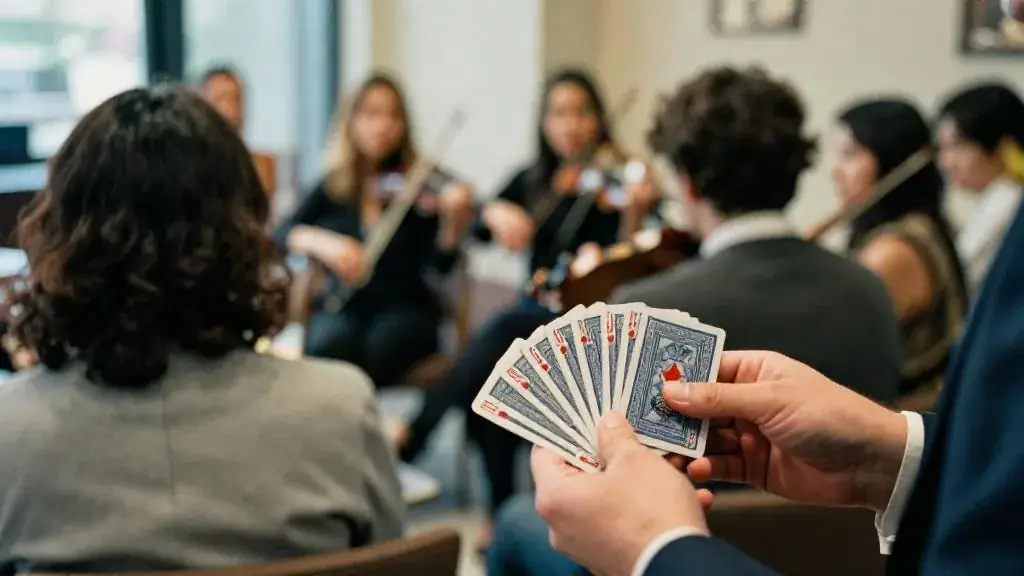
- Roaming or close-up acts work the room guest by guest: magicians, caricaturists, stilt walkers, roaming musicians. They fill gaps, cover arrivals, and give strangers something to talk about. One performer per 40–60 guests for full coverage of a cocktail hour.
- Stage acts hold the whole room for 20 to 45 minutes: illusionists, mentalists, bands, aerialists, comedians. They need a stage, sightlines, sound and a slot where nobody is eating.
- Ambient acts are background: a jazz trio, a DJ at dinner volume, a harpist at the ceremony. They set the level of the room and are not meant to be watched.
Match the job to the moment in the program before you choose the act.
Audience, age and culture
Who is in the room decides the act more than the budget does. A seated room of hospital donors with an average age over 55 wants wit, not volume. A product launch for 300 people under 35 wants something they will film. A multicultural wedding wants acts both families will recognize as a celebration, which may mean two acts rather than one compromise. Children under eight need a show under 30 minutes with participation; children over ten need a show that does not treat them as under eight.
Ask the client three questions: who will be in the room, what have they seen before at this event, and what would embarrass the host. The last question removes more acts than the budget.
Room, ceiling and rigging
Check the room against the act before you quote it.
| Act | Needs | Check |
|---|---|---|
| Close-up magician | Light, a path through the room, a place to stand | Dinner lighting bright enough to see cards |
| Mentalist or stage illusionist | Stage of roughly 4 × 3 m minimum, wireless mic, clear sightlines, access to the audience | Pillars; distance from the furthest table; stairs onto the stage |
| Band, 4-piece | Stage of roughly 6 × 4 m, power, sound, lighting, backline access | Dock, elevator, union rules, curfew |
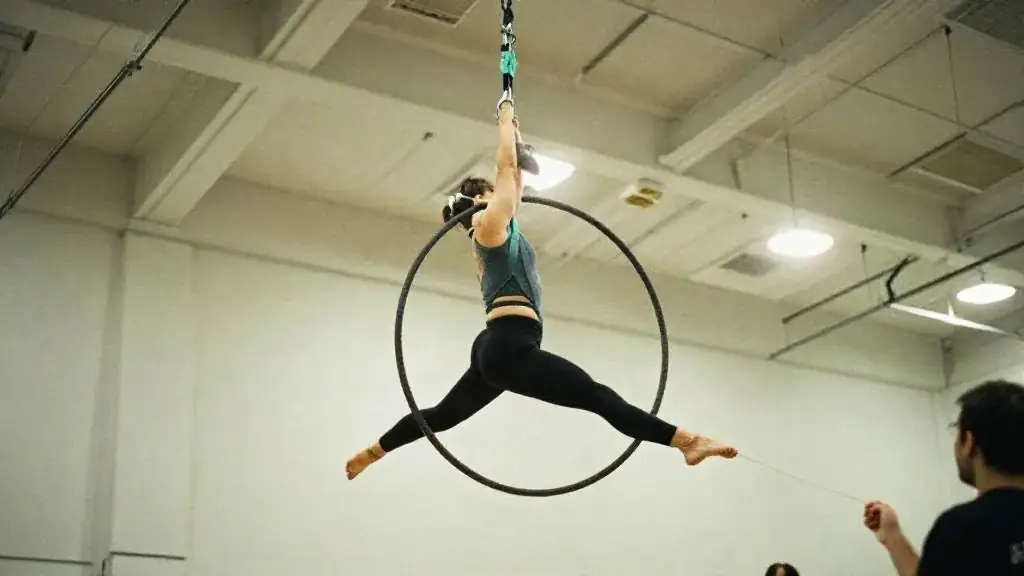
| Aerial duo (lyra, silks) | Certified rigging point rated for the dynamic load (typically 450 kg working load or more, engineer-confirmed), clear ceiling of 4.5–5 m minimum and 6 m or more preferred, venue approval, insured rigger | Ask the venue for the engineer’s letter. No letter, no act |
| Fire performer | Venue and often fire department approval, fire watch with extinguishers, outdoor or a specific indoor clearance | Most hotels say no indoors; some permit enclosed flame only |
| DJ | Table, power, sound; a dance floor | Curfew; the noise bylaw if outdoors |
Ceiling height is the number planners forget. A 4.9 m ballroom is at the bottom of the range for aerial work and will restrict what the act can do; many will decline. A loft with a 7 m ceiling and exposed steel still needs an engineer to confirm the point. Indoor pyrotechnics need a licensed pyrotechnician certified by Natural Resources Canada under the Explosives Act, plus venue and fire department approval; treat them as a separate project.
Placing entertainment in the program
- Roaming acts in cocktail hour, from doors to the call to dinner.
- Ambient music during dinner service. Never a stage act over plates; servers and performers compete and both lose.
- The stage act in the gap after the main course is cleared and before the ask, the speeches, or the dance floor opening. A warmed-up, attentive room is the best thing you can hand a fundraiser or a first dance.
- The MC introduces every stage act, by name, with one sentence about why they are here. An act that walks on unannounced loses the first two minutes.
- The dance floor opens after the stage act, not before. A room that has been dancing will not sit for a show.
The entertainment hours planner builds this sequence from your run of show and tells you how many performer-hours you are buying.
Worked example: the Harbour Gala
Room: 420 m², 4.9 m ceiling, no rated rigging points, house stage on the east wall. Audience: 200 donors and their guests, average age over 50, many of them regulars. Program: cocktails 6 to 7, dinner 7 to 9, paddle raise before 9.
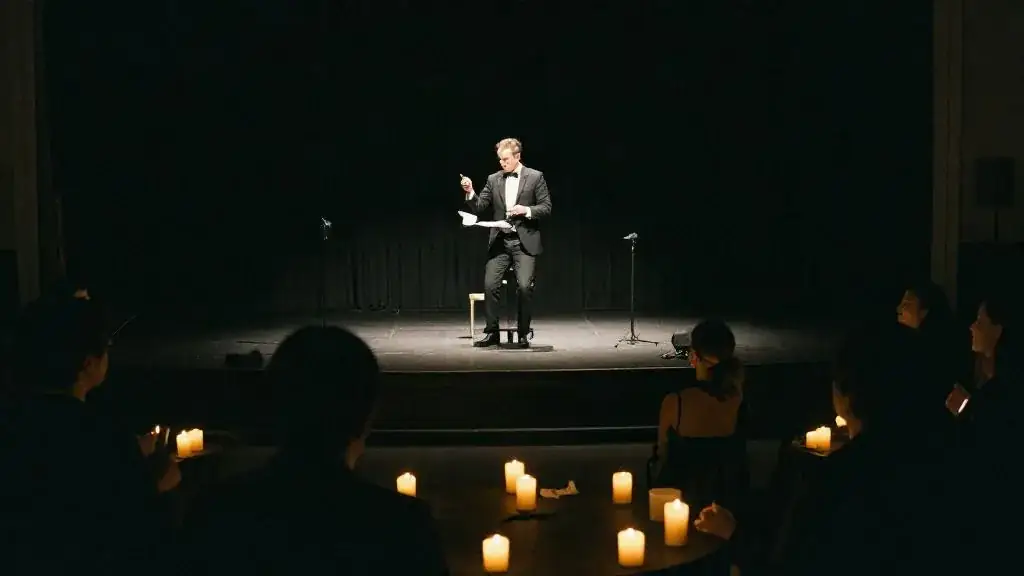
The committee’s first idea was an aerial duo during dinner. The room has no engineer-confirmed rigging point and a ceiling at the bottom of the range, and dinner is the wrong slot. Out. The second idea was a band; the program has no dancing, so a band would be an expensive ambient act. Out.
What went in: two strolling close-up magicians for the 25-minute gap between seating and the first plate, because arrivals are staggered and a seated room is easiest to work table by table; at $600–$1,500 for two hours each (typical GTA range, 2026) they cost less than one aerial act and reach more people. A mentalist for 30 minutes right before the ask, introduced by the MC, at $1,500–$5,000 (typical range); his set ends with the room laughing and looking at the stage, which is exactly when the auctioneer wants to walk on. A pianist on the house grand for dinner at ambient volume. Total entertainment, roughly $6,000 inside the $40,000 envelope.
We used the entertainment finder to shortlist the mentalist by audience and room type, then watched a full unedited set before booking.
Common mistakes
- Booking an aerialist for a room with no engineer’s letter and hoping the venue will not ask.
- Putting the stage act over dinner service.
- Opening the dance floor before the show.
- Choosing the act from the reel without asking who will be in the room.
- No MC introduction, so the act starts to a room still talking.
- Three roaming performers for 300 cocktail guests and wondering why half the room never saw them.
Worksheet
Download the worksheet, complete it for your own event (or the running gala example), and keep it in your course binder. It takes about 15 minutes.
Check your understanding
Related guides, venues and vendors

Sponsorship and table sales
Specialist · Fundraisers · 15 min
Packages, pricing, the committee, and the 12-week sales calendar.
Read more
City permits: parks, tents, noise, road closures
Module 8: Legal, Safety & Risk (Ontario) · 15 min
Toronto, Mississauga, Vaughan and Hamilton processes for park bookings, tents, amplified sound, road closures and food vendors.
Read more
Holiday parties that people attend
Specialist · Corporate · 15 min
Dates, budgets per head, programs, and the entertainment that works for 50 to 500 colleagues.
Read more