Mics, mixers, speakers, projectors, LED walls, lighting washes, gobos, DMX. Enough to brief an AV company and check their quote.
Read the transcript
AV basics for planners.
Mics, mixers, speakers, projectors, LED walls, lighting washes, gobos, DMX.
Enough to brief an AV company and check their quote.
What you need to know, and what you can leave to the AV company.
You do not need to run a mixer.
You need to brief an AV company well enough that the quote is right, read the quote well enough to spot padding, and walk into the room on the day knowing what each box does.
Six concepts.
A wired lectern mic is the most reliable thing in the room. Wireless handhelds suit MCs and Q and A; lapel (lavalier) mics suit presenters who move, but pick up jewellery and rustle; headsets suit performers.
The mixer takes every source (mics, laptop audio, the DJ) and sends it to speakers. For speech in a ballroom of 200, two speakers on stands at the stage plus two delay speakers halfway back keep the volume even; a band or DJ brings their own.
Reading the quote.
Briefing the AV company.
Send the creative brief, the floor plan, the draft run of show, the performer riders, the venue's AV rules and the power information.
Then ask for a site visit together.
On the day.
A sound check with every microphone and every laptop before doors, a cue-to-cue with the MC for every transition, and the AV operator with a copy of the run of show that has an AV column.
The operator should know what happens next before you say it.
That is the lesson. The worksheet and the quiz are just below this video.
What you will be able to do
- Brief an AV supplier
- Read an AV quote
- Plan mics and lighting for speeches and acts
What you need to know, and what you can leave to the AV company
You do not need to run a mixer. You need to brief an AV company well enough that the quote is right, read the quote well enough to spot padding, and walk into the room on the day knowing what each box does. That is six concepts.
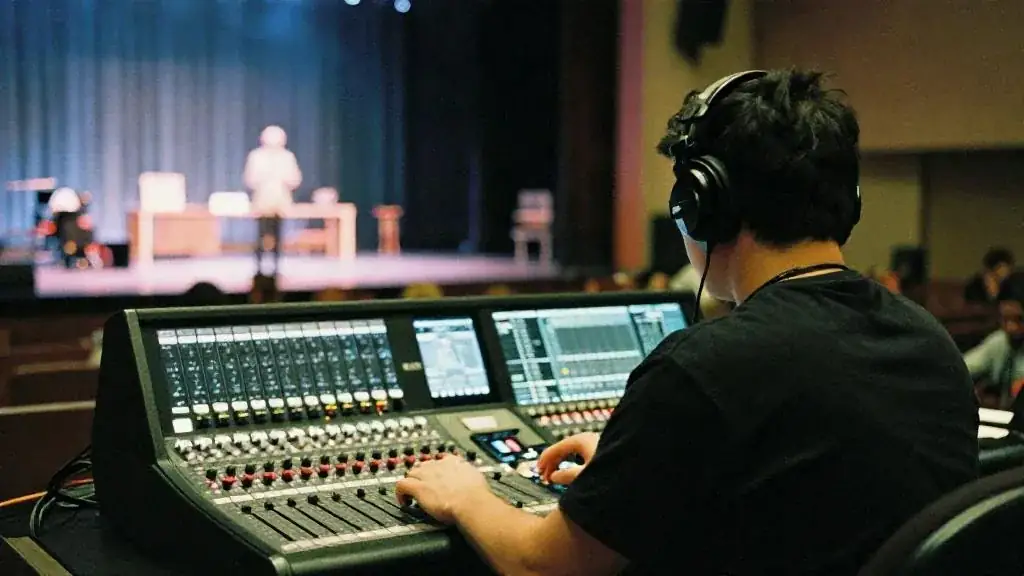
Six concepts
- Microphones. A wired lectern mic is the most reliable thing in the room. Wireless handhelds suit MCs and Q&A; lapel (lavalier) mics suit presenters who move, but pick up jewellery and rustle; headsets suit performers. Order one more wireless than you think you need, and spare batteries for every one.
- Mixer and speakers. The mixer takes every source (mics, laptop audio, the DJ) and sends it to speakers. For speech in a ballroom of 200, two speakers on stands at the stage plus two delay speakers halfway back keep the volume even; a band or DJ brings their own.
- Screens and projection. A 16:9 screen of about 3.6 m (12 ft) wide is comfortable for 200 people seated at rounds; an LED wall is brighter, needs no projector throw and costs several times more. Ask for a confidence monitor (a screen facing the stage) for any speaker using slides.
- Lighting. Uplighting (fixtures on the floor washing walls) changes the room for the least money; pin spots light centrepieces; a stage wash lights faces; a gobo projects a logo or pattern. Dance looks (moving heads, haze) are a separate quote. DMX is the control protocol; it matters only in that one operator can run cues from one desk.
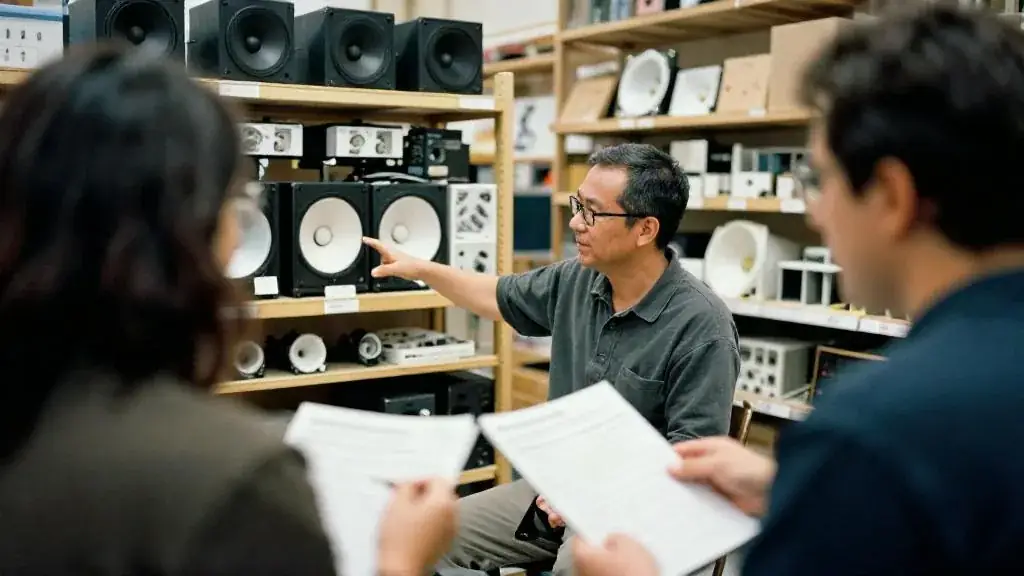
- Power. Lighting and sound need circuits the venue must provide; a large setup may need a distro from the venue’s power room with an electrician. Ask the venue what is available before the AV company quotes.
- Labour. Set-up, operation and strike are hours on the quote. A plated gala with a program typically needs one audio operator and one lighting operator through the show, plus set-up and strike crews.
Reading the quote
| Line | Reasonable | Question it if |
|---|---|---|
| Equipment | Itemised, with quantities | “Sound package” with no items |
| Labour | Hours × rate, with a call time and an out time | No end time; overtime undefined |
| Transport | A truck and a crew | Multiple trucks for a one-room event |
| Management fee | A technical director on larger shows | A percentage on top of everything, on a small show |
| Venue AV | House system included in the room rate | Exclusive in-house AV at list price with no negotiation; some hotels charge a fee for outside AV |
Briefing the AV company
Send the creative brief, the floor plan, the draft run of show, the performer riders, the venue’s AV rules and the power information. Then ask for a site visit together. The two questions that save the most money: “What does the venue already have that we can use?” and “What is the simplest setup that does this program well?”
On the day
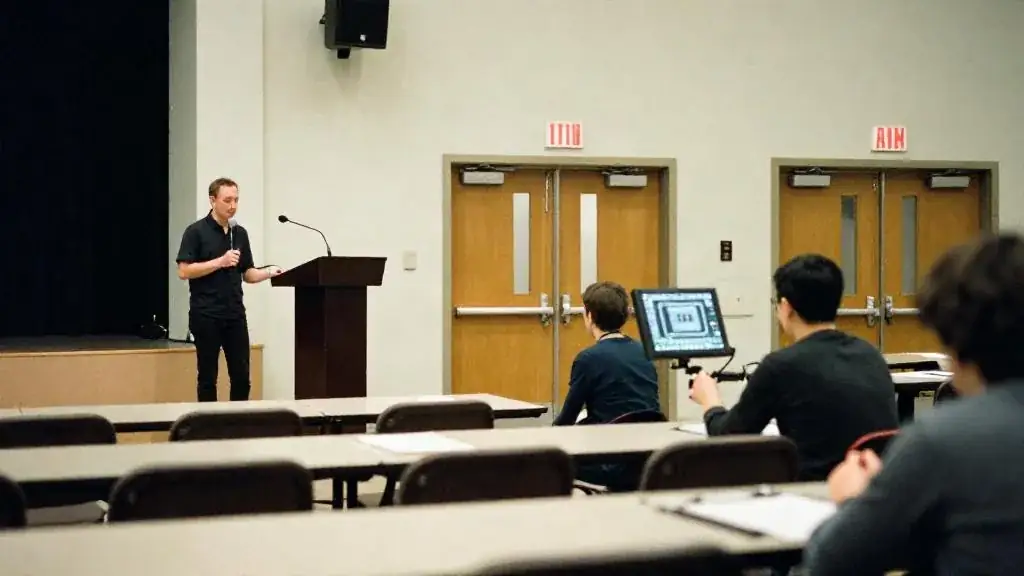
A sound check with every microphone and every laptop before doors, a cue-to-cue with the MC for every transition, and the AV operator with a copy of the run of show that has an AV column. The operator should know what happens next before you say it.
Worked example
The Harbour Gala hotel included the house PA, two wireless handhelds and a riser in the contract. The AV company added a lapel mic for the mentalist, a 3.6 m screen with projector and confidence monitor for the mission video, a stage wash, uplighting on the pillars to turn them into features, and one operator for the show: $1,900 all-in. The first quote was $4,300 because it included a second screen and a lighting desk nobody needed.
Common mistakes
- Not asking what the venue has already.
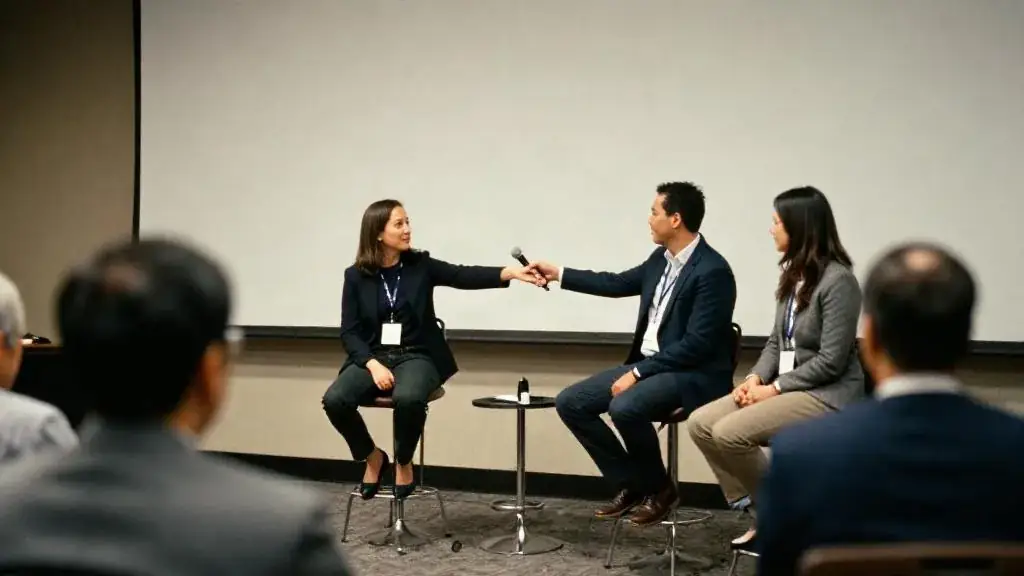
- A speaker with slides and no confidence monitor.
- One wireless mic for an MC, a speaker and a Q&A.
- A lighting quote with haze in a room with smoke detectors that trigger an evacuation.
- No AV column on the run of show.
Numbers to know
Most AV conversations go wrong on power, not on equipment. A standard household-style outlet in Ontario sits on a 120-volt circuit, usually rated at 15 amps, which works out to about 1,800 watts. Electricians plan continuous loads at no more than 80 percent of that, so think of each ordinary circuit as roughly 1,400 watts of usable capacity.
That number explains a lot. LED uplights draw very little and a dozen can share a circuit; a pair of powered speakers and a small mixer are usually fine; a coffee urn, a hair straightener in the green room and a DJ rig on the same circuit will trip a breaker in the middle of the first dance. Ask the venue for a power map showing which outlets share a breaker, and give the AV company the list of everything that plugs in, including the caterer’s warming equipment and the photo booth.
Other figures worth carrying in your head:
- Allow time for the AV company to arrive several hours before doors for a ballroom set-up, and longer for anything with truss or an LED wall. Ask for their set-up estimate in hours, not in a general “morning of”.
- Sound check and the cue-to-cue need a quiet room. Book at least an hour before doors when caterers are not setting cutlery.
- Screen size is driven by the farthest seat. A common rule is that the back row should be no more than about six to eight screen heights away; if your room is deeper, add a second screen rather than a bigger one.
- Wireless microphones need batteries for the whole show plus a spare set, and frequencies cleared for the room. Ask the operator to confirm both.
Ontario rules that apply
Electrical safety in Ontario is overseen by the Electrical Safety Authority (ESA). In practice, anything beyond plugging equipment into existing outlets, such as tying into a venue’s power distribution or running temporary power in a tent, should be done by a licensed electrical contractor, and larger temporary installations may need an inspection. The venue and a professional AV company will know what applies; your job is to ask the question early enough that the answer can be scheduled.
Accessibility applies to AV. Under the AODA, organizations that serve the public must provide accessible customer service, and a well-planned AV brief helps: captions on video content, a microphone the speaker can reach from a seated position, a ramp or level access to the stage if a presenter uses a mobility device, and an assistive listening system or reserved seating near the speakers for guests with hearing loss. Ask the AV company what they can supply, and put it on the quote.
Playing recorded or live music at an event is generally covered by music licensing tariffs certified by the Copyright Board of Canada. Many venues already hold the licence that covers events in their rooms, so ask the venue first. In a raw space or outdoors, check who is responsible before you settle on the playlist.
GTA practice notes
Downtown Toronto hotels and convention venues often have an in-house AV provider and may charge a fee, or require their own technician on site, when you bring in an outside company. That is not a reason to give up, but it changes the arithmetic. Get the in-house quote, the outside quote and the outside-AV fee in writing, then compare all three. Some large venues also work with unionized stage labour, which affects call times, minimum hours and who is allowed to touch what. The lesson on hotels, unions and load-in rules covers this in depth.
Load-in in the GTA is a logistics problem as much as a technical one. A truck needs a dock or a legal place to unload, a time slot that does not clash with the caterer, and parking for the crew afterwards. Venues on busy downtown streets may have strict dock schedules, so put the AV truck’s arrival on the production schedule and send it to the venue.
Questions to ask
Before you approve any AV quote, ask the venue what is included in the room (house sound, a lectern mic, a screen, a riser), what the power available in the room is and where it is, whether outside AV is permitted and what it costs, and whether haze or smoke is allowed with their fire alarm system. Ask the AV company who the operator on the night is and whether they were on the site visit, what the backup plan is for a failed wireless mic or laptop, what overtime costs per hour and when it starts, and how they will handle captions or assistive listening if guests need them. Write the answers into the brief so that they survive staff changes on either side.
How this connects to the next lesson
An AV quote is a contract in waiting. Every question you asked here, from call times to overtime and outside-AV fees, needs to appear in writing before you pay a deposit. The next lesson, on vendor contracts and insurance, shows you how to make that happen, and why an AV company that rigs anything overhead must give you a certificate of insurance before load-in. Keep the performer tech rider template nearby, because performers’ sound and lighting needs feed straight into the AV brief.
Worksheet
Download the worksheet, complete it for your own event (or the running gala example), and keep it in your course binder. It takes about 13 minutes.
Check your understanding
Related guides, venues and vendors
Module 5 workshop: book a full vendor team
Module 5: Vendors & Entertainment · 15 min
For the gala from Module 3, select entertainment, caterer, AV and photo from the Directory, collect riders and COIs, and build the…
Read more
Module 2 workshop: discovery to proposal in a week
Module 2: Discovery & Concept · 15 min
Take a mock client (a tech company, 180 guests, holiday party, $35,000) from discovery call to signed proposal.
Read more
Privacy, photo rights and PIPEDA
Module 8: Legal, Safety & Risk (Ontario) · 15 min
Guest data, photography consent, performer image rights, and what you can post. Includes the signage and consent language that works.
Read more