The digital control protocol that lighting consoles use to control fixtures.
Read the transcript
DMX.
The digital control protocol that lighting consoles use to control fixtures.
How it works in practice.
DMX sends a stream of numbers from a lighting console to fixtures along a daisy-chained cable.
One chain, called a universe, carries 512 channels.
How to handle it.
Ask the lighting company which fixtures are on DMX control and which are stand-alone or on the venue's house system.
Find out how the venue's house lights are controlled. In many hotels they are on a wall panel, not the console, so a blackout needs a venue staff member at the switch.
Questions to ask.
Where will the lighting operator sit? Usually at front of house, with a view of the stage.
Can the emergency and exit lighting stay on during a blackout? It must, and the act has to work with it.
More detail, examples and common mistakes are on this page, below the video.
How it works in practice
DMX sends a stream of numbers from a lighting console to fixtures along a daisy-chained cable. One chain, called a universe, carries 512 channels. Each fixture is given a starting address and uses as many channels as it needs: a simple dimmer might use one, a moving light can use dozens for colour, position, gobo and focus. Larger shows run several universes over a network and convert back to DMX near the fixtures. Wireless DMX transmitters are common with battery uplights.
You do not need to program it. What matters to a planner is that anything on DMX can be pre-programmed into cues, then played back on a single button at the right moment. That is how a room goes from dinner amber to dance-floor colour, or snaps to black for a finale.
How to handle it
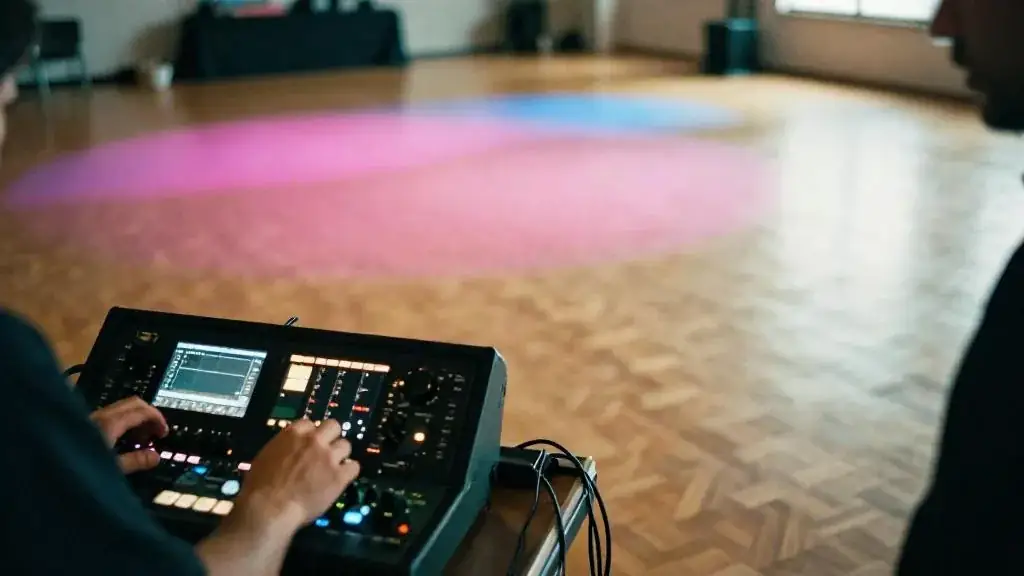
- Ask the lighting company which fixtures are on DMX control and which are stand-alone or on the venue’s house system.
- Find out how the venue’s house lights are controlled. In many hotels they are on a wall panel, not the console, so a blackout needs a venue staff member at the switch.
- Write every lighting change as a cue in the run of show, with the timing and who calls it.
- Collect lighting cues from every tech rider, especially for a stage illusion act, where a blackout is part of the trick.
- Book programming time on site. Pre-programming offsite helps, but cues still need focus and checking in the room.
- Rehearse each cue at least once with the performer or speaker.
Questions to ask
- Where will the lighting operator sit? Usually at front of house, with a view of the stage.
- Can the emergency and exit lighting stay on during a blackout? It must, and the act has to work with it.
- What happens if the wireless signal drops: do fixtures hold their last look or go dark?
- Is there one operator for the whole night, or a hand-off after dinner?
Related tools
The run-of-show template has a lighting column for cues, and the performer tech rider template asks acts to list theirs in advance. See the production schedule entry for fitting programming time into load-in.
Why it matters
Knowing a fixture is DMX-controlled tells you it can be cued, dimmed and colour-changed in the run of show.
Example
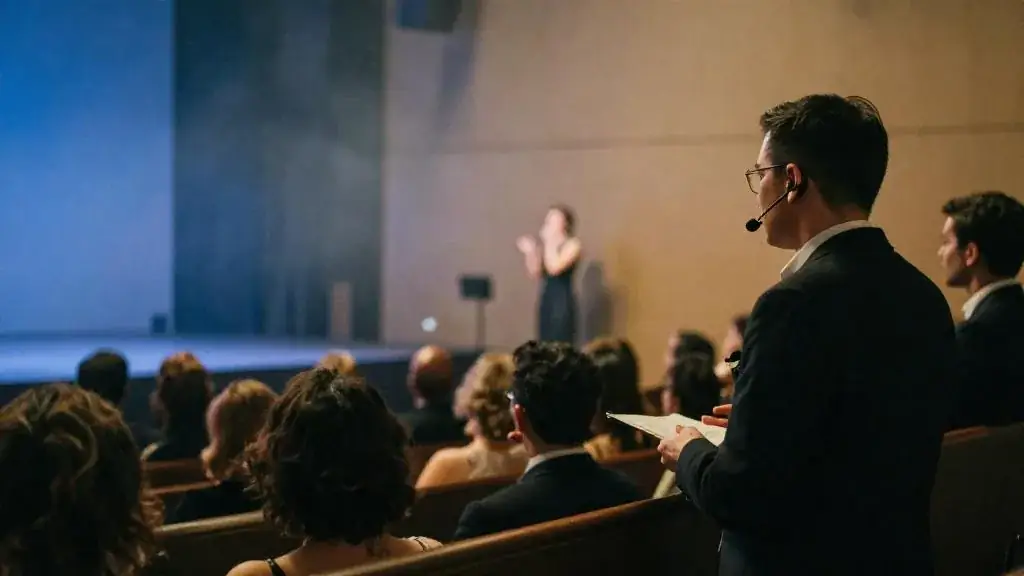
The lighting designer programs a blackout cue for the illusionist's finale over DMX.
Common mistakes
- Expecting battery uplights with no DMX to change colour on cue
Related guides, venues and vendors

Dietary codes
Food & Beverage
Short labels (V, VG, GF, DF, NUT, H, K) placed on the seating chart so servers deliver the right plate.
Read more
Food stations
Food & Beverage
Themed serving points guests visit, often with chefs preparing to order.
Read more
COI (Certificate of Insurance)
Business & Legal
A document from an insurer confirming a vendor holds liability coverage at stated limits for a date.
Read more