Ontario licence rules, officiants, ceremony order, processional and recessional, rain plans.
Read the transcript
Ceremony logistics and the marriage licence.
Ontario licence rules, officiants, ceremony order, processional and recessional, rain plans.
The licence comes first.
Nothing else in the ceremony matters if the paperwork is wrong.
In Ontario the marriage licence is issued by municipal clerks.
Choosing and briefing the officiant.
Ask three things of every officiant: Are you registered to solemnize marriages in Ontario?
What is your ceremony length and format?
The order of ceremony.
A civil or non-denominational ceremony usually runs 20 to 30 minutes.
This is the standard skeleton; move or cut any element the couple does not want.
Site logistics.
The rain plan.
An outdoor ceremony without a written rain plan is a plan to improvise in front of 160 people.
The plan needs three things: a named indoor or tented alternative that is already set up or can be set in under an hour, a decision time (usually two to three hours before the ceremony) and a decision maker (you, not the couple).
That is the lesson. The worksheet and the quiz are just below this video.
The licence comes first
Nothing else in the ceremony matters if the paperwork is wrong. In Ontario the marriage licence is issued by municipal clerks. Both parties attend in person with identification, there is no HST on the licence, and in Toronto the fee is $180 (confirm the current fee with the clerk’s office before you send the couple). The licence is valid for 90 days, so the appointment belongs in the last three months of your timeline, not in month twelve. Put the appointment on the shared calendar, and put the licence itself in the emergency kit on the day; the officiant needs it before the ceremony.
The marriage must be solemnized by a registered officiant and there must be two witnesses. A friend reading a script is not an officiant unless they are registered; if the couple wants a friend to lead the ceremony, the usual solution is for a registered officiant to attend and perform the legal portion while the friend does the rest. Religious officiants at churches, gurdwaras, mosques and synagogues are typically registered through their institution, but ask.
Choosing and briefing the officiant
Ask three things of every officiant: Are you registered to solemnize marriages in Ontario? What is your ceremony length and format? Do you handle the paperwork after the ceremony? Then send them the draft order of ceremony, the names with pronunciations, the music cues and the run of show. Confirm the arrival time in writing. The officiant should be in place before the first guest sits down.
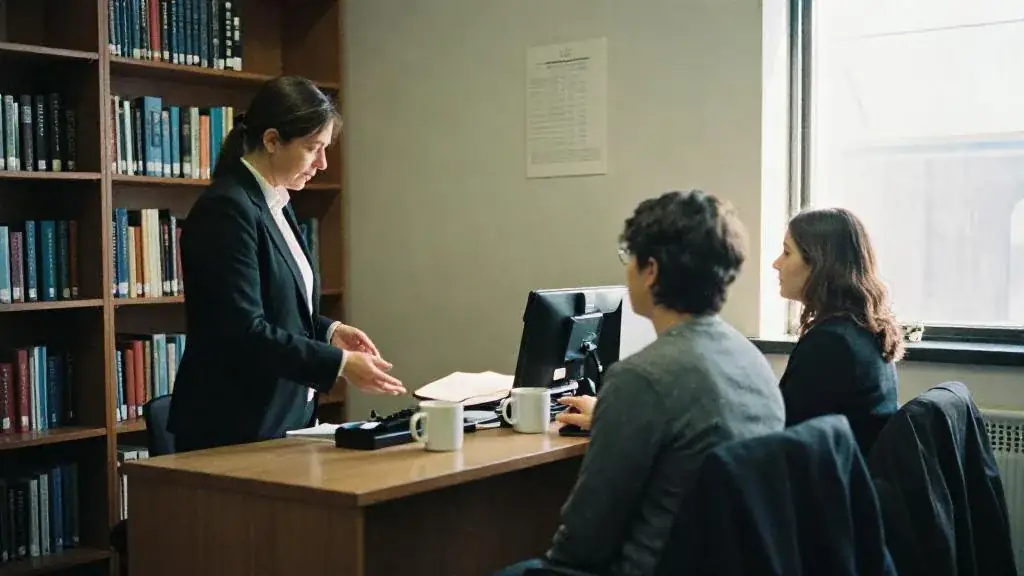
For a religious ceremony, the institution sets the format, the music rules and sometimes the dress code and photography rules. Ask early whether flash, drones and videography are permitted, and whether there are preparation classes or documents required of the couple.
The order of ceremony
A civil or non-denominational ceremony usually runs 20 to 30 minutes. This is the standard skeleton; move or cut any element the couple does not want.
- Prelude music while guests are seated (20 to 30 minutes of playlist or live musician).
- Seating of grandparents and parents.
- Processional: officiant and partner at the front first, then wedding party, then the second partner with escort. Processional music starts on a cue from the planner.
- Welcome and opening words.
- Readings, if any.
- Declaration of intent (the “I do”).
- Vows.
- Exchange of rings.
- Optional ritual: unity candle, sand, handfasting, cultural element.
- Pronouncement and kiss.
- Signing of the register with the two witnesses; music covers this.
- Recessional, couple first, then wedding party in reverse order.
Write the processional as a list of names in order with who they walk with and what they do when they arrive at the front. Give copies to the officiant, the musician or DJ, the photographer and whoever is cueing from the back. The person at the back controls the pace: one pair at a time, and the next pair goes when the previous one is halfway.
Site logistics
| Item | What to confirm |
|---|---|
| Seating | Chairs set for the count plus 5 per cent, centre aisle at least 1.5 m, reserved rows marked, companion seats beside accessible positions |
| Sound | Lapel mic on the officiant and one on the speaking partner, or a handheld on a stand; a dedicated speaker for outdoor ceremonies; test it with music and voice |
| Signing table | Table, two chairs, pen that works, the licence and the register, positioned where the photographer can shoot it |
| Sightlines | Stand at the back row and check what a seated guest sees; move the arch or the florals if they block the couple |
| Timing | Guests seated 15 minutes before; wedding party staged out of sight 10 minutes before; couple’s first look earlier if planned |
| Weather | Sun direction at ceremony hour, shade or umbrellas, water for guests, heaters for shoulder-season evenings |
The rain plan
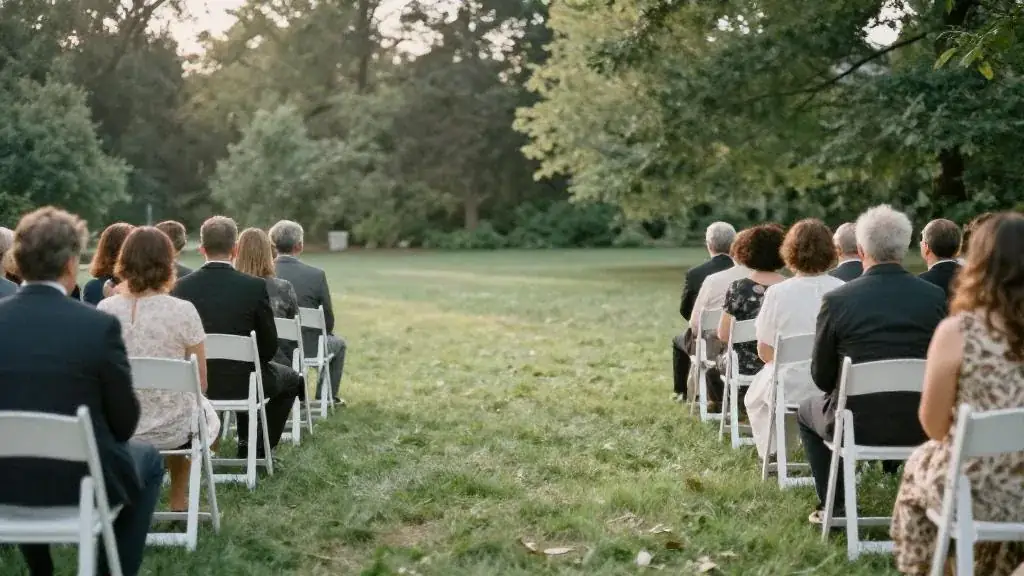
An outdoor ceremony without a written rain plan is a plan to improvise in front of 160 people. The plan needs three things: a named indoor or tented alternative that is already set up or can be set in under an hour, a decision time (usually two to three hours before the ceremony) and a decision maker (you, not the couple). Tents for a ceremony of this size easily exceed 60 m² and therefore need a building permit in Ontario, flame-resistant fabric certification and the required clearances; the tent size calculator will tell you how large the tent must be. If the rain plan is to use the reception room, work out with the venue how the room is flipped from ceremony to dinner and how long the flip takes; the cocktail hour is usually where the flip hides.
Worked example: the Ferreira–Khan wedding
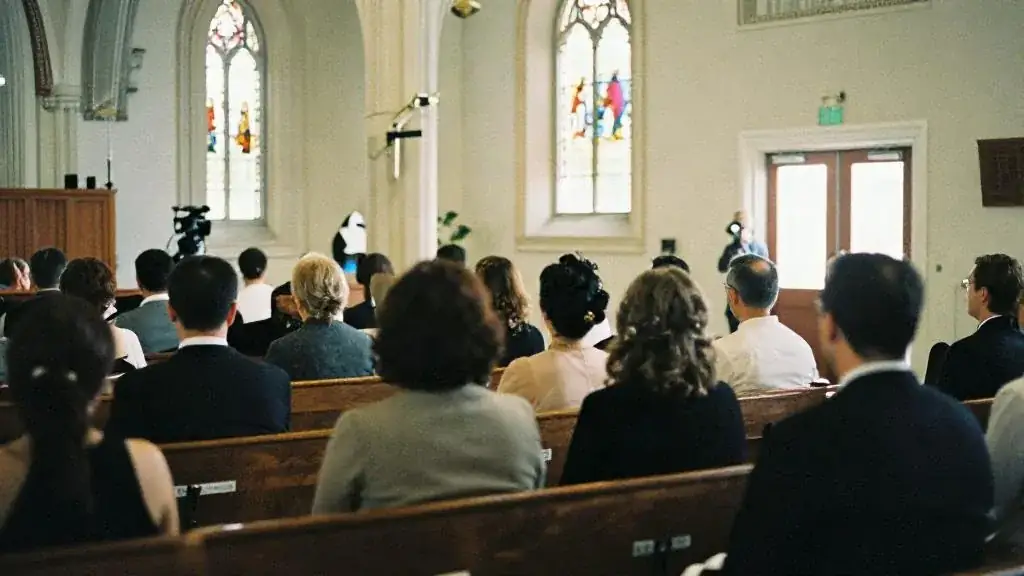
Ana and Omar had two ceremony moments on the Saturday. The church ceremony at 1 p.m. was led by the parish priest, who is registered to solemnize marriages and handled the legal paperwork, so the licence went to the church office the week before, with a copy in the kit. The nikah at the loft at 5 p.m. was a religious ceremony led by the imam in a side room with the two families, immediately before the reception. We confirmed with the imam what he needed in the room (a table, seating for the families and witnesses, a quiet space, no alcohol in the room), and the caterer held the bar closed until the nikah concluded. The processional at the church was eleven people including two flower girls; we rehearsed it on the Friday with the real music, and the pacing cue was the priest nodding to our assistant at the back door.
Common mistakes
- Getting the licence too early (it expires after 90 days) or too late (the week of).
- An unregistered friend performing the legal portion.
- No microphone outdoors; the back half hears nothing.
- No rehearsal of the processional with the actual music.
- A rain plan that exists only in the planner’s head.
Worksheet
Apply this lesson to a real or practice event using the worksheet, then mark the lesson complete to track your progress toward the certificate.

Related guides, venues and vendors

Art Gallery of Ontario
Downtown, Toronto · up to 450 guests
In-house catering
The gallery runs its own food and beverage service from three on-site kitchens.
Read more
Two Sisters Vineyards
Niagara · up to 75 guests
In-house catering · Outdoor space
Two Sisters is a vineyard estate and winery in Niagara-on-the-Lake.
Read more
Holiday party magician & illusionist · Magic Magic roster
Entertainment, Magicians
Magician and illusionist for holiday parties, weddings and corporate receptions, performing visual close-up magic and a compact stage set.
Read more