The ask, the paddle raise, live and silent auctions, and the entertainment that keeps donors in the room.
Read the transcript
The fundraising program.
The ask, the paddle raise, live and silent auctions, and the entertainment that keeps donors in the room.
What a fundraising program actually has to do.
A gala is not a dinner with a speech in it.
It is a revenue event with a dinner wrapped around it, and every minute of the program either moves money or protects the minute that will.
The four revenue engines and when each one runs.
The silent auction must close before the paddle raise so the two never compete for attention.
The live auction warms the room with laughter and a bit of competition, then the paddle raise converts that energy into straight gifts.
Entertainment that keeps donors in the room.
Here is a timing rule we treat as fixed: no stage entertainment during dinner service, ever.
Servers crossing sightlines, cutlery noise and the smell of a main course beat any performer.
Worked example: the Harbour Gala run of show.
Two hundred guests, Thursday in November, downtown hotel ballroom, twenty rounds of ten.
Cocktails run 6 to 7, dinner 7 to 9, and the foundation wants the paddle raise done before 9 p.m. so people leave on a high and the Friday-morning office crowd gets home.
Common mistakes.
Letting the chair, the CEO and the board chair each have ten minutes. Three speakers at four minutes each is a program; three at ten is an exodus.
Running the live auction after dessert. Energy is gone and so are the people who have babysitters.
That is the lesson. The worksheet and the quiz are just below this video.
What a fundraising program actually has to do
A gala is not a dinner with a speech in it. It is a revenue event with a dinner wrapped around it, and every minute of the program either moves money or protects the minute that will. Once you see it that way, the decisions get easier: the entertainment, the speeches, the video and the food service all get judged by one question. Does this keep donors in the room, warm, and ready for the ask?
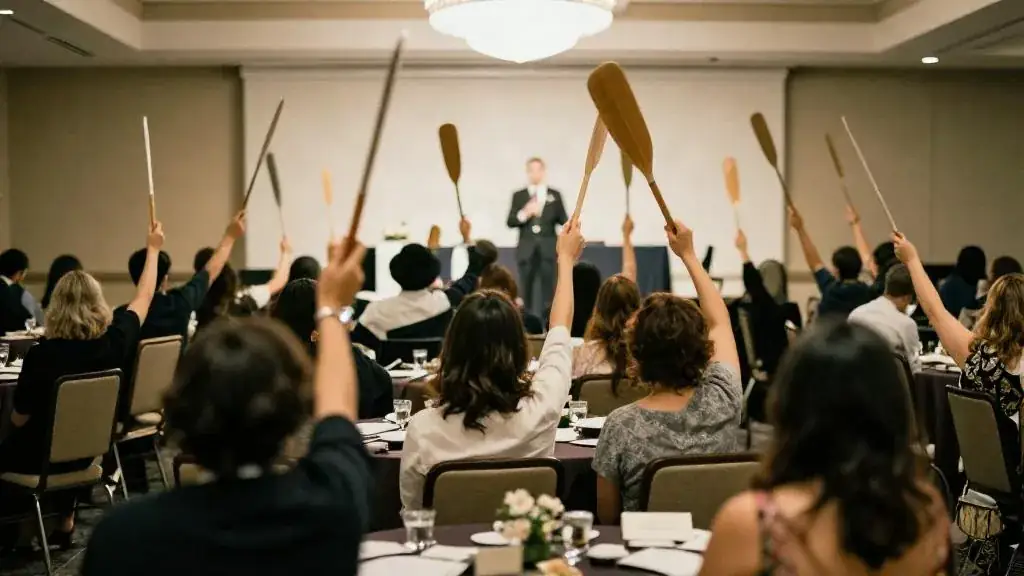
The ask is the moment the organization tells the room what the money does and invites them to give, right now, in public. In Toronto hospital-foundation galas that moment is usually a paddle raise: an auctioneer or MC calls out giving levels from the top down ($10,000, $5,000, $2,500, $1,000, $500) and guests raise a numbered paddle to commit. Spotters write down paddle numbers. Nobody pays at the table; the commitment is recorded and invoiced or charged afterwards.
Everything else in the program is support for that moment. The impact video softens the room. The patient or family speaker makes it personal. The entertainment set gives people a reason to stay seated through the gap between dinner and the ask, and sets the emotional temperature the auctioneer needs.
The four revenue engines and when each one runs
| Engine | When it runs | What it needs from you |
|---|---|---|
| Table and ticket sales | Weeks 12 to 1 before the event | A price, a package, a committee, a deadline (see lesson 2) |
| Silent auction | Opens at cocktails, closes during dessert | Mobile bidding or bid sheets, a display area with lighting, a closing announcement, a checkout desk |
| Live auction | Two to four lots immediately before the paddle raise | A real auctioneer, lots worth standing up for, a hard time cap |
| Paddle raise | Before 9 p.m., before dessert is cleared, before anyone leaves | A rehearsed script, a lead gift seeded in advance, spotters, a visible thermometer or screen |
Order matters. The silent auction must close before the paddle raise so the two never compete for attention. The live auction warms the room with laughter and a bit of competition, then the paddle raise converts that energy into straight gifts. Put the paddle raise after dessert and after the band starts, and you will watch a third of your room pick up their coats.
Entertainment that keeps donors in the room
Here is a timing rule we treat as fixed: no stage entertainment during dinner service, ever. Servers crossing sightlines, cutlery noise and the smell of a main course beat any performer. Entertainment belongs in the gaps.
- Cocktail hour (roughly 1 performer per 40 to 60 guests). Strolling close-up magicians or a mentalist working table to table. They break up the cliques, give sponsors something to talk about and stop the bar from becoming the only activity.
- The 20 to 30 minute gap between seating and the first plate. Guests are seated, welcomed, and waiting. This is dead air unless you fill it. Strolling acts can work the rounds here without competing with a plate in front of anyone.
- The set right before the ask. A 20 to 30 minute stage act, ideally a mentalist, because a mentalist set is quiet, seated, attentive and ends on a high note the MC can step straight into. Keep it under 30 minutes; the auctioneer needs the room while it is still awake.
- After the ask. Band, DJ or dance floor. By now the money is in, so anyone who leaves is a lost drink, not a lost gift.
The MC introduces every stage act, by name, in one sentence, and thanks them afterwards. A performer who walks on unannounced reads as a lull, not a feature.
The site directory at /directory/ lists GTA magicians, mentalists and circus acts by category. Listings owned by the site founder carry a visible disclosure and get no ranking preference, so compare on the brief, not on position.
Worked example: the Harbour Gala run of show
Two hundred guests, Thursday in November, downtown hotel ballroom, twenty rounds of ten. Cocktails run 6 to 7, dinner 7 to 9, and the foundation wants the paddle raise done before 9 p.m. so people leave on a high and the Friday-morning office crowd gets home.
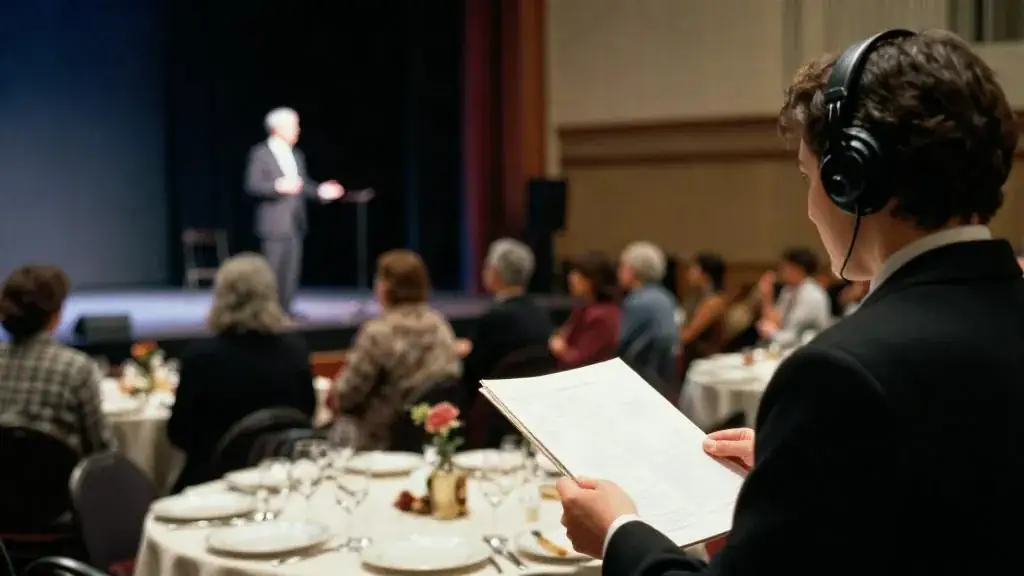
- 6:00 Doors. Silent auction open on mobile bidding, display tables along the pillar-free south wall. Two strolling magicians work the cocktail floor (200 guests, so two performers is at the lower end of the ratio; a third would be a nice-to-have).
- 6:55 Chimes. Guests move to tables.
- 7:00 to 7:25 Welcome from the foundation chair, sponsor thank-you, then the two magicians work the rounds during the 25-minute gap before the first plate.
- 7:25 First course down. No stage activity until plates are cleared.
- 8:00 Main course. Impact video runs quietly on screens during the transition only; sound stays low.
- 8:25 Mains cleared. Silent auction closes with a 2-minute warning from the MC.
- 8:30 Mentalist set, 25 minutes, introduced by the MC. Room is seated, full, and listening.
- 8:55 Patient speaker, 4 minutes. Auctioneer takes the stage straight after. Two live lots, then the paddle raise, done by about 9:15. (The target was before 9; we tell the foundation that 15 minutes late on the ask is fine, 45 minutes is not.)
- 9:20 Dessert, coffee, thank-you, band or DJ until 11.
Use the run-of-show template to lay this out with owners for each cue, and the entertainment hours planner to check that each act is booked for the right window, not just a flat two hours from doors.
Common mistakes
- Letting the chair, the CEO and the board chair each have ten minutes. Three speakers at four minutes each is a program; three at ten is an exodus.
- Running the live auction after dessert. Energy is gone and so are the people who have babysitters.
- Booking a loud, high-energy stage act right before the ask. The auctioneer then has to pull the room back down to listen. A mentalist or a quiet storyteller leaves the room exactly where the ask needs it.
- No lead gift. A paddle raise that opens at $10,000 and gets silence is painful. Line up one or two commitments at the top level before the night so the first hands go up immediately.
- Forgetting that the hotel bills on the schedule, not on your hopes. If dinner runs long because speeches ran long, the bar hours and staff overtime follow.
Worksheet
Apply this lesson to a real or practice event using the worksheet, then mark the lesson complete to track your progress toward the certificate.

Related guides, venues and vendors
Ontario Special Occasion Permit guide
October 17, 2026 · 2 min read
When you need an SOP, the types, timelines, costs, Smart Serve rules and the mistakes that get bars shut down.
Read more
Sponsorship and table sales
Specialist · Fundraisers · 15 min
Packages, pricing, the committee, and the 12-week sales calendar.
Read more
Stewardship after the gala
Specialist · Fundraisers · 15 min
Thank-yous, impact reports, and next year's save-the-date.
Read more