Vendor fees, sponsorship tiers, ticketing vs free, and the festival budget shape.
Read the transcript
Vendors, sponsors and revenue.
Vendor fees, sponsorship tiers, ticketing versus free, and the festival budget shape.
The shape of a festival budget.
A festival budget is lopsided.
Most of the cost is fixed and falls before the first visitor arrives: permits, insurance, staging, sound, tents, fencing, washrooms, security, first aid, waste and marketing.
Typical cost lines.
Sound, staging, power, fencing, barricades, signage and waste removal are quoted per event; get three quotes each.
Everything above is before 13 per cent HST unless the vendor says otherwise.
Vendor fees.
Food and merchandise vendors pay for a spot.
Organizers commonly charge a flat fee per spot, a percentage of sales, or a mix, and charge more for corner and stage-adjacent spots.
Sponsorship tiers.
A free festival lives on sponsors.
Build three or four tiers from benefits you can deliver and photograph:
Ticketed or free.
A free event draws a larger and more varied crowd and is easier for sponsors and municipalities to support, but there is no gate revenue and attendance is harder to predict.
A ticketed event gives you money in advance and a known number, but costs you fencing, entry staff, a ticketing platform and some of the crowd.
That is the lesson. The worksheet and the quiz are just below this video.
The shape of a festival budget
A festival budget is lopsided. Most of the cost is fixed and falls before the first visitor arrives: permits, insurance, staging, sound, tents, fencing, washrooms, security, first aid, waste and marketing. Revenue is mostly variable and arrives late, through vendor fees, sponsorships, beverage sales and, for ticketed events, the gate. The planner’s job is to make the fixed costs fit inside the revenue you can be sure of, and treat the rest as upside.
Typical cost lines
| Line | Typical GTA range, 2026 or note |
|---|---|
| Portable washroom trailer | $1,500–$3,500 per day each |
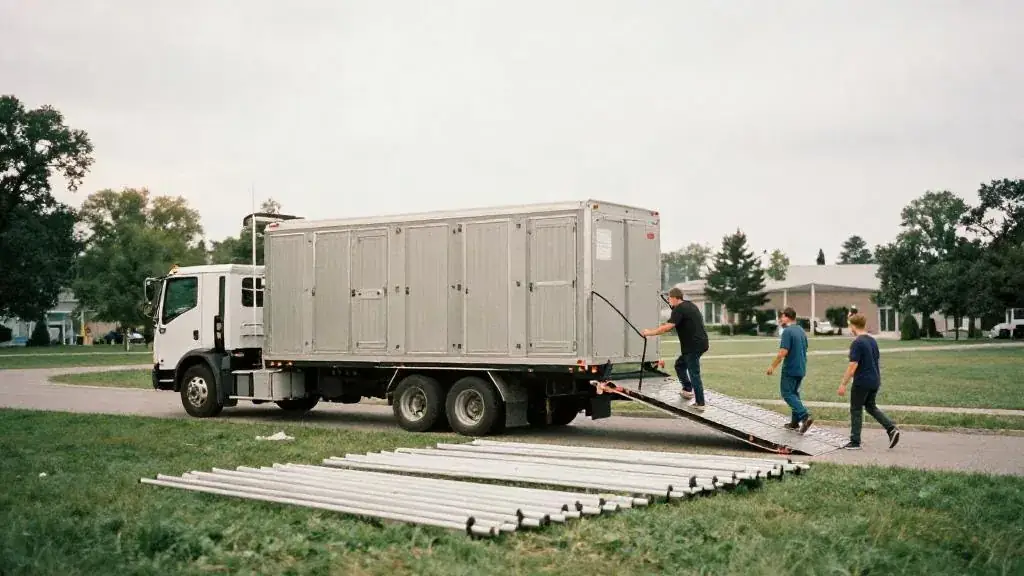
| 20×40 frame tent, installed | $1,200–$2,500 each, plus permit where aggregate exceeds 60 m² |
| Security guards | $35–$50 per hour per guard |
| Registered first-aid responders | $45–$70 per hour per responder |
| DJ | $900–$2,500 |
| Four-piece band | $2,500–$6,000 |
| Roaming close-up performers | $600–$1,500 per performer for 2 hours |
| Event liability insurance | One-day $2–5M policies run $150–$400 for small events; a street festival will cost more and the city may set the limit; get a quote |
| Permits, road closure, paid duty police, SOP | Check the current fees with the city and the AGCO; the SOP for a public sale event is $150 per day |
Sound, staging, power, fencing, barricades, signage and waste removal are quoted per event; get three quotes each. Everything above is before 13 per cent HST unless the vendor says otherwise.
Vendor fees
Food and merchandise vendors pay for a spot. Organizers commonly charge a flat fee per spot, a percentage of sales, or a mix, and charge more for corner and stage-adjacent spots. Flat fees are easier to collect and budget. Percentage fees are fairer to new vendors but need reporting you can trust. Whatever the model, write it into a vendor agreement that covers the spot size, power supplied, set-up and tear-down times, required licences and insurance, waste rules, and what happens if the event is cancelled for weather. Collect fees in advance; on the night is too late.
Curate the mix. Thirty vendors selling the same thing compete each other out of business, and next year they do not come back.
Sponsorship tiers
A free festival lives on sponsors. Build three or four tiers from benefits you can deliver and photograph:
- Presenting sponsor: name in the event title, on every poster and on the main stage banner, mentioned by the MC every hour, a booth in the best spot.
- Stage or zone sponsor: a named stage or area, signage, MC mentions before each act on that stage.
- Activation sponsor: a booth or experience on site, sampling where permitted, social media mentions.
- Community supporter: logo on the website and a thank-you board.
Price the tiers from what the sponsor gets (the reach and the on-site presence), not from what your budget is short by. Use the sponsorship deck template and promise only what the site plan has room for. After the event, send each sponsor a report with photographs of every benefit and the attendance estimate with its method.
Ticketed or free
A free event draws a larger and more varied crowd and is easier for sponsors and municipalities to support, but there is no gate revenue and attendance is harder to predict. A ticketed event gives you money in advance and a known number, but costs you fencing, entry staff, a ticketing platform and some of the crowd. A middle path is a free festival with a paid area, such as a beer garden or a reserved seating area at the main stage. Run each option through the event budget calculator and the event ROI calculator.
If alcohol is sold, it must be under a public-event SOP, with liquor bought from the LCBO, Beer Store or a winery under the permit, receipts on site, the permit posted, and every server Smart Serve certified. Service hours end at 2 a.m. with last call at 1:45, though your noise exemption and permit conditions will usually end it far earlier.
Worked example: the Lakeshore Night Market
The Lakeshore Night Market is free to enter. Its revenue comes from 40 food and merchandise vendors on flat fees with a premium for spots near the main stage, a presenting sponsor, two stage sponsors, four activation sponsors, and a beer garden run under a public-event SOP. Fixed costs went first in the budget sheet: permits and paid duty police (fees confirmed with the city), insurance at the limit the city required, stage, sound and power, three tents, eight washroom trailers, fencing for the beer garden, security and first aid by the hour, waste and marketing. The organizers set a rule: sponsorship and vendor fees together had to cover all fixed costs before the beer garden was counted. Beer garden revenue was budgeted at half of the estimate, as weather insurance in all but name. They built the full plan in the budget sheet.

Common mistakes
- Counting beverage revenue in the break-even; one rainy evening erases it.
- Selling sponsor benefits the site plan has no room for.
- Collecting vendor fees on the night.
- Too many vendors selling the same thing.
- Guessing permit and police costs instead of asking the city.
Worksheet
Apply this lesson to a real or practice event using the worksheet, then mark the lesson complete to track your progress toward the certificate.

Related guides, venues and vendors
Entertainmentverse
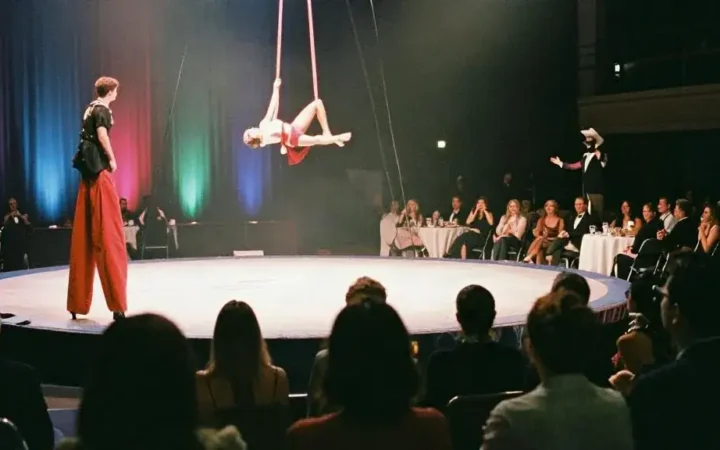
Circus & Aerial Acts, Entertainment, Fire, LED & Glow Acts, Magicians, Roaming Acts · Roaming acts from $650 · stage shows from $1,800
Entertainment agency combining the Magic Magic and Circus Universe rosters with new act categories: magic, circus, aerial, fire and LED, roaming characters,…
Read more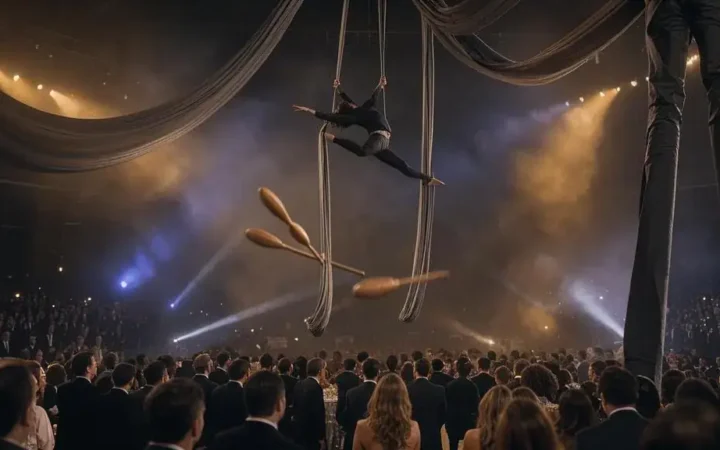
Circus Universe
Circus & Aerial Acts, Entertainment, Fire, LED & Glow Acts, Jugglers, Roaming Acts, Stilt Walkers · Roaming from $550 · aerial from $1,200 · fire from $900
Toronto circus entertainment company: aerialists, fire and LED performers, stilt walkers, jugglers, acrobats, contortion, strongmen, clowns, walkabout characters and full circus productions.
Read more
Ask a Performer: a touring juggler on what planners get wrong
October 21, 2026 · 1 min read
An internationally touring juggler on riders, ceilings, set lengths, and the one question he wishes every planner asked.
Read more