For the gala, design arrival, cocktail hour, dinner, program and departure with lighting cues, décor priorities and accessibility built in.
Read the transcript
Module 6 workshop: design the guest experience.
For the gala, design arrival, cocktail hour, dinner, program and departure with lighting cues, décor priorities and accessibility built in.
What you are producing.
This workshop pulls Module 6 into one document: a guest experience plan for the Harbour Gala that a lighting supplier, a florist, a caterer, an AV lead and a greeter could each read and know their part.
It has five sections, one per phase of the evening, and each section carries the same four lines: what the guest experiences, décor priority, lighting cue, and accessibility check.
Phase 1: Arrival, 5:45 to 6:15.
Street-level signage at both the main and side entrances.
Two coat check attendants.
Phase 2: Cocktail hour, 6:00 to 7:00.
Two bars, one at each end of the foyer, so no line exceeds about a dozen people.
Six pass-arounds circulating from 6:05, two vegetarian and one vegan clearly described by servers.
Phase 3: Transition and dinner, 6:55 to 8:10.
Seating screen at the ballroom doors; staff at each door directing by table number.
Pre-set first course on the table so the room looks ready.
Phase 4: Program and the ask, 8:15 to 9:05.
MC welcomes at 8:15 and introduces the CEO for a six-minute talk.
MC introduces the mentalist at 8:25; 15-minute set.
That is the lesson. The worksheet and the quiz are just below this video.
What you will be able to do
- Produce a guest experience plan
- Write lighting cues into the run of show
- Complete the accessibility checklist
What you are producing
This workshop pulls Module 6 into one document: a guest experience plan for the Harbour Gala that a lighting supplier, a florist, a caterer, an AV lead and a greeter could each read and know their part. It has five sections, one per phase of the evening, and each section carries the same four lines: what the guest experiences, décor priority, lighting cue, and accessibility check. Build yours in the run of show template with a lighting column added, and complete the venue tour checklist alongside it.
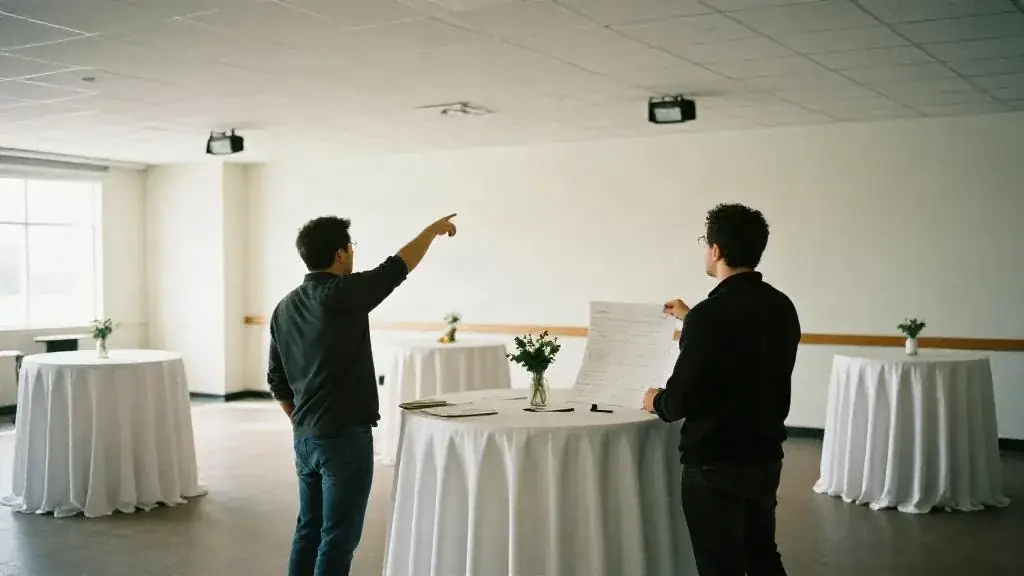
Work through the five phases in order. For each, the example below shows what we wrote for the gala; your job is to argue with it, improve it, and then write the version for your own event.
Phase 1: Arrival, 5:45 to 6:15
Guest experience. Street-level signage at both the main and side entrances. Two coat check attendants. A greeter with the guest list on a tablet at the top of the stairs, and a poured glass of sparkling wine or a non-alcoholic alternative within reach before registration, not after. The two strolling magicians start at 6:00 in the foyer, one near coat check so the line has something to watch.
Décor priority. Low. One branded welcome sign on an easel and the foundation’s logo gobo on the foyer wall. Nothing else; the foyer is a corridor.
Lighting cue 1, 5:45. Foyer house lights at 70 percent; four amber uplights along the foyer wall; gobo on.
Accessibility. Step-free side entrance signed and listed on the invitation; the push-button door tested at 5:30; the greeter knows the route to the elevator and the quiet room; the accessible washroom on the ballroom level checked unlocked.
Phase 2: Cocktail hour, 6:00 to 7:00
Guest experience. Two bars, one at each end of the foyer, so no line exceeds about a dozen people. Six pass-arounds circulating from 6:05, two vegetarian and one vegan clearly described by servers. Magicians rotate through groups; the planner nudges them toward the quiet corners and the sponsors. At 6:55 the MC’s voice, from the ballroom doors, invites guests to dinner.
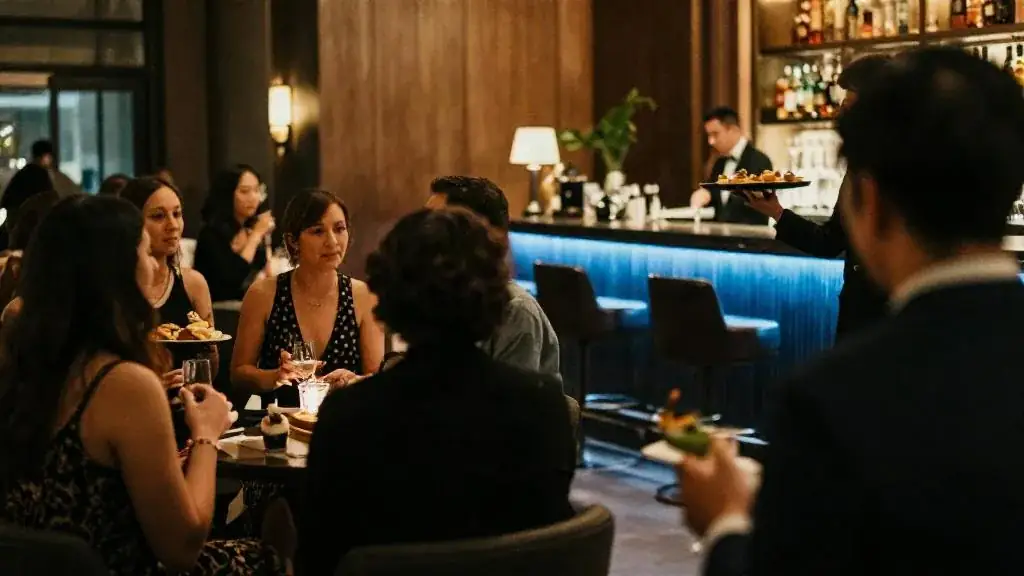
Décor priority. Low to medium. Bar fronts draped in the foundation’s blue; sponsor logos on a single screen loop, not on individual banners.
Lighting cue 2, 6:55. Foyer house lights to 100 percent for one minute (the universal signal that a space is closing), then ballroom doors open on amber uplights at 70 percent, pin spots on, house at 60 percent.
Accessibility. Bar height: a lowered counter section or a server who brings drinks to seated guests in the foyer. Sound in the foyer kept at conversational level; no amplified music during cocktails.
Phase 3: Transition and dinner, 6:55 to 8:10
Guest experience. Seating screen at the ballroom doors; staff at each door directing by table number. Pre-set first course on the table so the room looks ready. Magicians work the tables from 7:00 to 7:20, the gap before anyone touches a plate. Main plated from 7:35, cleared by 8:10. No one speaks from the stage while plates move.
Décor priority. High, but targeted. Twenty pin-spotted centrepieces: tall on the four sponsor tables near the stage, low with enclosed candles on the sixteen others. Hotel ivory linen. One printed program per table.
Lighting cue 3, 7:05. House to 40 percent, uplights amber, pin spots full, stage wash at half.
Accessibility. Tables 4, 9 and 15 on the aisle nearest the side exit for the three guests who asked for wheelchair seating, companions beside them; the aisle marked on the floor plan and kept clear of uplights and florist stands; dietary codes on the chart and with the captain.
Phase 4: Program and the ask, 8:15 to 9:05
Guest experience. MC welcomes at 8:15 and introduces the CEO for a six-minute talk. MC introduces the mentalist at 8:25; 15-minute set. MC introduces the auctioneer at 8:42; paddle raise runs to 8:58. Dessert and coffee land at 9:05 after the ask closes. The mentalist set sits right before the ask because the room is most attentive and most together after a shared moment; the ask lands on that energy.
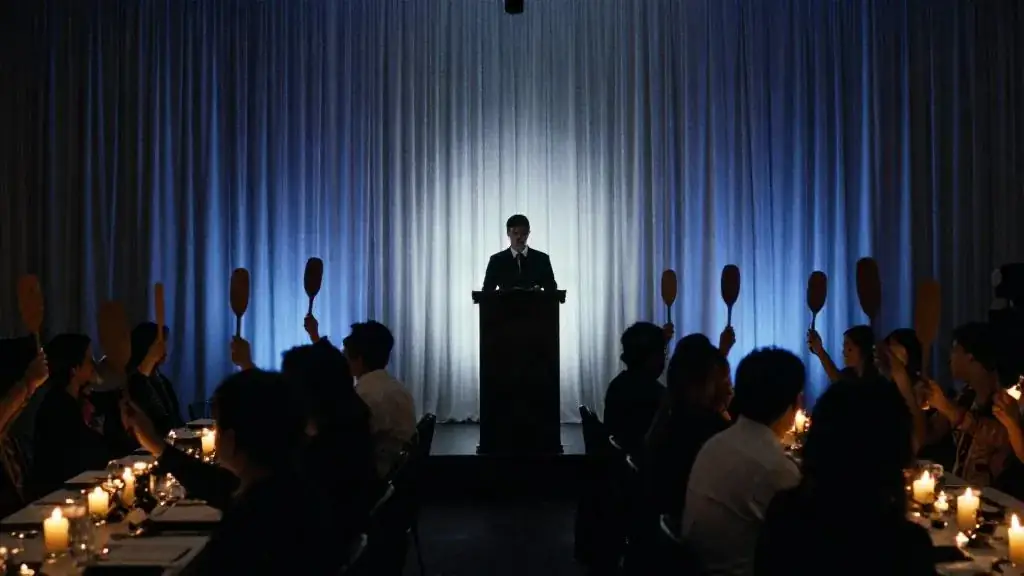
Décor priority. The backdrop. Six metres of draping with the logo gobo; every speaker photo and every paddle-raise photo is framed against it.
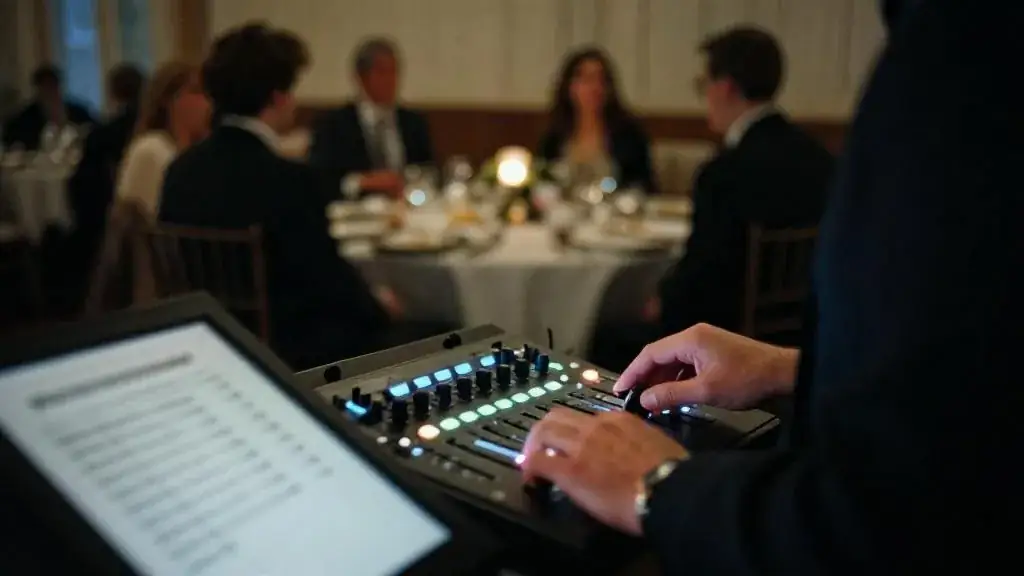
Lighting cues 4 to 6. 8:15: house to 20 percent, stage wash full, podium lit. 8:25: house to 10 percent, single tight spot centre stage; MC warns the room the lights will dim. 8:42: house to 40 percent so spotters can see every paddle; uplights shift from amber to blue.
Accessibility. Live captions on both side screens from 8:15; every speaker on a microphone; the auctioneer repeats each bid aloud; the mentalist chooses participants who have agreed in advance and does not require anyone to climb the stage steps.
Phase 5: Departure, 9:30 to 10:00
Guest experience. MC thanks guests at 9:30 with the total raised on screen. Coat check back to two attendants. Rideshare code on the screen and on cards at coat check. Board chair at the door saying goodnight.
Décor priority. None. Florist strikes from 10:30, after the last guests; her strike time is in the run of show.
Lighting cue 7, 9:30. House to 70 percent, uplights amber, stage wash off.
Accessibility. Side exit signed and door tested again; a staff member assigned to walk any guest to the accessible drop-off; the elevator confirmed in service.
Worked example: the finished table
| Time | Beat | Décor | Lighting cue | Accessibility owner |
|---|---|---|---|---|
| 5:45 | Arrival | Welcome sign, foyer gobo | 1: foyer 70%, amber | Greeter |
| 6:00 | Cocktails | Bar drape, logo loop | hold | Bar captain |
| 6:55 | Transition | Seating screen | 2: foyer 100% then ballroom 60% | Door staff |
| 7:05 | Dinner | Pin-spotted centrepieces | 3: house 40%, pins full | Captain |
| 8:15 | Program | Backdrop | 4: house 20%, stage full | AV lead (captions) |
| 8:25 | Mentalist | Backdrop | 5: house 10%, one spot | MC (warning) |
| 8:42 | Paddle raise | Backdrop | 6: house 40%, blue | Auctioneer |
| 9:30 | Departure | None | 7: house 70% | Planner |
Common mistakes in this workshop
- Writing the guest experience for the ballroom only. Three of the five phases happen outside it.
- Lighting cues without a trigger and an owner. Every row above has a time; on the day each also has a “go” called by the stage manager.
- Accessibility as a separate page. It belongs in the same row as the cue, so the person running the cue sees it.
- Spending the décor line evenly. The backdrop and the sponsor tables carry the photographs; the foyer and the departure carry nothing.
Worksheet
Download the worksheet, complete it for your own event (or the running gala example), and keep it in your course binder. It takes about 18 minutes.
Check your understanding
Related guides, venues and vendors
Twenty terms you need on day one
Module 1: Foundations · 15 min
BEO, run of show, F&B minimum, attrition, COI, SOP, load-in, strike, rider, gobo. Planners speak a dialect; this lesson teaches the twenty…
Read more
Starting an event planning business in Ontario
Module 12: The Business of Event Planning · 15 min
Sole proprietorship vs corporation, business name registration, HST registration thresholds, insurance, bank account and the first contract.
Read more
Writing the creative brief
Module 2: Discovery & Concept · 15 min
One page that tells every vendor what the event feels like, who it is for and what cannot be compromised. The brief…
Read more