What you will be able to do
- Describe the five responsibilities every planner carries
- Tell the difference between a planner, a coordinator and a producer
- Explain why the run of show is the planner’s core deliverable
Ask ten planners what they do and you will hear ten versions of the same answer: they make decisions early so that nobody has to make them late.
Read the transcript
What an event planner actually does.
Ask ten planners what they do and you will hear ten versions of the same answer: they make decisions early so that nobody has to make them late.
The five responsibilities.
"Celebrate the team" becomes a date, a headcount, a budget per head and a definition of success you can measure afterward.
Build the budget, hold the contingency, track every quote with HST and gratuity included, and say no when a wish breaks the envelope.
Planner, coordinator, producer.
A full-service planner owns all five from the first meeting.
A day-of (or month-of) coordinator takes a plan the host built and runs it, starting four to eight weeks out.
Why the run of show matters.
Every other document feeds the run of show.
If a detail is not on it, it does not happen.
That is the lesson. The worksheet and the quiz are just below this video.
The five responsibilities
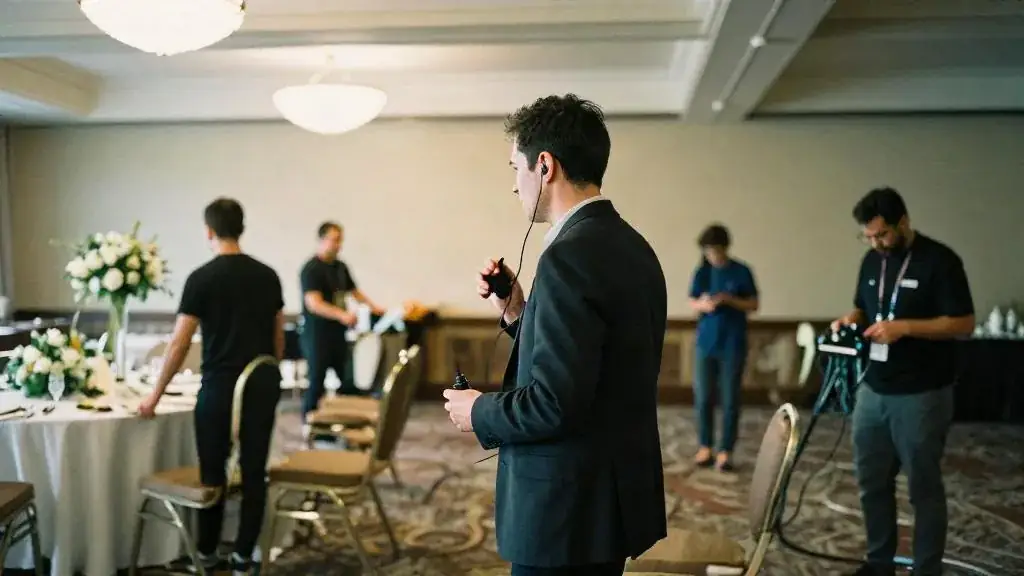
- Translate the goal. “Celebrate the team” becomes a date, a headcount, a budget per head and a definition of success you can measure afterward.
- Own the money. Build the budget, hold the contingency, track every quote with HST and gratuity included, and say no when a wish breaks the envelope.
- Assemble the team. Venue, caterer, entertainment, AV, décor, photo, staffing. Match each to the audience and the room, and collect their contracts, insurance and technical riders.
- Write the plan. Master timeline for the months, run of show for the day. One owner per cue.
- Absorb the problems. The band is late, the power trips, the CEO adds a speech. The planner solves it in the hallway while the room keeps going.
Planner, coordinator, producer
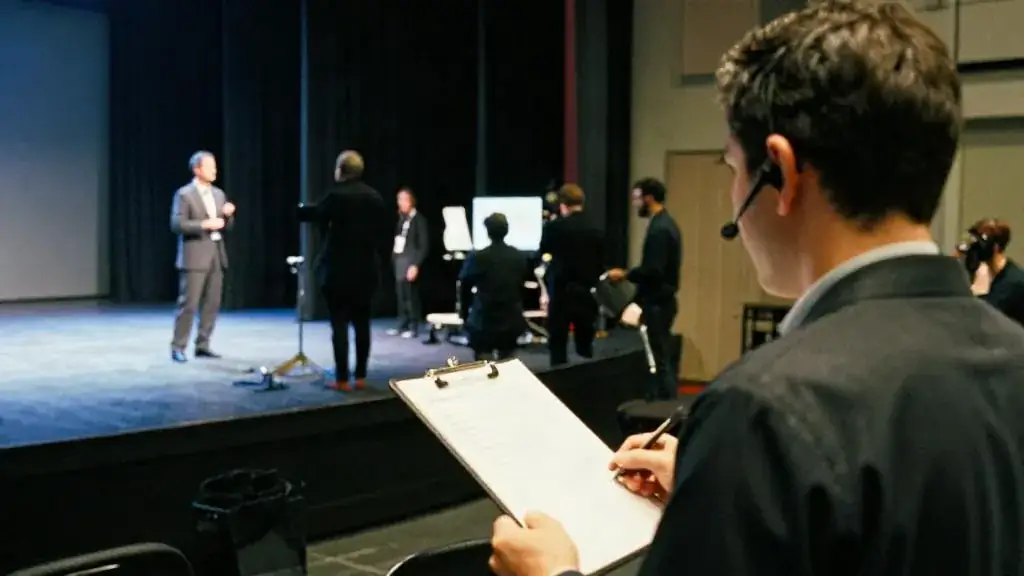
A full-service planner owns all five from the first meeting. A day-of (or month-of) coordinator takes a plan the host built and runs it, starting four to eight weeks out. A producer owns the technical show: staging, lighting, sound, video, cues. Large events have all three; a backyard wedding has one person doing all of it.
Why the run of show matters
Every other document feeds the run of show. If a detail is not on it, it does not happen. We build one in Module 7 and you will use the template in every specialist track.
Ontario rules that apply to the planner
No provincial licence is needed to call yourself an event planner in Ontario, which is why the title means so little on its own. What a client is really buying is judgement, and the rules you work under come from the things you touch: alcohol, money, food, crowds and personal information. A planner who knows where each rule lives is worth more than one who has memorized a list.
- Alcohol. The AGCO issues Special Occasion Permits for events in places without a liquor licence, and anyone serving must hold Smart Serve certification. You do not pour, but you are the one who notices that the loft has no licence.
- Tax. HST in Ontario is 13 percent. Once your taxable revenue passes $30,000 in four consecutive calendar quarters you must register with the CRA and charge it, and your quotes should show it on its own line from the start.
- Your business name. If you trade under a name other than your own legal name, register it with the province through ServiceOntario before you put it on a contract.
- Travel. If you sell travel itself (flights, hotel packages, a destination wedding bundle), Ontario expects travel sellers to be registered with TICO. Confirm with TICO before you resell anything travel-related.
- Accessibility and privacy. The AODA sets accessibility standards that venues and organizations must meet, and PIPEDA governs the guest lists, dietary notes and phone numbers you collect for business clients.
None of this is legal advice. It is a map of where the questions come from, so you know whom to ask.
GTA practice notes
The Greater Toronto Area is one market on a map and several on a calendar. A planner working from Toronto will take clients in Mississauga, Vaughan, Markham, Oakville and Pickering, and each move changes the drive, the parking, the vendor travel fees and sometimes the permit office. Write the municipality into the brief on day one, because the City of Toronto, the region and the local fire service each have their own processes for parks, tents and road use.

Distance in the GTA is measured in time, not kilometres. A vendor crossing the city on a Friday afternoon can lose an hour on the highway, so the run of show you will learn to write has load-in times that assume traffic. If guests rely on transit, check the TTC and GO schedules with Metrolinx for the event night before you print an end time; a gala that ends after the last convenient train becomes a taxi line in the cold.
A worked example
A software company in Mississauga asks for “something fun for the team” in early December, 120 people, budget not yet set. Here is how the five responsibilities from this lesson turn that sentence into a plan.
The planner translates the goal first: a Thursday evening, 120 guests, a per-head budget agreed with the client’s finance lead, and one measure of success the client will actually check (attendance above 85 percent and a short survey the following week). She owns the money by building a budget with HST and the caterer’s service charge in every line and holding a contingency the client cannot spend on centrepieces.
She assembles the team in order of scarcity: a licensed venue near a GO station so nobody needs a permit or a long drive, then the caterer, then entertainment, then AV. She writes the plan as a master timeline counting back from the date and, three weeks out, a run of show with one owner per cue. On the night, the keynote runs eleven minutes long. She trims the second toast, tells the DJ, and dinner lands on time. Nobody in the room knows there was a problem, which is the point.
Common mistakes new planners make
The first is selling yourself as a decorator. Clients remember the room, but they hire you again because the bar did not run dry and the speeches ended on time. Lead with the plan and the risk you remove, and let the décor follow.

The second is quoting without tax. A proposal that says $45 a head and becomes $58 once the 18 percent service charge and 13 percent HST are added is a broken promise, even if it is arithmetically fair. The third is taking verbal agreements: every vendor, including a friend who plays guitar, needs something in writing that says what, when, how long and what happens if they cannot come.
The last is trying to be the planner, the coordinator and the producer at once on an event that needs all three. Know which role you have been hired for, say it in the contract, and bring in help when the technical show is bigger than you can run from the hallway.
How this connects to the next lesson
You now know the job. The next lesson sorts the work itself: corporate, social, non-profit and public events, and who usually plans each one. That matters because the five responsibilities stay the same while the client, the decision-maker and the rules change. Keep the run of show in mind as you go, and open the master event checklist to see how every task in this course eventually lands on it. When you reach budgeting, the lesson on HST, gratuities and service charges in Ontario picks up the tax point made here.
Worksheet
Download the worksheet, complete it for your own event (or the running gala example), and keep it in your course binder. It takes about 10 minutes.

Check your understanding
Related guides, venues and vendors

Starting an event planning business in Ontario
Module 12: The Business of Event Planning · 15 min
Sole proprietorship vs corporation, business name registration, HST registration thresholds, insurance, bank account and the first contract.
Read more
Tools of the trade
Module 1: Foundations · 15 min
A planner needs a budget spreadsheet, a timeline, a run of show, a vendor contact sheet, a floor plan tool and a…
Read more
Real-time problems: the fifteen most common
Module 10: Event Day · 15 min
Power trips, rain, no-shows, drunk guests, medical incidents, double-booked rooms, missing cake. The fix for each, in the order you do it.
Read more