Formats, venues, budgets and the logistics of moving guests out of the city.
Read the transcript
Micro-weddings, elopements and destination (Niagara, Muskoka).
Formats, venues, budgets and the logistics of moving guests out of the city.
Three formats, three different jobs.
A micro-wedding is a full wedding with a short guest list, usually under 40 people.
An elopement is the couple, the officiant, two witnesses and sometimes a photographer; it may be legally identical to a wedding but the planning is a one-day logistics job.
Micro-weddings.
The budget does not shrink in proportion to the guest list.
Fixed costs such as photography, the officiant, the planner and the couple's attire are the same for 30 guests as for 160; what drops is catering, rentals and venue size.
Elopements.
The legal requirements do not change: a licence from the municipal clerk (valid 90 days, both parties present with ID), a registered officiant and two witnesses.
If the couple has no witnesses, the officiant or the photographer often arranges them; ask.
Destination: Niagara and Muskoka.
Both regions sell the same thing: a view, a weekend and a reason for guests to make a trip of it.
The planning is a logistics problem with a wedding attached.
Moving guests out of the city.
Guests who have to drive two hours and find a hotel room are guests who may not come.
Lower the friction in this order:
That is the lesson. The worksheet and the quiz are just below this video.
Three formats, three different jobs
A micro-wedding is a full wedding with a short guest list, usually under 40 people. An elopement is the couple, the officiant, two witnesses and sometimes a photographer; it may be legally identical to a wedding but the planning is a one-day logistics job. A destination wedding, in the GTA sense, means moving most of the guests out of the city for the day or the weekend: Niagara-on-the-Lake and the Niagara wine region, Muskoka and the cottage districts, Prince Edward County and the lakeshore towns. Each format changes where the money and the risk sit.
Micro-weddings
The budget does not shrink in proportion to the guest list. Fixed costs such as photography, the officiant, the planner and the couple’s attire are the same for 30 guests as for 160; what drops is catering, rentals and venue size. So a micro-wedding often spends more per guest and more on experience: a restaurant private room with a chef’s menu, a live musician instead of a DJ, a close-up magician who can work a single long table for the whole cocktail hour. Venues that work well in the GTA include restaurant private rooms, small galleries, greenhouses, heritage houses and rooftop spaces; ask about minimum spends rather than rental fees, because many restaurants price it that way.
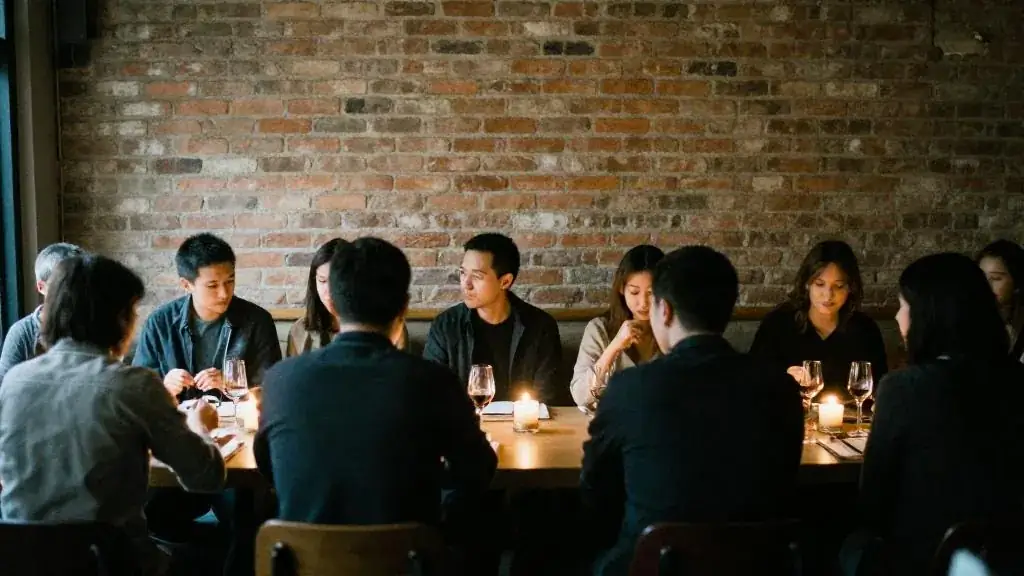
Programs are shorter. One long table instead of rounds. Toasts from the seats. The first dance in the room where dinner happened. A three-hour reception is normal and a hard out at 10 p.m. is common for restaurant spaces, so plan the evening as a dinner party with a ceremony at the start.
Elopements
The legal requirements do not change: a licence from the municipal clerk (valid 90 days, both parties present with ID), a registered officiant and two witnesses. If the couple has no witnesses, the officiant or the photographer often arranges them; ask. City Hall ceremonies exist in Toronto and some other GTA municipalities and are booked through the clerk’s office; check availability and the current fee rather than assuming. Outdoor elopements in a park or on a beach need the same park permit any event would, and some locations charge for professional photography; check with the city or conservation authority.
The planner’s job on an elopement is a tight run of show, a weather plan, transport and a dinner reservation afterwards. Price it as a day-of coordination job, typically $1,200 to $2,500 (typical GTA range, 2026), plus any vendor sourcing.
Destination: Niagara and Muskoka
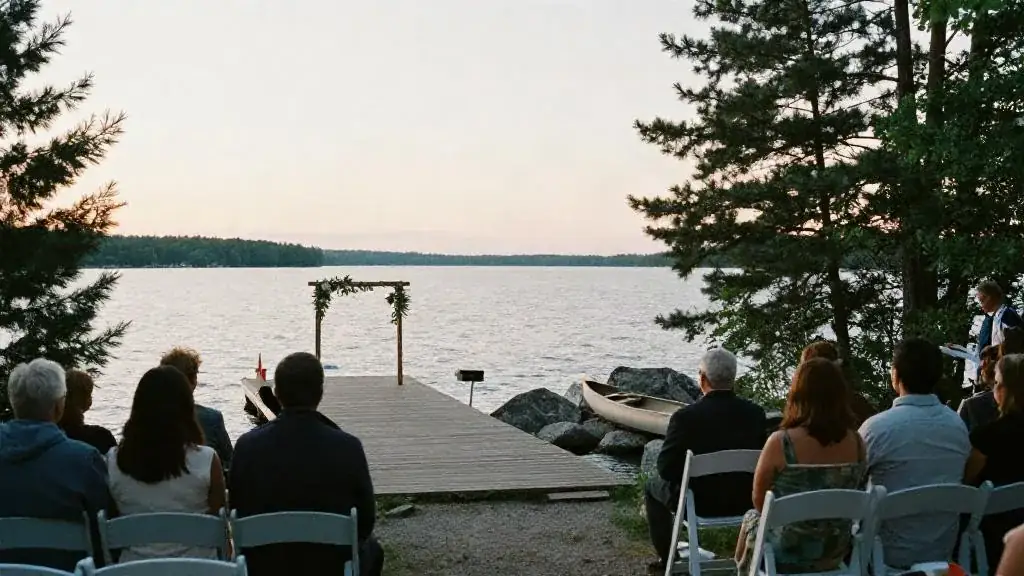
Both regions sell the same thing: a view, a weekend and a reason for guests to make a trip of it. The planning is a logistics problem with a wedding attached. The questions that decide whether it works:
| Question | Niagara region | Muskoka |
|---|---|---|
| Travel from Toronto | Typically 1.5 to 2 hours by road, longer on summer Saturday afternoons with QEW traffic | Typically 2 to 3 hours by road; Friday evening traffic north is heavy in summer |
| Venue types | Wineries, estate houses, inns, restaurant barns; many have licensed bars and in-house catering | Resorts, cottages, lakeside lodges; some are dry-hire with tents and outside catering |
| Accommodation | Hotels, inns and bed-and-breakfasts in walkable towns; room blocks fill fast in summer | Resort rooms and cottage rentals; often the venue is the accommodation, with minimum-night stays |
| Weather plan | Winery indoor spaces are usually available as a rain plan; confirm | Tents are the rain plan; permits apply over 60 m², engineer review at 225 m² and over, 3 m clearance from structures |
| Noise and end time | Town and winery rules vary; many end outdoor music at 11 p.m. or earlier | Sound carries across water; municipalities have their own noise bylaws; ask the venue for its cutoff |
| Vendors | Strong local vendor base; Toronto vendors add travel fees | Thinner local base; most vendors travel from the GTA and may need overnight accommodation |
Moving guests out of the city
Guests who have to drive two hours and find a hotel room are guests who may not come. Lower the friction in this order:
- Book a room block at one or two properties as early as the venue, and put the booking link and the cutoff date on the wedding website.
- Charter coaches from one downtown pickup point. A coach rental for a day trip is a fixed cost that removes drinking-and-driving risk and keeps the timeline honest, because everyone arrives together. Get a quote for the actual route and hours; do not guess.
- Give a welcome event the night before (casual, local, optional) so the wedding day starts with everyone already there.
- Write the travel information on the invitation and the website: drive time, parking, shuttle times, the last shuttle back, and what to do if someone misses it.
- Carry a local emergency list: nearest hospital, pharmacy, taxi number, tow service, and the venue manager’s cell.
Vendor travel is a line item. Photographers, bands, planners and hair and makeup teams commonly add travel time, mileage and, for Muskoka, an overnight stay. Budget it with the budget sheet and the timeline generator, and build in an extra hour of load-in for a tented site compared with a ballroom.
Worked example: a Ferreira–Khan alternative
Before settling on the Distillery loft, Ana and Omar priced a Niagara winery for the same 160 guests and $70,000. The winery rental and in-house catering came out close to the loft once the loft’s rentals were added, but three things changed the answer. Coaches for 120 guests from downtown and back added a fixed transport cost. The Khan family’s mehndi on the Thursday would have needed to move to Niagara as well, or the family would be travelling twice. And the winery’s outdoor music cutoff was 11 p.m., which cut an hour from a dance floor that two families had been looking forward to. They kept Niagara for the honeymoon weekend. The method was the same as any venue decision: price the whole weekend, not the rental.
Common mistakes
- Assuming a smaller wedding is proportionally cheaper; fixed costs do not shrink.
- Elopements without the licence appointment booked; clerk appointments can be weeks out in peak season.
- Destination weddings that leave guests to arrange their own transport and accommodation.
- Forgetting that a tented reception is a permit, an engineer and a weather decision, not a tent.
- Not asking the venue for its outdoor music cutoff before the band is booked.
Worksheet
Apply this lesson to a real or practice event using the worksheet, then mark the lesson complete to track your progress toward the certificate.
Related guides, venues and vendors
Kortright Centre for Conservation
Vaughan · 150–300 guests
Outdoor space
Kortright is a conservation centre operated by the Toronto and Region Conservation Authority (TRCA).
Read more
Pickering Museum Village
Pickering · up to 108 guests
Pickering Museum Village is a City of Pickering heritage museum with restored buildings and heritage gardens in Greenwood.
Read more
Parkwood Estate
Oshawa · up to 125 guests
Outdoor space
Parkwood is a historic grand estate and National Historic Site, now operated as a museum.
Read more