Toronto and GTA processes for street events, parks, noise, food vendors and road closures.
Read the transcript
Permits, road closures and the city.
Toronto and GTA processes for street events, parks, noise, food vendors and road closures.
The city is your first client.
A private event needs a venue and a contract.
A public event on a street or in a park needs the municipality to agree that it can happen, and then several departments to agree on how.
The permit map.
Most street festivals and park events touch the same set of approvals.
The names and forms differ by municipality, but the questions do not.
Building the application.
A municipal application is judged on whether the reviewers believe you can run the event safely.
Give them the evidence in one package:
Timing backwards from the date.
For a summer street festival, work backwards from the longest lead time, not the shortest.
In our experience, first contact with the municipality six to nine months out is comfortable for a first-year event; returning events often hold their date from year to year.
Worked example: the Lakeshore Night Market.
The Lakeshore Night Market is a free street festival in Mississauga drawing 8,000 attendees over one summer evening, on a stretch of road closed from late afternoon until after midnight.
Because it is in Mississauga, not Toronto, the organizers started by asking the City of Mississauga's special events office which permits applied and what they cost, rather than reusing a Toronto checklist.
That is the lesson. The worksheet and the quiz are just below this video.
The city is your first client
A private event needs a venue and a contract. A public event on a street or in a park needs the municipality to agree that it can happen, and then several departments to agree on how. Parks, transportation, police, fire, public health, licensing and by-law enforcement each have a say, and each works to its own timeline. The festival planner’s first job is to find out who those people are in the host municipality and get the event in front of them early. Toronto, Mississauga, Brampton and the other GTA municipalities each run their own processes, so never assume one city’s form or fee applies in another; check the current requirements and fees with the city.
The permit map
Most street festivals and park events touch the same set of approvals. The names and forms differ by municipality, but the questions do not.

| Approval | Who usually issues it | Planning note |
|---|---|---|
| Special event or park permit | Municipal parks or special events office | Toronto park permits for special events go through the city’s Parks special event permit process; apply months ahead for summer weekends |
| Road closure | Municipal transportation department, with police and transit consulted | Expect a traffic management plan, detour signage, notice to residents and businesses, and conditions on barricades and paid duty officers; check the current requirements with the city |
| Noise exemption | Municipal by-law office | In Toronto (Chapter 591) amplified sound limits are stricter 11 p.m.–7 a.m. and an outdoor amplified sound exemption takes about 4 weeks to process; other municipalities have their own by-laws |
| Food vendors | Public health for inspection; municipal licensing for vendor licences | Collect each vendor’s licences and inspection documents before you confirm their spot |
| Tents and structures | Municipal building department; fire department | Tents over 60 m² aggregate need a building permit (OBC 3.14); 3 m from other structures; engineer’s review at 225 m² or more; CAN/ULC-S109 fabric certification |
| Alcohol | AGCO Special Occasion Permit | Public event: apply at least 30 days ahead with a municipal “municipal significance” resolution; events of 5,000+ people per day need 60 days’ notice |
| Raffles or 50/50 draws | Municipality (under $50,000 in prizes) or AGCO (over) | Charitable or religious organizations only |
Building the application
A municipal application is judged on whether the reviewers believe you can run the event safely. Give them the evidence in one package:
- A site plan to scale, showing stages, vendors, tents, washrooms, first aid, emergency vehicle routes, exits and barricade positions.
- A run of show with load-in, open, close and load-out times, including when the road reopens.
- Expected attendance and how you estimated it.
- Security, first-aid and emergency plans, with named providers.
- A certificate of liability insurance naming the municipality as additional insured, at the limit the city requires.
- A resident and business notification plan for any road closure.
- A waste and recycling plan, and how the site will be returned to its original state.
Start the risk side of this in the risk register template; reviewers ask the questions it answers.
Timing backwards from the date
For a summer street festival, work backwards from the longest lead time, not the shortest. In our experience, first contact with the municipality six to nine months out is comfortable for a first-year event; returning events often hold their date from year to year. The SOP for a 5,000-plus crowd needs 60 days’ notice, and the municipal resolution has to exist before that, which can mean a council or committee calendar you do not control. A Toronto noise exemption needs about four weeks. Road closure approvals usually trail the special event permit. Put each of these into the timeline generator as a hard date.

Worked example: the Lakeshore Night Market
The Lakeshore Night Market is a free street festival in Mississauga drawing 8,000 attendees over one summer evening, on a stretch of road closed from late afternoon until after midnight. Because it is in Mississauga, not Toronto, the organizers started by asking the City of Mississauga’s special events office which permits applied and what they cost, rather than reusing a Toronto checklist. The office pointed them to the road closure process, the noise rules, public health for the 40 food vendors and the building department for the tents.
The beer garden drove the calendar. With more than 5,000 people expected, the AGCO needed 60 days’ notice, and the municipal significance resolution had to be in hand before the application. The organizers mapped the council calendar, asked for the resolution in the spring, and filed the SOP well beyond the 60-day mark. Everyone pouring held Smart Serve certification, and the beer was bought under the permit with receipts kept on site. The three vendor tents together exceeded 60 m², so a building permit and fabric certificates went in with the site plan.
Common mistakes
- Assuming Toronto’s process, fees or noise rules apply in another GTA municipality.
- Filing the SOP without the municipal resolution, or with less than 60 days’ notice for a 5,000-plus crowd.
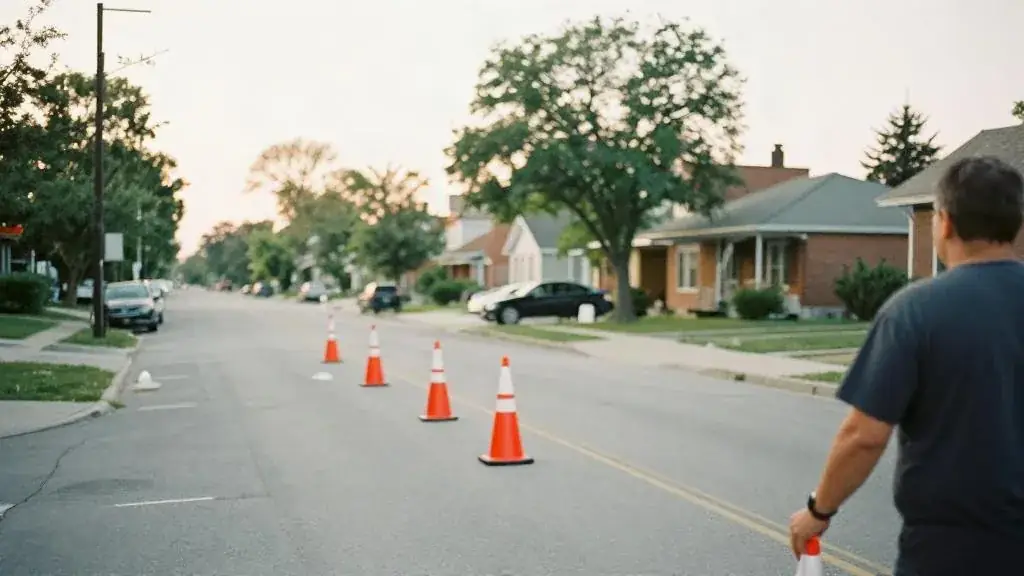
- Treating road closure as a sign and some pylons rather than a plan the city approves.
- Confirming food vendors before checking their licences and inspections.
- Guessing permit fees in the budget; check the current fee with the city.
Worksheet
Apply this lesson to a real or practice event using the worksheet, then mark the lesson complete to track your progress toward the certificate.
Related guides, venues and vendors

Ask a Performer: a touring juggler on what planners get wrong
October 21, 2026 · 1 min read
An internationally touring juggler on riders, ceilings, set lengths, and the one question he wishes every planner asked.
Read more
Hiring a festival & community event magician in Toronto: what to expect and what it costs
September 13, 2026 · 4 min read
Roaming magic and crowd-pleasing stage shows for festivals, fairs, BIA street events and community celebrations.
Read more
Site planning and crowd management
Specialist · Festivals & Public Events · 15 min
Site maps, egress, density, barriers, security ratios, medical and weather.
Read more