Round tables with chairs on only two-thirds of the circumference so everyone faces the stage.
Read the transcript
Crescent rounds.
Round tables with chairs on only two-thirds of the circumference so everyone faces the stage.
How it works in practice.
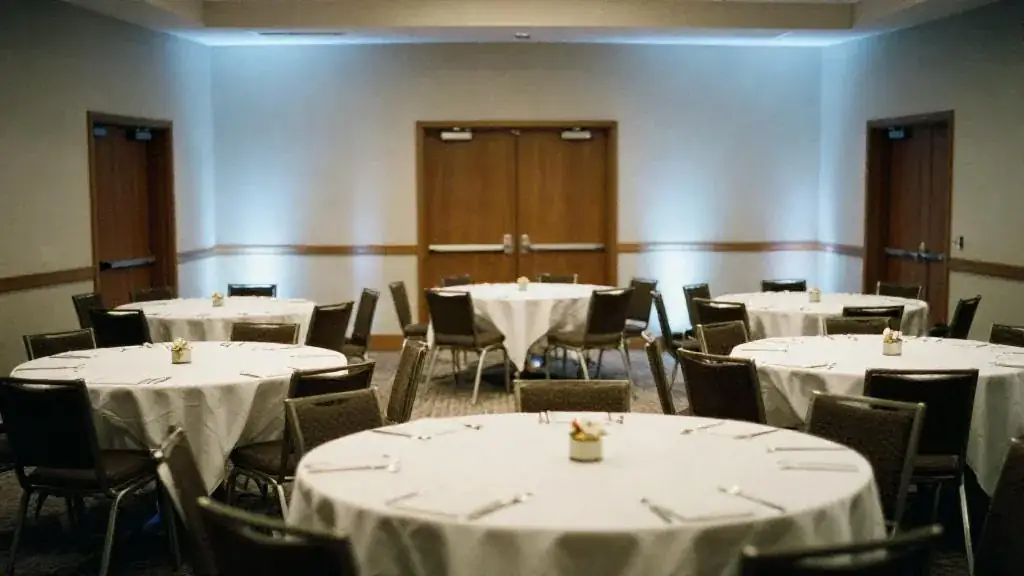
Crescent rounds use the same banquet tables as a dinner, but chairs are placed only on the side facing the stage, leaving the back third open.
Nobody turns their chair around for the keynote, nobody sits with their back to the screen, and servers can approach from the open side.
Worked numbers.
Twenty-six to thirty tables instead of eighteen means more floor, more linen and more centrepieces.
Rentals and décor rise with table count, not guest count.
When to use it.
Award dinners, where the program runs through the meal.
Conference plenaries with a meal or with workshop tasks at the table.
More detail, examples and common mistakes are on this page, below the video.
How it works in practice
Crescent rounds use the same banquet tables as a dinner, but chairs are placed only on the side facing the stage, leaving the back third open. Nobody turns their chair around for the keynote, nobody sits with their back to the screen, and servers can approach from the open side. The cost is capacity: a 72-inch round that seats 10 for dinner seats 6 or 7 in crescent.
The open side should face the stage’s opposite direction, and every table should be angled slightly toward centre stage rather than all aligned to the wall. In a wide room, tables at the edges need more angle than tables in the middle.
Worked numbers
| Layout | Seats per 72-inch round | Rounds needed for 180 guests |
|---|---|---|
| Full rounds | 10 | 18 |
| Crescent | 6 | 30 |
| Crescent | 7 | 26 |
Twenty-six to thirty tables instead of eighteen means more floor, more linen and more centrepieces. Rentals and décor rise with table count, not guest count.
When to use it
- Award dinners, where the program runs through the meal.
- Conference plenaries with a meal or with workshop tasks at the table.
- Fundraisers where the mentalist or auctioneer needs everyone looking forward before the ask.
- Any event where the front-of-room screen carries important content.
For a social dinner where the program is a ten-minute toast, full rounds are better. People came to talk to each other.
How to handle it
- Decide early. Crescent changes the room count, so it affects venue choice.
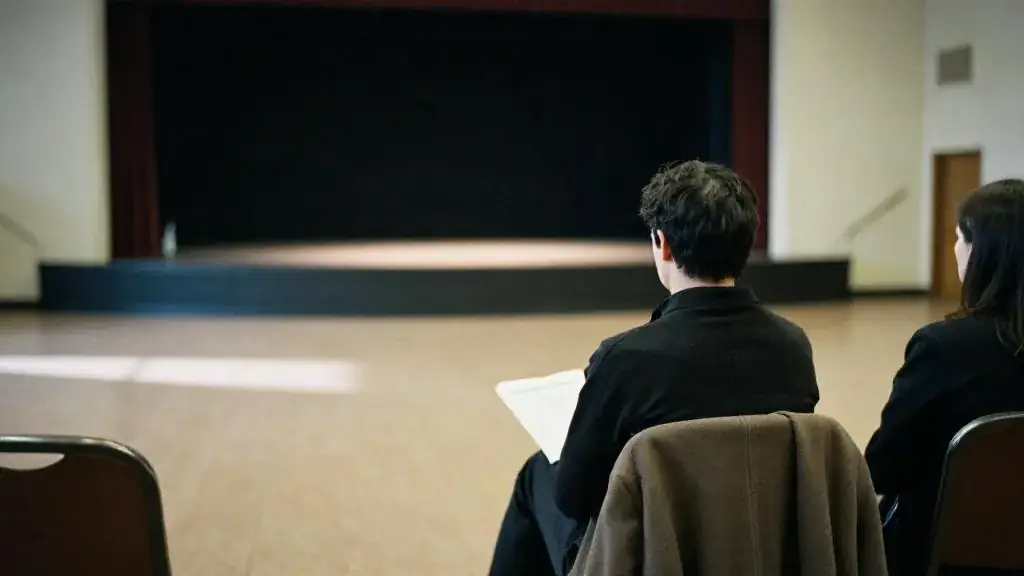
- Check sightlines from the furthest table and the corners; use a raised stage if the room is deep.
- Use the empty side for service: plates go down from behind the open arc.
- Mix layouts if needed: crescents at the front, full rounds at the back where the view is poorer anyway and guests mostly watch the screen.
- Put the plan on the BEO with a drawing. “Crescent” means different things to different banquet captains.
Related tools
Model the layout in the venue capacity calculator by setting seats per table to 6 or 7. See also cabaret seating, the nearly identical layout used for shows with food.
Why it matters
Use for award dinners and conferences with a program; capacity drops by a third.
Example
Rounds of 10 become crescents of 6–7.
Common mistakes
- Using crescents when there is no stage program
Related guides, venues and vendors

Set length
Entertainment
The duration of a performance segment.
Read more
Run of show
Planning
A minute-by-minute schedule of every cue at an event, with one named owner per cue.
Read more
Deposit
Business & Legal
A partial payment at signing that holds the date; usually 25–50% in the GTA.
Read more