A fee paid to secure a planner’s or professional’s services, usually credited against the total.
Read the transcript
Retainer.
A fee paid to secure a planner's or professional's services, usually credited against the total.
How it works in practice.
A retainer is the money that turns "I would love to work with you" into a held date.
For planners, performers and day-of coordinators, the date is the product.
Worked numbers.
Typical planner arrangement, credited retainer (figures are illustrative, not a standard):
If the planner is registered for HST, tax applies to each instalment as it is invoiced, including the retainer.
How to handle it.
Put the retainer amount, the credit and the refund position in the first section of the contract, not in the payment schedule at the back.
Tie the retainer to the cancellation clause so both read the same way.
More detail, examples and common mistakes are on this page, below the video.
How it works in practice
A retainer is the money that turns “I would love to work with you” into a held date. For planners, performers and day-of coordinators, the date is the product. Once it is booked, every other enquiry for that Saturday gets turned away, so the retainer compensates for that lost opportunity as much as it pays for early work.
Most retainers are credited against the total fee, which is what separates them from a pure booking fee. The contract should say three things plainly: whether the retainer is credited, whether it is refundable, and what work it covers before the full scope is signed. In our experience the usual answer in the GTA is credited, non-refundable, and covering the discovery calls and first planning draft.
A retainer is not quite the same as a deposit, though people use the words loosely. A deposit is a part-payment against a defined order. A retainer often comes before the order is fully defined, which is why its terms need to be tighter.
Worked numbers
Typical planner arrangement, credited retainer (figures are illustrative, not a standard):

| Item | Amount |
|---|---|
| Full planning fee | $6,000 |
| Retainer on signing (25%) | $1,500 |
| Second payment at 90 days out | $2,250 |
| Final payment 14 days out | $2,250 |
| HST at 13% on the full fee | $780 |
If the planner is registered for HST, tax applies to each instalment as it is invoiced, including the retainer.
How to handle it
- Put the retainer amount, the credit and the refund position in the first section of the contract, not in the payment schedule at the back.
- Tie the retainer to the cancellation clause so both read the same way.
- State what happens if the date moves: does the retainer transfer to a new date, and for how long?
- Issue a receipt that names the event date the retainer secures.
- Do not start vendor bookings on the client’s behalf until the retainer has cleared.
The event proposal template has a fee block you can adapt for the retainer and instalments.
Why it matters
Planners use retainers to commit the date before the scope is final.
Example
A $1,500 retainer credited against a $6,000 planning fee.
Common mistakes
- Confusing a retainer with a non-refundable booking fee without saying so in the contract
Related guides, venues and vendors

Money dance
Weddings & Cultural
A tradition in Filipino, Polish, Greek and other weddings where guests pin or give money while dancing with the couple.
Read more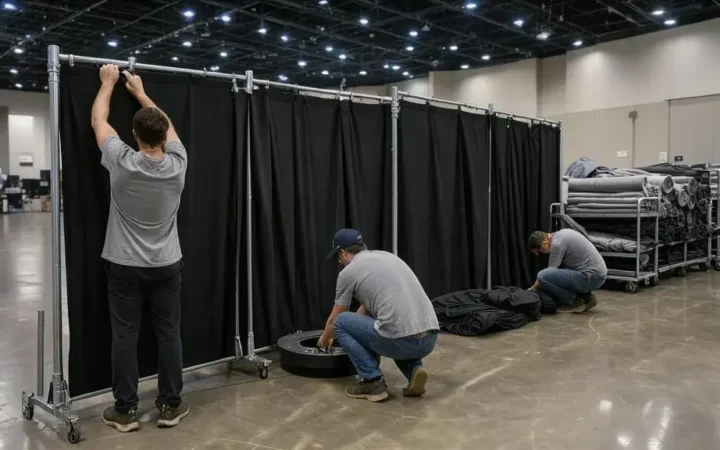
Pipe and drape
Production & AV
Adjustable metal uprights and bases with fabric panels, used to create walls, backdrops and hide storage.
Read more
Lyra
Entertainment
A suspended steel hoop used for aerial performance.
Read more