Every event needs a measurable outcome: leads, attendance, donations, survey scores, retention. Set it in discovery and it writes the debrief for you.
Read the transcript
Goals and success measures.
Every event needs a measurable outcome: leads, attendance, donations, survey scores, retention.
Set it in discovery and it writes the debrief for you.
A goal you can measure.
"A great party" cannot be measured, so it cannot be planned or defended.
Write the goal with a number, a deadline and an owner: "At least 85 percent of invited staff attend the December 12 party and the survey averages 8 of 10." Now every decision can be tested against it.
One primary measure, two secondary.
Writing the goal in five steps.
Start from the morning-after answer in the discovery brief. It is usually a feeling; your job is to turn it into a count.
Pick the one number that would prove it. If the answer was "people who work remotely say it was worth it", the number is attendance by remote staff, not overall attendance.
Design the data capture before the event.
A measure you cannot capture is decoration.
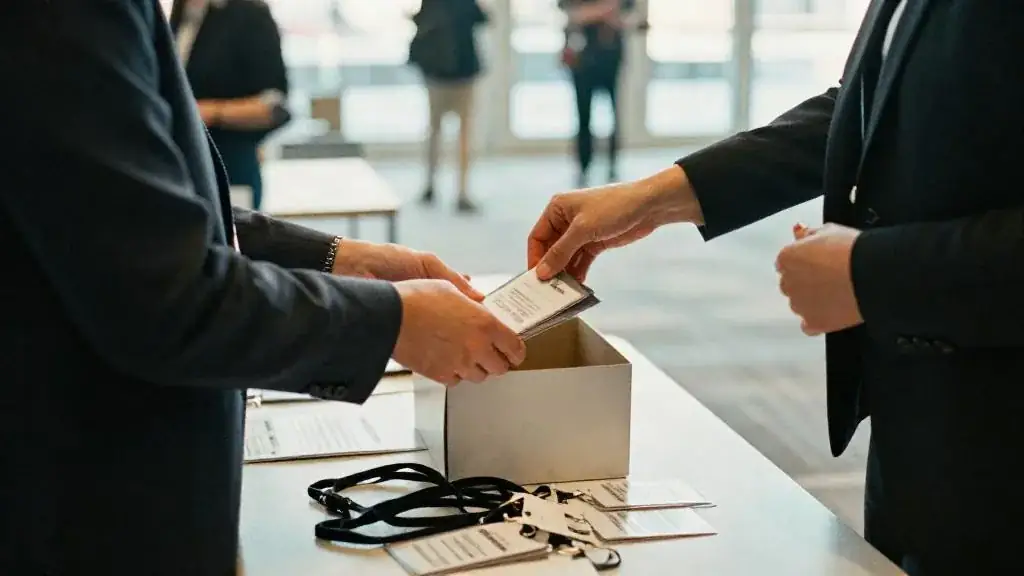
Decide now how each number will be collected: a check-in list for attendance, a lead-capture tablet for leads, the foundation's donation platform for proceeds, a survey sent within 48 hours for scores.
Questions to ask the client about each measure.
Who in your organization already tracks this number, and in what system?
Can that system tell us the figure for this event alone, or only for the quarter?
That is the lesson. The worksheet and the quiz are just below this video.
What you will be able to do
- Write a SMART-style event goal
- Pick one primary and two secondary measures
- Design the data capture before the event
A goal you can measure
“A great party” cannot be measured, so it cannot be planned or defended. Write the goal with a number, a deadline and an owner: “At least 85 percent of invited staff attend the December 12 party and the survey averages 8 of 10.” Now every decision can be tested against it.

One primary measure, two secondary
| Event | Primary | Secondary |
|---|---|---|
| Holiday party | Attendance rate | Survey score; number of people who stayed past 10 p.m. |
| Product launch | Qualified leads captured | Media mentions; demo requests |
| Fundraising gala | Net proceeds | New donors; donor retention |
| Conference | Paid registrations | Session ratings; sponsor renewals |
| Wedding | The couple’s own one-line goal | Guests present at the last dance; a ceremony that ran on time |
Writing the goal in five steps

- Start from the morning-after answer in the discovery brief. It is usually a feeling; your job is to turn it into a count.
- Pick the one number that would prove it. If the answer was “people who work remotely say it was worth it”, the number is attendance by remote staff, not overall attendance.
- Attach a baseline. Ask for last year’s figure. If there is none, say so in the goal and set a range.
- Set a target that is a stretch, not a fantasy. From 70 to 85 percent is a stretch; to 100 is not a goal, it is a wish.
- Name the owner and the date the number will be known. “The development officer reports net proceeds by December 5.” A number without an owner is never collected.
Design the data capture before the event
A measure you cannot capture is decoration. Decide now how each number will be collected: a check-in list for attendance, a lead-capture tablet for leads, the foundation’s donation platform for proceeds, a survey sent within 48 hours for scores. Put the capture tasks on the master timeline with owners.
Questions to ask the client about each measure
- Who in your organization already tracks this number, and in what system?
- Can that system tell us the figure for this event alone, or only for the quarter?
- What was the number last year, and the year before? Is there a trend?
- Who will see the result, and what decision will they make with it? Budget next year? Whether to hire us again?
- If the number came in below target, what would you want to know about why?
- Is there any measure you are being asked to report that you think is the wrong one?
The last question is the useful one. A marketing manager told to report “social media impressions” for an internal staff party knows it is the wrong measure and will be relieved to be asked.

Privacy and the measures
Most capture methods collect personal information: names at check-in, email addresses for the survey, giving history on a donation platform. Under PIPEDA, collect only what the measure needs, say on the form what it is for, protect it, and delete it when the report is done. A survey that asks for a name when the goal only needs a score is collecting more than it should. If a lead-capture tablet at a product launch scans business cards, the registration wording should say so.
Baselines and targets
Ask for last year’s numbers. If attendance was 70 percent, a target of 85 is ambitious and defensible; 100 is a fantasy. If there is no baseline, set the target as a range and say so.
Worked example
Harbour Gala: primary measure net proceeds, target $120,000 (last year $96,000). Secondary: at least five first-time major donors; survey “likely to recommend” of 8 or better. Capture: the donation platform exports giving by table; the development officer tags first-time donors; the survey goes out Friday morning after a Thursday event.
Walking the five steps: the morning-after answer was “we netted $120,000 and three new major donors said yes”, which already contains two numbers. The baseline is $96,000 net and two first-time major donors last year, from the foundation’s own report. The target of $120,000 is a 25 percent increase, which the committee accepts because table sponsors have already added $15,000 to the top line before a single ticket is sold. The owner of the net-proceeds figure is the development officer, who commits to a reconciled number within ten days because the paddle-raise pledges take a week to collect. The survey owner is the planner, with the questions drafted in month six and the send scheduled on the master timeline for 9 a.m. the Friday after.
One decision changes because of the measure. The committee wants a silent auction; the development officer notes that last year’s silent auction netted little after prizes and staff time and kept donors in the lobby during the ask. It is dropped in favour of the paddle raise, which the measure favours.
Common mistakes
- Choosing a measure nobody can collect. Fix: name the system and the owner before you adopt the measure.
- Three primary measures. Fix: one primary; if two things matter equally, the client has not decided what the event is for.
- Sending the survey a week later. Fix: schedule it for the morning after, with the link already built.
- Collecting more personal data than the measure needs. Fix: strip the form to the fields the report will use.
- Reporting the gross for a fundraiser. Fix: the measure is net; put the event cost beside the revenue on the same page.
Worksheet
Download the worksheet, complete it for your own event (or the running gala example), and keep it in your course binder. It takes about 10 minutes.

Check your understanding
Related guides, venues and vendors

Building a project write-up
Module 11: After the Event · 15 min
The ten-section template, what to include honestly (including what went wrong), photo rights and anonymisation.
Read more
Client contracts and getting paid
Module 12: The Business of Event Planning · 15 min
Your own agreement: scope, fee, deposits, cancellation, liability cap, photo rights. Invoicing and late payment.
Read more
Contingency and the reserve
Module 3: Budgeting · 15 min
Ten percent, held by the planner, released only for scope that was not in the brief. Learn what it covers, what it…
Read more